Philly-area pantries see a surge as reduced SNAP payouts could face ‘significant delays’
Key details, such as when SNAP benefits would reach families, remained unclear Monday.
News that President Donald Trump’s administration plans to partially replenish Supplemental Nutrition Assistance Program benefits offered little solace to families holding empty SNAP cards in the Philadelphia region as the freeze entered its third day Monday.
In an eleventh-hour ruling Friday, federal judges in Rhode Island and Massachusetts said the administration was required to replenish benefits using a $5 billion contingency fund with the U.S. Department of Agriculture.
The rulings were a partial win for the 25 attorneys general and governors, including Pennsylvania Gov. Josh Shapiro, who sued to force the funding of SNAP.
But to the chagrin of food-assistance proponents, the administration said Monday that those funds would pay for only half the usual benefits. SNAP benefits total about $8 billion a month.
“This means that no funds will remain for new SNAP applicants certified in November, disaster assistance, or as a cushion against the potential catastrophic consequences of shutting down SNAP entirely,” Patrick A. Penn, an Agriculture Department under secretary, wrote in a court filing Monday.
Key details, such as when benefits would reach families, remained unclear Monday. Penn warned of “procedural difficulties,” such as some states’ decades-old computer systems, that could “lead to payment errors and significant delays.”
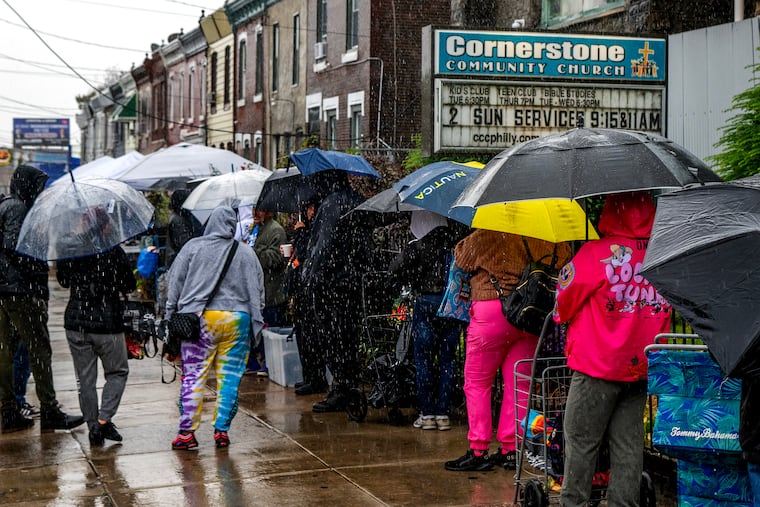
Meanwhile, some pantries and community fridges in the Philly region have already reported surges in people seeking food assistance
“It’s nerve-wracking, because we don’t know what the end of it is,” said founder and CEO of Murphy’s Giving Market, Desiree Murphy-Morrissey. “I don’t see an end.”
The phone lines for Murphy’s, a food pantry in Upper Darby, have been flooded with calls since SNAP benefits lapsed Saturday. Roughly 77,000 people receive SNAP benefits in the county, but the calls are coming from across the region.
The pantry has already aided about 115 new people since SNAP funding ran dry.
At Bebashi, in West Philadelphia, some families even showed up on Sunday — a day the nonprofit is typically closed. Staff were there for an event and were able to provide families with emergency food packets.
Since the program’s inception, SNAP has remained funded through government shutdowns due to how much of a lifeline it is to the country’s most vulnerable families. Adding to the benefits freeze are the compounding effects of tariffs, rising grocery prices, Pennsylvania’s state budget impasse, and the thousands of federal workers who are forced to show up to work without pay or furloughed.
“The face of hunger looks different,” said Sebrina Tate, president and CEO of Bebashi. “It is no longer people who are unemployed or underemployed; it is working families who are hungry. We get calls every day because of the government shutdown.”
Two million Pennsylvanians receive SNAP benefits, including 713,000 children. With the uncertainty surrounding SNAP, lawmakers and donors have rushed to help, though they’re limited in what they can do.
The administration told states that it would not reimburse them if they tried to fill SNAP cards themselves, Shapiro said. State and local officials are instead helping pantries across the region, which are expected to be on the front lines of food assistance.
In signing a disaster declaration Friday, Shapiro was able to rush $5 million to nonprofit Feeding Pennsylvania, which partners with food pantries across the state. The funds reached the nonprofit Monday, according to a Shapiro spokesperson. Shapiro also launched a private-sector fundraising effort, which had yielded $1 million as of Friday.
Montgomery County, where 63,000 individuals receive SNAP benefits, is slated to release $500,000 to pantries.
Bucks County, which already released $150,000 in food assistance in response to the state budget impasse, is considering an additional $200,000 this week.
This weekend in Philadelphia, where about 30% of residents receive SNAP benefits, Mayor Cherelle L. Parker signed an executive order that allocated $5.5 million to food pantries, families receiving city services, and small grocery and corner stores.
Parker’s administration also tapped philanthropic groups that contributed $6 million to a regional food fund.
Still, lawmakers are aware that no amount of flexing funds or philanthropic donations can replace the federal government’s role in keeping people fed. Pennsylvania receives $366 million in SNAP benefits a month.
“SNAP provides nine meals for every one meal from the entire nonprofit world,” said Susan Neiger Gould, executive director of Manna on Main Street, an anti-hunger agency in Lansdale, Montgomery County.
Even so, the average SNAP payout is just $187 per person per month, federal figures show, and area pantries have seen steady upticks in need in recent months.
With families getting half their usual benefits, the pantries don’t expect the need to slow down anytime soon.
Staff writer Alfred Lubrano contributed to this article.