A Chesco town lowered taxes. That’s pretty unusual — but may not be something others can copy.
West Bradford is lowering property taxes this year, due to a culmination of savings.
It was something of a lucky confluence of factors in West Bradford Township that led to residents seeing a reduction in their property taxes going into the new year, as other communities in the state see hikes.
A number of loans that were refinanced during record-low interest rates at the height of the COVID-19 pandemic in 2020, plus long-term lease agreements that brought the municipality more money, eventually equaled “substantial savings,” said Justin Yaich, town manager.
Savings in hand, the township decided they’d give it back to residents, he said, rather than funding “another pet project or another program.”
In the budget, passed last month by the town’s board of supervisors, West Bradford set its property tax millage for a 0.25 mill — a 50% reduction in the tax for residents. For a home worth roughly $300,000, residents will now pay $75 a year, down from $150.
It comes as Philadelphia’s collar counties and municipalities have faced tightening budgets and have had to hike taxes after years of stagnation.
It’s unusual, John Brenner, executive director of the Pennsylvania Municipal League, said of West Bradford’s reduction.
“There have been increases, and I’ve seen a number of them from municipal leaders throughout the Commonwealth — cities, boroughs, townships,“ Brenner said. ”You’re seeing counties raise taxes that haven’t in a long, long time. So that tells you the environment we’re in.”
Local governments are fairly limited in how they can levy taxes under state law, with the biggest portion of revenue coming from “the beleaguered property tax,” Brenner said. Schools and the county take from that same source, with local municipalities usually taking far less.
“Local government is not a business,” Brenner said. “It’s a provider of services, and those services cost money, and somebody has to pay for it.”
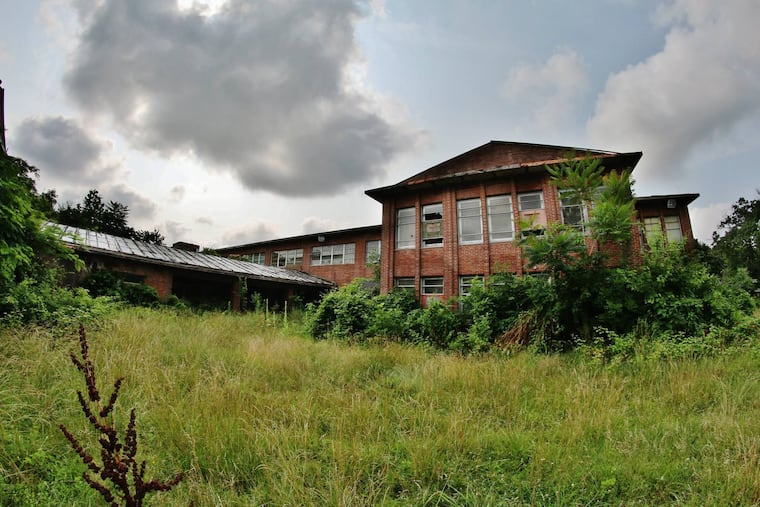
But in West Bradford, it was years of planning and a flurry of factors, Yaich said. It started in 2019, when the town purchased the former Embreeville State School and Hospital, an abandoned 900,000-square-foot psychiatric hospital that had been deteriorating for more than two decades. A developer had sought to transform the property into a high-density residential complex, which saw community pushback and years of litigation.
To purchase the site for roughly $23 million to turn it into 200 acres of open space, the township — for the first time — levied a real estate tax. (Residents already paid property tax to Downingtown Area School District and the county but previously did not pay the town.)
But early in 2020, West Bradford refinanced its outstanding debts, renegotiated some lease terms, and began to hold other costs consistent. Over the years, it culminated in the township being able to reduce the real estate tax, Yaich said.
The board’s philosophy is to do its core responsibilities — taking care of roads and infrastructure, caring for the open spaces and parks, running trash and recycling programs — and make sure there’s enough leftover for new programs or capital improvements, Yaich said. But anything beyond that, return it to the taxpayers, rather than figure out how to spend it, he said.
It is easier to spend money than it is to trim, Yaich added, noting that the township faces rising costs and shrinking revenue sources: Cable providers, who once were paying $300,000 to the township in a year to put their lines in, are dwindling as people turn to streaming services. With more electric vehicles, fewer people are filling up at the pumps, meaning less liquid fuels money for the township, too. It’s rare, and unlikely to be replicated in a few years, to cut costs for residents like this, he acknowledged.
As other town managers call and ask Yaich how to emulate him, he tries to dispel the magic.
“We’re in a unique situation that we were able to do it,” Yaich said. “There’s no magic sauce or magic potion that we’re doing here that other places aren’t doing. It’s just that we were set up at the right time in the right place, and we acted when things were favorable to us and we were fortunate.”
This suburban content is produced with support from the Leslie Miller and Richard Worley Foundation and The Lenfest Institute for Journalism. Editorial content is created independently of the project donors. Gifts to support The Inquirer’s high-impact journalism can be made at inquirer.com/donate. A list of Lenfest Institute donors can be found at lenfestinstitute.org/supporters.

Want to get Inquirer Chester County straight to your inbox every week? Sign up here for our guide to the news, stories, and events shaping life in your community.