Femtech has emerged as both a corrective and a catalyst to close the knowledge gap in medicine
AI-driven diagnostic tools trained on newly expansive data could, for the first time, develop reference ranges calibrated to women’s biology rather than retrofitted from male norms.
She started with an apology. I had just introduced myself to a woman who came to the emergency department on a Sunday morning. She dropped her eyes and told me she had tried really hard to stay home because she didn’t want to waste my time.
She went on to describe a discomfort in her stomach and chest area from when she woke up at 4:45 a.m. that persisted despite her trying to take deep breaths or address the nausea that accompanied.
She knew she might be more anxious than usual because she had just turned 70, and had a realization that both of her parents had died of heart disease before reaching 72 years old. She told herself not to think about her sister, who dropped dead from a heart problem at 65.
Between the disclaimers, rationalizations, and apologies, my patient near-perfectly described classic cardiac symptoms for postmenopausal women, together with her own risk factors and a significant family history of cardiac disease. The medical establishment has long called what she described as “atypical” symptoms, not because they are rare, but because it wasn’t the usual chest pain pattern that men experienced.
Within 30 minutes of meeting, we diagnosed and started treating her. She was having a heart attack.
As the “birthplace of American medicine,” Philadelphia is full of examples of women’s medical needs being dismissed or underappreciated, from the times of Benjamin Rush continuing into the 21st century. “Hysteria,” once a relatively common diagnosis for women, is no longer part of the medical lexicon, but the underlying sentiment and bias may persist. My patient internalized the idea that she must be anxious or “crazy,” not that she was having a medical emergency. This isn’t coincidence. It’s the residue of a medical culture that, for most of its history, characterized women’s symptoms as emotional.
Our healthcare infrastructure and systems are built on this cultural foundation.
Centuries of research on symptoms, risk factors, and disease progression have only described what is seen in men — mainly white men. It wasn’t until 1993 that the FDA required women to be included in clinical trials and large-scale studies. The data and evidence on which guidelines, recommendations, and medical decision-making parameters were developed omitted the realities women faced until very recently.
Incomplete data means underinvestment in drivers of mortality
The United States has the highest maternal mortality rate among high-income countries. American women experience death during pregnancy and the perinatal period at a rate more than three times higher than women in Europe and parts of Asia. For years, the dominant narrative of maternal mortality pointed to chronic disease and obstetrical complications — cardiovascular disease, hypertension, hemorrhage, and infection.
However, a February study published in the New England Journal of Medicine shows how an unintentionally myopic view can lead us astray.
The questions that get asked in research determine the answers that get found.
The classifications of death during the pregnant and perinatal period are “pregnancy-related” and “pregnancy-associated,” each considered separately. When these researchers considered both together in looking at all maternal deaths between 2018 and 2023, they found that unintentional drug overdose, homicides, and suicides were, in fact, the top causes of death.
The vast majority (77%) of homicides involved firearms and intimate partner violence — the leading cause of death for pregnant Black women. The highest causes of maternal death for white women were overdose and suicide.
The difference might seem like semantics, but the consequences of this could be monumental.
Healthcare policy and downstream funding for services, the design of focused interventions, even insurance coverage all come from this incomplete picture. The data actually show gun violence — either perpetrated by a partner or self-inflicted — plays a bigger role than disease, illness, or medical complications in U.S. maternal deaths.
Meanwhile, we invest heavily in disease response, while underinvesting in upstream drivers of mortality, including trauma, which disproportionately affects women, and access to firearms, which is a uniquely American determinant of health and safety when compared to our peer countries.
The questions that get asked in research determine the answers that get found. The realities of domestic abuse, substance use, or gun violence are not invisible to the women experiencing them. But prior researchers asking the questions may not have considered them the same way, and the systems classifying the data weren’t structured to see them.
Younger leaders are asking new questions
The tide is turning — and we know exactly who’s turning it. The change isn’t coming from above.
My Gen X brethren brought greater diversity and representation to the worlds of medicine, science, and research. More women and people of color are asking questions that were never asked before, and studying diseases that were never prioritized before.
We are the doctors who are more aware of the exclusions and built-in biases of the systems we navigate together with our patients.
Change is also coming from my generation of women who were expected to suffer in silence, as our mothers and grandmothers had — and decided not to. Menopause is a prime example. In November, the FDA removed black-box warnings from hormone replacement therapies that had been shunned by an entire generation of doctors.
That reversal took decades of advocacy, mounting science, and women loud enough to be heard over institutional inertia. The menopause market reached nearly $18 billion in 2024 and is projected to hit $27 billion by 2030, driven in large part by Gen X and millennial women becoming far more vocal about their symptoms and demanding better options and answers.
The promise of femtech
Against this backdrop of a shrinking medical workforce, a new wave of investment is arriving. Women’s health start-ups drew a record $2.6 billion in venture investment in 2024 — the highest ever tracked.
Female-focused healthcare companies, like Maven Clinic and Midi Health, offering longitudinal telehealth and wraparound services, have shown success in improving health outcomes and decreasing costs for their members.
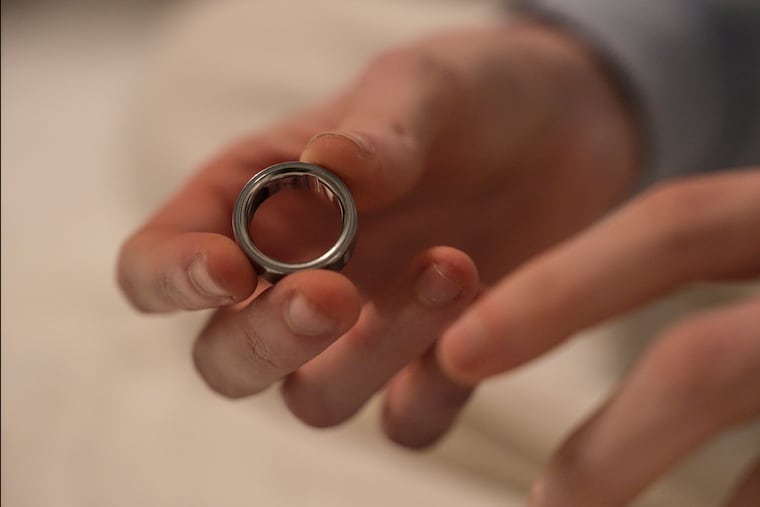
Femtech companies are generating datasets on female physiology at a pace and depth that traditional clinical research can’t match. Wearables like the Oura Ring are tracking sleep architecture, heart rate variability, and cycle-linked physiologic changes in real time across millions of users across the world — longitudinally, passively, and at scale.
This is genuinely new science and knowledge. AI-driven diagnostic tools trained on this data could, for the first time, develop reference ranges calibrated to women’s biology rather than retrofitted from male norms.
Femtech has emerged as both a corrective and a catalyst: technology-enabled solutions purpose-built for female biology, creating new data and new pressure on legacy medicine to close the knowledge gap. It is an innovation force accelerating scientific understanding that is both commercially compelling and medically necessary.
Yet, we know how, despite advances and progress, history can repeat itself. In the case of technology, it’s happening faster and at a far larger magnitude.
The women most likely to be using an Oura Ring today are educated, digitally engaged, disproportionately white, higher-income, and employed in a sector that offers premium health benefits. The women most likely to die of overdose, homicide, or even chronic disease during pregnancy — the women the NEJM data named — are not in that dataset.
Maven Clinic has been structured as an employer-sponsored benefit. When Black women gain access to Maven’s virtual care network, they engage at higher rates than white members. The demand, the need, and the willingness are there.
The bottleneck is access. It structurally excludes gig workers, Medicaid recipients, and the uninsured, not to mention the many employees whose benefits don’t include Maven. This may change with a new subscription model to Maven Clinic, but for now, again, women’s health may be a perk.
When this technology, which is effectively excluding the majority of the female population, is generating the training data for the next generation of AI diagnostics, the knowledge gap doesn’t just persist. It gets encoded. It will be amplified. It can set a new foundation.
How can the systems being built around women be designed for all of us — not only for the ones who can already afford to be seen? Philadelphia could be the answer.
Philadelphia can lead the way
Meeting with female founders and investors in recent months, I’ve been blown away by the unmatched potential we have in our city.
This was perfectly articulated in a Technical.ly article on Monday, in which the authors outline how, in addition to the medical and scientific expertise of “meds and eds,” Philadelphia offers entrepreneurs “lower operating costs, faster access to clinical partners, a collaborative ecosystem and strategic acquirers within a 30-minute radius.”
Together with our minority-majority population, the lessons we have learned from our history, and our fierce female scientists and physicians who embody grit and determination, Philadelphians can ensure we don’t build a system of precision women’s health only for the privileged, but instead for the next — and all — future generations.
My hope, as an emergency physician, public health expert, and healthcare executive, is to be able to say to all women what I said to my patient in the ED that Sunday.
Once we got her care situated, I took her hand in mine. “You never need to rationalize asking for medical attention. I’m here to help no matter what.”
Priya E. Mammen is an emergency physician, healthcare executive, and public health specialist who helps the nation’s most impactful companies integrate clinical integrity at scale.

- How do you prove you’re American?
- We are at a generational inflection point in healthcare. It’s time for Gen X physicians to assert themselves as the stewards of our profession.
- Have we decided health is a perk?
- As our central source of scientific guidance loses credibility, other experts step up
- Who will write our history?

Inquirer Opinion Newsletter