Elizabeth Hughes: There is a viable path for Pittsburgh to save its newspaper. Here’s how we did it with The Inquirer.
As publisher of The Inquirer, I believe that our own experience over the past decade offers a template for success.
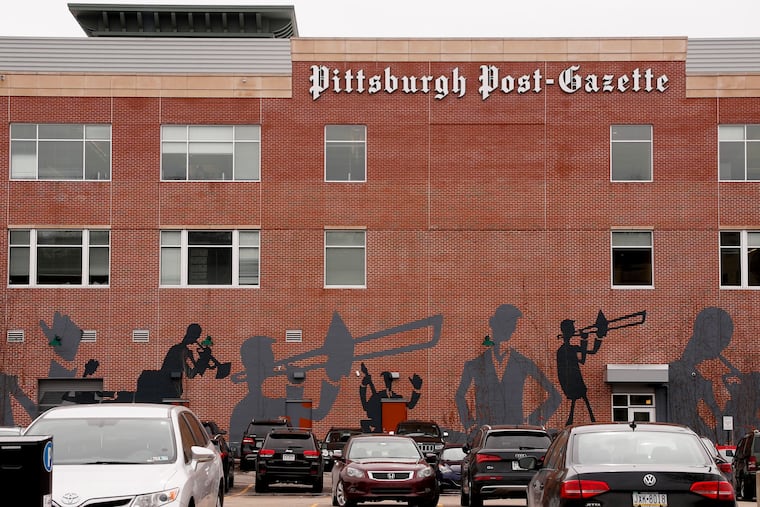
The news that the Pittsburgh Post-Gazette will soon cease publishing has, justifiably, sounded alarms across the media landscape. The end of a storied organization with deep local roots and a legacy of strong journalism should concern all who believe that a free and thriving press is fundamental to a functioning civic society.
Among the questions clamoring for answers in light of the news: What will fill the void in Pittsburgh? Will the deep pockets of the city’s many notable philanthropies provide the funds needed to support a new news organization? Will the remaining media outlets — Pittsburgh is not a news desert by any stretch — have the capacity to grow and expand? And the existential question: Will the citizens of the Steel City see the need to support local news now that it is, to an extent, imperiled?
As publisher of The Philadelphia Inquirer, I believe that our own experience over the past decade offers a template for success. It was only a little more than a decade ago that we were a struggling news organization, with an impressive history of notable journalism, but beset by warring owners, threatened by bankruptcy, and, in May 2014, up for sale on the auction block.
Redemption began with a visionary philanthropist, H.F. “Gerry” Lenfest, who set out to save The Inquirer and provided the wherewithal to do it. He established the Lenfest Institute for Journalism, our nonprofit owner, and pursued an innovative tax structure that created a for-profit Inquirer with a separate board. Both are the indispensable keys to our stability and success.
Lenfest’s generosity planted the news philanthropy seed in Philadelphia and, through the institute, established a funding mechanism that supports our journalism. His donation, in cash, allowed The Inquirer to modernize and transform from a legacy print shop to a modern multiplatform news organization.
But we have also known that The Inquirer’s long-term stability — and the ability to consistently provide quality journalism — depended on building a successful and integrated business. And that meant forging a new identity through a modern brand campaign, developing a robust marketing strategy, engineering our own path to success by building our own products, and creating new and compelling opportunities for advertisers. Significantly, it also required meeting and convincing civic and business leaders that The Inquirer was a vital asset worth investing in.
There are 200 journalists in our newsroom, and the journalism produced every day is impressive and innovative, deep and local. In the end, that is what people will pay for. And the business results? The Inquirer in 2025 had its first year-over-year increase in revenue since 2004, and an operating profit of several million.
The majority of our revenue, 70%, comes from consumer marketing, which means people are paying for our journalism; 19% is from advertising, which signals that local businesses and institutions find merit in supporting us; and 5% from syndication and other partnerships. Philanthropy accounted for 6% of revenue in 2025, and we project donor contributions ranging from 6% to 10% going forward.
Lenfest, who died in 2018, was a successful businessman before he became an influential philanthropist. He left his mark on civic and cultural institutions throughout Philadelphia. But his last great effort was to save The Inquirer — to give it the runway it needed because he believed in the importance of local journalism.
There is much work to be done, and challenges to be met, but the lasting legacy of H.F. “Gerry” Lenfest is an Inquirer that is stable and succeeding as a business.
Elizabeth H. Hughes has been the publisher of The Philadelphia Inquirer since 2020.