You can destroy a homeless encampment, but you can’t destroy our community
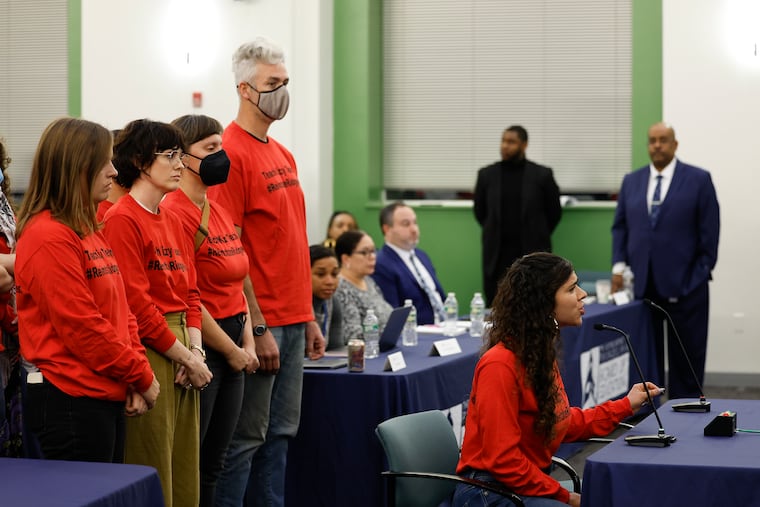
A group of unhoused people in South Philadelphia has formed a community board to advocate for their rights in the face of increased hostility from the city and developers.
Who do encampment sweeps protect? Not unhoused Philadelphians.
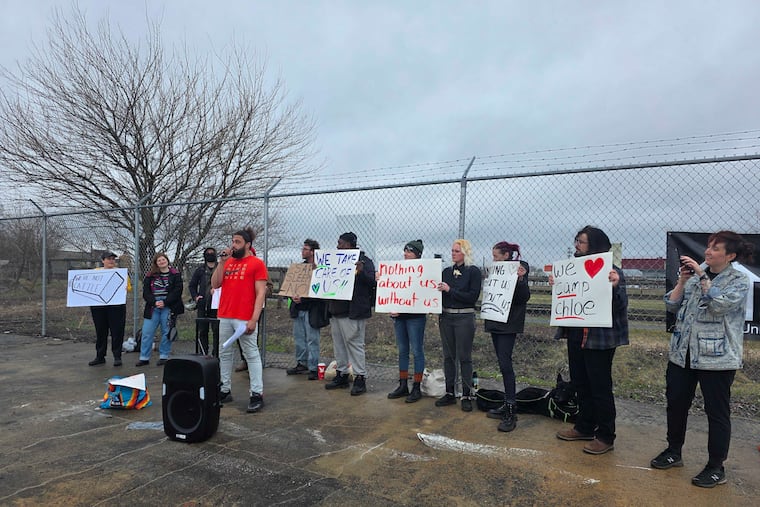
Earlier this month, after years of repeated sweeps, an encampment of South Philadelphia residents declared they are tired of bearing the cost of violent and ineffective policies.
They announced the formation of the Camp Chloe Community Oversight Board, aligned around four strategic demands of the Parker administration and Office of Homeless Services: safe sleep sites, a property receipt system for belongings destroyed during sweeps, housing-first policies, and a community oversight board composed of people with lived experience.
They are demanding to be equal stakeholders in negotiations about their fate.
Throughout her tenure, Mayor Cherelle L. Parker has overseen numerous, misleadingly named “encampment resolutions.” These sweeps, often initiated due to quality-of-life complaints and ostensibly an opportunity to connect unhoused neighbors with resources, offer no resolution at all.
In fact, these ineffective and expensive measures destroy families by displacing and separating them. Public and private sanitation workers destroy vital records, medications, and treasured possessions with impunity and excessive force.
Last week, Camp Chloe residents had their tents cut down with machetes, and this past fall, one resident even had his tent full of his personal possessions bulldozed into the Delaware River.
Camp Chloe is a chosen family. Residents share food, resources, protection, and comfort with one another.
Why does protecting encampments matter?
Ask yourself why you choose to be in community with the people you love. Camp Chloe is a chosen family. Residents share food, resources, protection, and comfort with one another. In particular, those most vulnerable to being sexually assaulted report feeling safer in the encampment than living on the street or in a shelter. Residents also describe the healing and transformative change that has taken place within their relationships.
They offer one another the support and protection the city has failed to provide.
Meanwhile, city government has said it has no power to intervene in matters of private property, but that the property owner can request city services to ”resolve encampments.” In theory and practice, the Office of Homeless Services, the Philadelphia Police Department, and the Managing Director’s Office provide the same stale offer of a temporary shelter bed, then stand aside as landscapers destroy our neighbors’ possessions and livelihoods. The residents move to a new spot, freshly traumatized, and the cycle continues with no resolution.
Instead, it is volunteer mutual aid organizers who show up consistently to provide survival materials including food, water, wound care supplies, drives to doctor’s appointments, help replacing destroyed identification documents, connections to HIV testing and treatment, and much more.
Our relationships with this community are more than just providing a service. We can tell you who in the camp can teach you about mythology or teach you carpentry. We know who takes their coffee black or with extra sugar. We trade songs we think one another might like, and we have helped each other shovel our cars out of the snow. When any of us has a bad day, we are there to comfort each other.
The University City Townhomes were demolished two years ago, destroying a multigenerational community that took decades of time and care to build, all to appease developers. That lot now sits empty and fenced off, with the promise to build affordable housing, but the community once there has already been destroyed.
What was the point?
City government wasted untold time and energy entertaining a proposal for an arena in Chinatown that would have destroyed yet another multigenerational community and site of cultural heritage. Mayor Parker chose to side with the developers and not the neighborhood, apparently unaware that she was merely a pawn in private business negotiations.
Once again, she is aligning herself with a real estate developer, Bart Blatstein, who “forgot” to pay $1 million in taxes. His property manager, James Moylan, was ousted as chair of the Zoning Board of Adjustments after he was federally indicted on embezzlement charges.
Recently, Moylan arrived at Camp Chloe to wake up residents with a cowbell. Our neighbors are not cattle. Why is the mayor of our city aligning herself with private individuals who have evaded taxes and misused public funds?
We the organizers stand in complete solidarity with Camp Chloe. We stand against developers who want to pour concrete over land that can ethically and sustainably be used to help the community flourish. The residents of Camp Chloe deserve a say in their fate. We invite Mayor Parker to come down to Camp Chloe and dignify the residents’ demands with a negotiation.
Leave the machetes, and we’ll bring the sandwiches.
Erin Cookman, Colleen Stepanian, and Kelsey León are residents and organizers in support of Camp Chloe, a group of unhoused people who have been subjected to numerous encampment sweeps. Camp Chloe is named after the encampment’s dog, Chloe, who checks in on all the residents and barks in warning of intruders.