History and ghosts haunt Philly — and echo religious zealotry from the 1700s
With the nation’s 250th birthday looming, George Whitefield is yet another contested ghost from America’s past, still haunting the present.
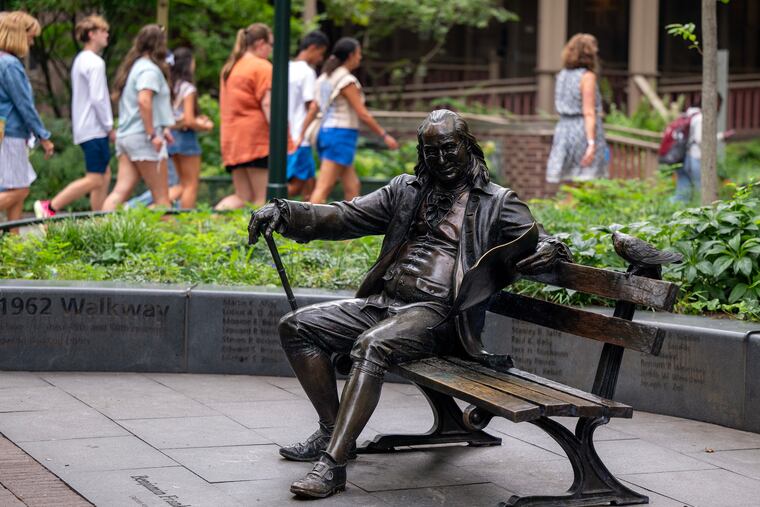
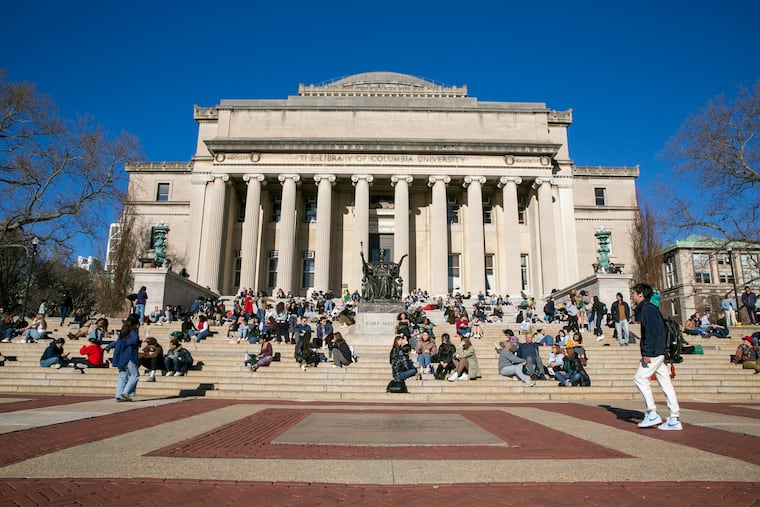
A water main break last month forced the closure of Spruce Street near the University of Pennsylvania’s Memorial Tower.
It was just the latest trouble at this busy spot, which has been fenced off for long stretches of time in recent years.
Turns out this is quite fitting.
After all, 300 years of American history remain under construction at this very site.
Visitors to Penn — which is President Donald Trump’s alma mater — used to be greeted by an imposing 15-foot statue of celebrated preacher George Whitefield (1714-1770) right outside the Quadrangle dorms, near Memorial Tower.
But campus officials dismantled the Whitefield memorial at the height of nationwide protests over George Floyd’s murder, led by the Black Lives Matter movement.
Whitefield — a revered figure among many 21st-century conservative Christians — was “a well-known evangelical preacher,” said former Penn president Amy Gutmann in July 2020.
But Whitefield also “led a successful campaign to allow slavery in Georgia. … Honoring him with a statue on our campus is inconsistent with our University’s core values, which guide us in becoming an ever more welcoming community that celebrates inclusion and diversity.”
» READ MORE: Liberals erase history, too | Jonathan Zimmerman
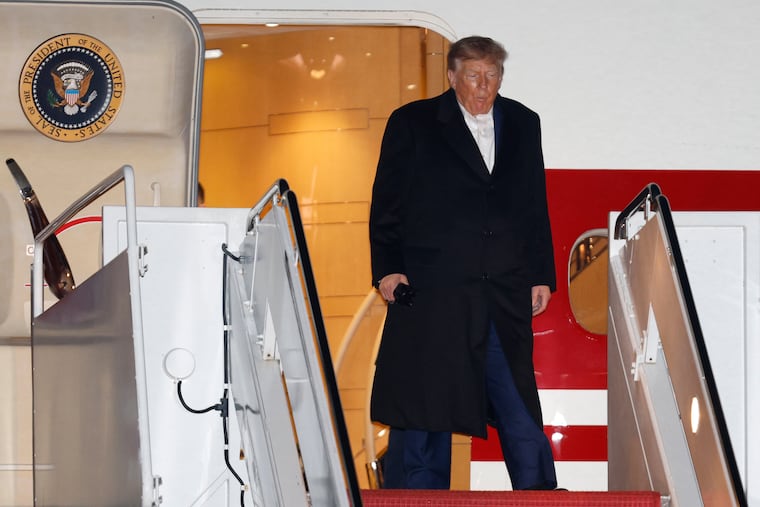
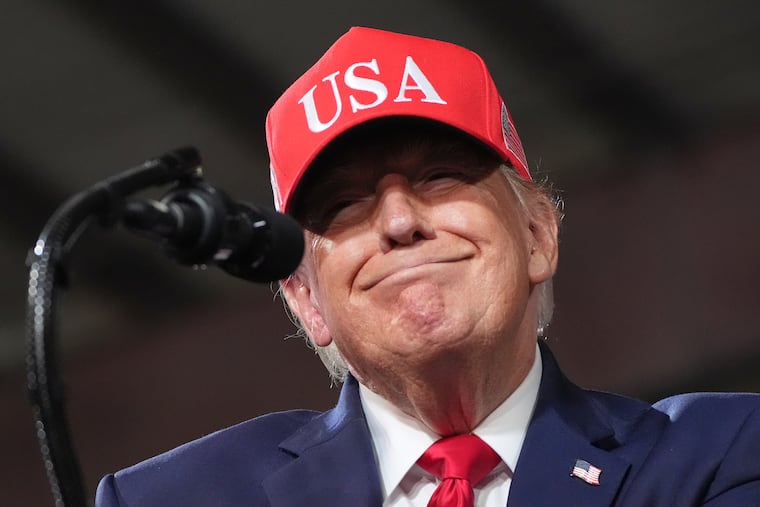
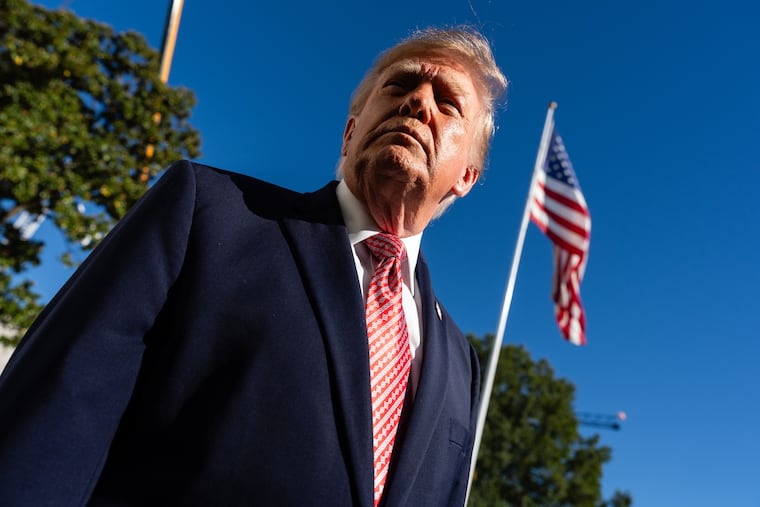
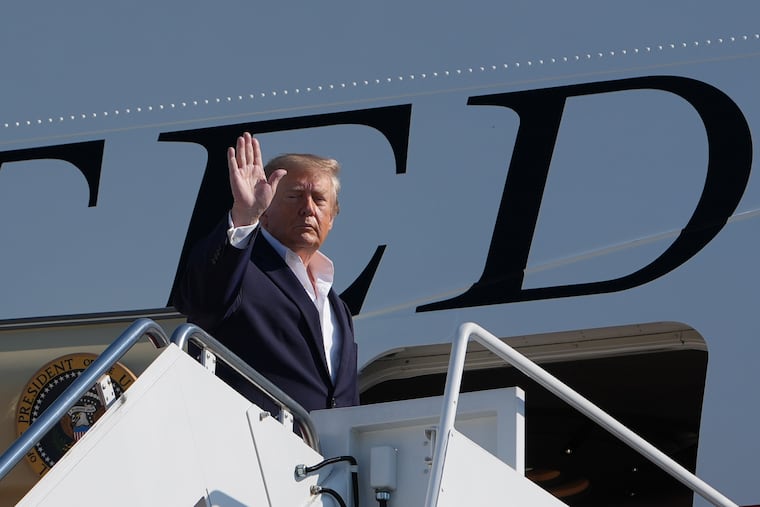
Trump, of course, has waged a relentless war on all things “woke” since his November 2024 reelection.
In fact, back in February, Trump’s Interior Department announced that a Delaware statue of Founding Father and enslaver Caesar Rodney — which had been removed from public view — would be displayed in Washington, D.C., this summer as part of America’s 250th birthday events.
And yet, even though Trump loyalists have written fawning biographies of Whitefield — and more recently compared the preacher to slain conservative icon Charlie Kirk — Penn’s Whitefield memorial remains out of sight.
That may change in the coming weeks, when a new movie about Whitefield’s friendship with Ben Franklin is released on April 3 — Good Friday — by a Lancaster County-based Christian film company.
In the movie trailer for A Great Awakening, Franklin is asked, “Was [Whitefield] part of the revolution?”
Franklin responds, “George Whitefield was the revolution.”
This sentiment has been echoed by a generation of conservative pundits and historians.
Others, however, argue that Whitefield’s links to slavery are just one of several major problems that mar his legacy — and still plague the U.S. today.
In short, with the nation’s 250th birthday looming, Whitefield is yet another contested ghost from America’s past, still haunting the present.
A Great Awakening seems to be aligned with author Randy Petersen, whose 2015 book claims that the “surprising” Franklin-Whitefield “friendship … invented America.”
Similarly, Baylor University’s Thomas Kidd called Whitefield nothing less than “America’s spiritual Founding Father,” in a 2014 biography.
And Eric Metaxas — a recent appointee to Trump’s Commission on Religious Liberty — dedicated a whole chapter to Whitefield in his bestseller, If You Can Keep It: The Forgotten Promise of American Liberty.
“(I)t’s not too much to say that the cultural earthquake began by Elvis and The Beatles … is as close as we can come to understanding what Whitfield represented,” Metaxas writes.
So why would Penn remove a statue of such an important figure?
Because even some conservatives now call out Whitefield’s ties to slavery. Baptist pastor Daniel Darling, in his 2025 book, In Defense of Christian Patriotism, celebrates a different 18th-century preacher, John Wesley, who “virulently opposed slavery … in contrast to his fellow evangelist and preacher George Whitfield.”
Ties to slavery are not the only criticism aimed at Whitefield.
To other critics, Whitefield was the first in a long line of zealots who manipulated religion to suggest that some Americans are blessed, while others are evil. That’s why J.D. Dickey’s 2019 book about Whitefield is titled American Demagogue.
The American right and left are still fighting each other like religious zealots from the 1700s.
Whitefield was part of a religious movement that exploited public fears, Dickey writes, convincing the faithful that some leaders “spoke directly to God” and were “direct participants in an unfolding cosmic trauma that was rapidly drawing to its apocalyptic close.”
Whitefield’s supporters in the 1740s went so far as to applaud his willingness to “thrust a nail of terror into the heart of sleeping souls.”
Skeptics like Boston preacher Charles Chauncey “question[ed] whether the anguish and joy [Whitefield] evoked were works of the Holy Spirit, or simply psychological disturbances,” in the words of scholar Frances Fitzgerald.
Whitefield and his allies had a “dangerous tendency,” Chauncey and others said, to accuse their critics of being not just wrong, but under the spell of evil — the pope in Rome, perhaps, or even Satan.
These were pretty much the same thing in deeply anti-Catholic colonial America.
Whitefield supporters countered that Chauncey and his followers were an out-of-touch elite, who “looked upon … the common people with an air of disdain.”
Does this sound familiar? It should.
Just a few months ago, in a column about “God and politics,” the New York Times’ David Brooks wrote: “A battlefield mentality prevails between the forces of Jesus and the forces of Satan. Fear replaces the traditional Christian virtue, hope.”
In other words, the American right and left are still fighting each other like religious zealots from the 1700s.
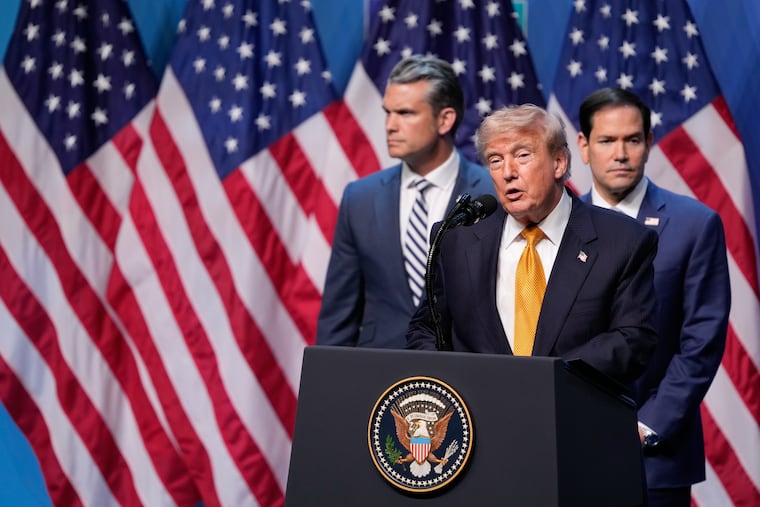
Secretary of Defense Pete Hegseth belongs to a church whose founder often claims that certain Americans will soon suffer for “making God angry.”
Billionaire moguls like Peter Thiel believe American sinners have invited an imminent apocalyptic rapture.
None of this is likely to be included in A Great Awakening.
But it’s something to consider the next time you hear that, back in the good old days, America was a unified, harmonious “Christian nation.”
Tom Deignan has written about history for the New York Times and Washington Post. He is writing a book about religion and violence in and around Philadelphia in the 1920s.

Inquirer Opinion Newsletter