Good intentions don’t build housing in Philly, and mediocre campaigns don’t win races in Pa. | Shackamaxon
This week, Councilmember Jamie Gauthier wants to produce more affordable housing, but her policy may be doing the opposite. Plus, the race for Pa. governor is set, and it’s Josh Shapiro’s to lose.
This week’s column looks into what happens when City Council members try to use a bad practice to serve the public good, and the beginning of Pennsylvania’s gubernatorial race.
Good intentions
In the first few months of this column, much of the toughest criticism has been leveled at Councilmembers Jeffrey “Jay” Young and Cindy Bass. While every district legislator participates in the tradition to some degree, these two have been the most egregious practitioners of councilmanic prerogative, which gives district Council members absolute discretion over land use and transportation questions within their districts.
Even worse, Young and Bass often struggle to offer coherent explanations for their actions. Over the past few years, I have spoken with a range of community members, local politicos, and development experts who have expressed total bewilderment about what exactly it is the pair is seeking to accomplish.
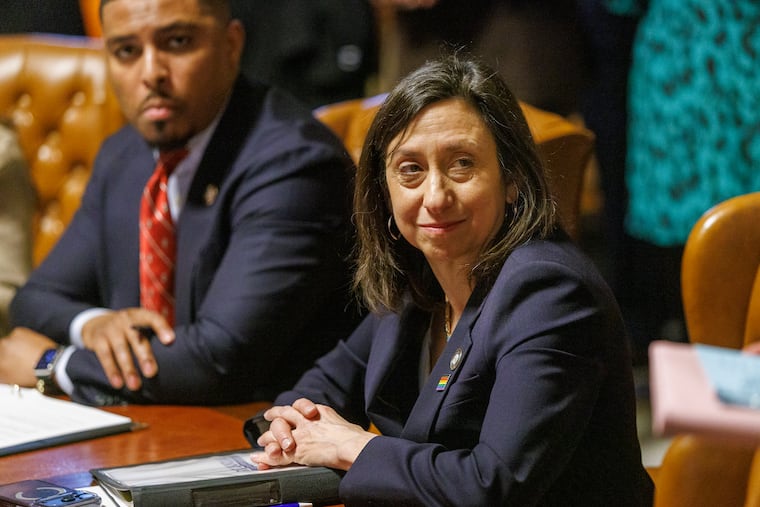
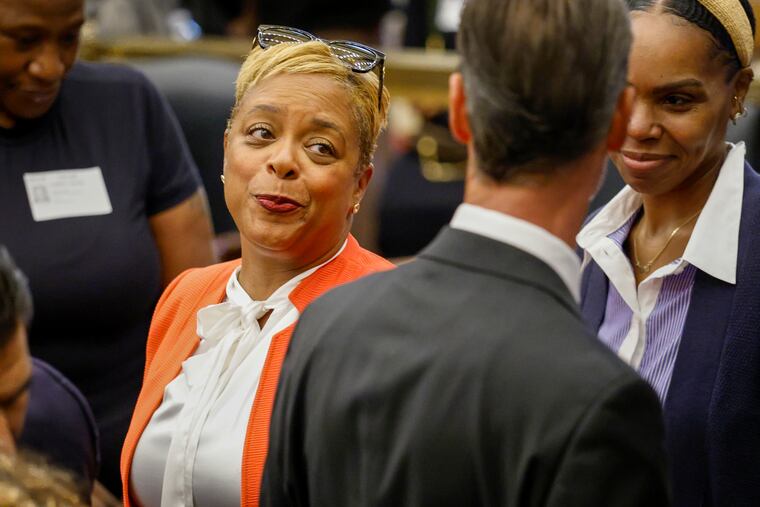
That’s not the case with 3rd District Councilmember Jamie Gauthier. Her values are clear. When Gauthier leans into prerogative, she’s not seeking to micromanage minor decisions. She even went as far as creating an exemption for her entire district that removes the need to secure a city ordinance for outdoor dining. Gauthier legislates because she wants to produce more affordable housing and prevent displacement. In many ways, it is a bold and admirable approach.
Still, when it comes to public policy, good intentions are not enough.
Middling MIN
Gauthier’s signature policy is her push for what she’s called the Mixed Income Neighborhoods overlay, or MIN. The policy, enacted in parts of both Gauthier and Councilmember Quetcy Lozada’s 7th District, builds off an existing city program, the Mixed Income Housing Bonus. Under the bonus program, developers could exceed current zoning limits in exchange for supporting affordable housing. This could be done either by building affordable units or by making a payment to the city’s housing trust fund.
MIN, however, is mandatory. It also does not come with any bonuses. For larger development projects (10 or more units), builders are required to set aside 20% of the units for low-income households. The idea is to increase the city’s stock of statutorily affordable housing, promote income integration, and allow poorer households to move to and remain in high-opportunity areas, all without costing the city a dime.
All of that sounds wonderful … in theory.
In practice, things have not panned out the way advocates had hoped. Instead of producing significant amounts of affordable housing, the zoning requirements have stifled development overall. Of the 18 major projects considered by the city’s Civic Design Review Board, only two are located within the boundaries restricted by the policy. One of those projects doesn’t include any housing at all, instead supplying nearly 500 parking spots adjacent to the Market-Frankford Line.
In an interview with Gauthier last fall, she told me she would stand by the results of MIN against the voluntary program or any other zoning program in the city of Philadelphia. Planning Commission data, however, tells a different story. In 2024, the most recent year studied, the MIN resulted in the completion of just five affordable units. The bonus program, on the other hand, created 63 affordable units and generates millions of dollars in bonus payments.
This, of course, only looks at one factor, which is the impact on affordable housing programs. It doesn’t answer the question of how many market-rate units would have been built without the requirement. Housing costs no longer affect just the poorest, as 90% of Americans live in counties where home prices and rents rose faster than income. For most people, whether they are University of Pennsylvania students or longtime residents, this private market is where they will find housing. Without enough construction to meet demand, prices will continue to rise.
The experience of cities like Austin, Texas, where rents are falling despite a surging population, demonstrates that new construction can help alleviate that pressure.
There’s also the economic impact. Development projects employ skilled workers and provide money for the city’s affordable housing programs. Without more research, we have no idea how much MIN has impacted city coffers. Before Gauthier’s program expands to more communities, the city should undertake a comprehensive investigation.
Maximum meh
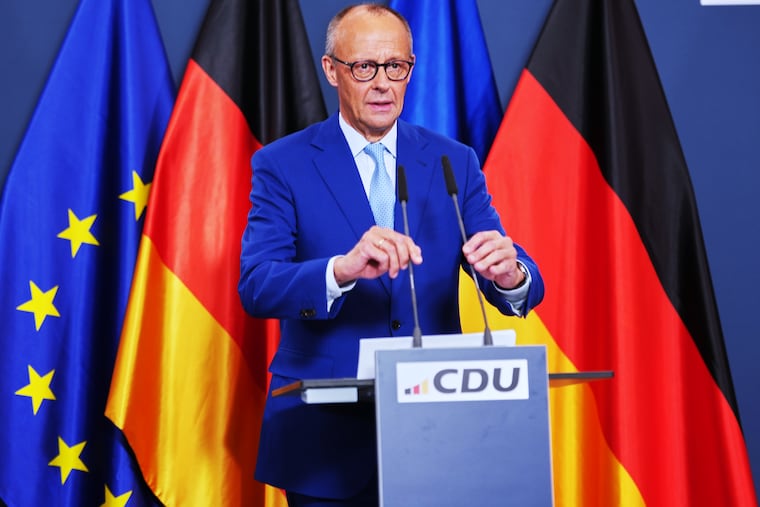
With State Sen. Doug Mastriano officially out and Gov. Josh Shapiro officially in, the Pennsylvania governor’s race has begun. With no other Republicans or Democrats expressing an interest in the position, a November matchup between Shapiro and State Treasurer Stacy Garrity looks certain.
Shapiro’s campaign launch video begins as you’d expect, with the rapid reconstruction of I-95 after a fire damaged several lanes in 2023 — a reminder of how the governor gets, uh, stuff done.
Garrity, who announced all the way back in August, has a steep challenge on her hands. Besides Tom Corbett, no Pennsylvania governor has lost a reelection bid since the ban on consecutive terms was dropped from the state constitution in 1967. Shapiro has a record $30 million on hand for his reelection bid, three times more than what he started with four years ago, the previous record. He also has a 3-0 record in statewide elections and a 60% approval rating.
This means Garrity will need to sell voters on her own ideas, rather than just banking on people souring on Shapiro. So far, it is worth asking what those ideas are.
As treasurer, Garrity’s main job is to manage the commonwealth’s bank accounts, not exactly the kind of thing that stirs the electorate. Garrity’s campaign video focuses on her biography, which notes her service in Iraq. It also lines up multiple hits on Shapiro, including on his not-entirely subtle pining for the presidency. But when it comes to the biggest issues facing Pennsylvanians, Garrity has yet to supply any answers.
Instead, the challenger used an interview with CBS 21 in Harrisburg to declare that Pennsylvania is “mediocre.” So far, that label seems more appropriate for Garrity’s campaign consultants than the commonwealth.

Inquirer Opinion Newsletter