Krasner isn’t perfect. The Pa. Supreme Court’s ruling on his exoneration push is worse. | Editorial
Ordering the state’s top prosecutor to oversee conviction reviews by Philadelphia’s district attorney is an unprecedented remedy that may create more problems than it solves.
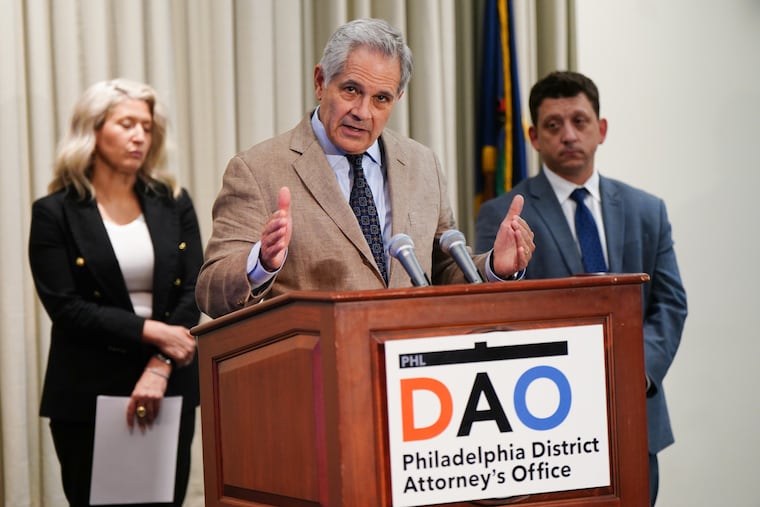
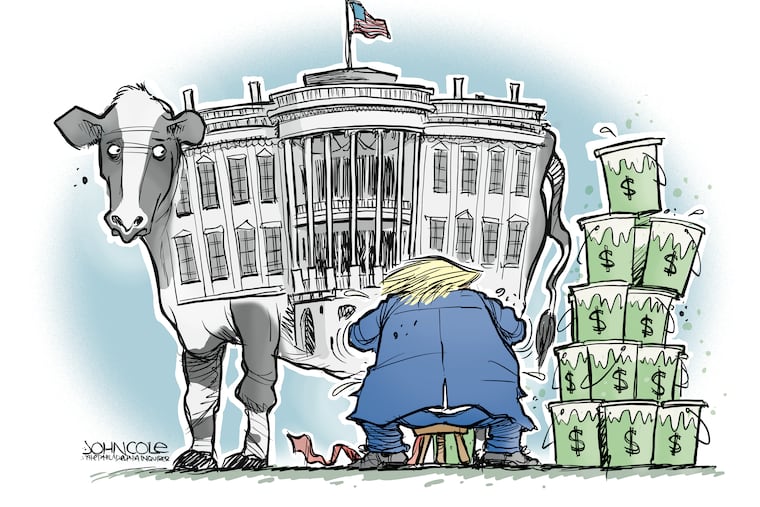
When the Pennsylvania Supreme Court authorized the state’s top prosecutor to review Philadelphia’s efforts to reverse tainted convictions, the message was clear.
The move was a stinging rebuke of District Attorney Larry Krasner and attempts by his office’s Conviction Integrity Unit to overturn verdicts it believed were marred by official misconduct.
It was also an unprecedented and dubious decision in which the cure may be worse than the disease.
Writing for the majority, Justice Kevin Dougherty found that the district attorney’s office repeatedly “made unreliable concessions unsupported by the facts and law” and “violated its duty of candor.”
The justices — Dougherty was joined by Daniel McCaffery, P. Kevin Brobson, and Sallie Updyke Mundy — ruled that any attempts by Krasner’s office to win exonerations must now be overseen by the attorney general.
Justices Debra Todd, Christine Donohue, and David Wecht disagreed, finding little to warrant such sweeping action by the court.
At the heart of the matter was the case of Lavar Brown, who was convicted in the robbery and fatal shooting of the manager of a North Philadelphia Rite Aid.
Krasner’s office believed Brown deserved a new trial because of past prosecutorial misconduct. The victim’s family accused Krasner of a conflict of interest over payments made to the district attorney by former law partners who had been involved in Brown’s case.
As Justice Wecht writes in his dissent, the court’s majority used the Brown case as a springboard to “scrutinize decisions made by the Philadelphia District Attorney’s Office in other, wholly unrelated cases.”
This board has long supported Krasner’s efforts to examine past convictions. No one should be imprisoned because of misconduct by the police or prosecutors, and the district attorney’s office has supported 59 exonerations so far.
It has been well established that some police and prosecutors have been willing to bend the rules — if not break them — in order to facilitate convictions and arrests. Unlike too many of his predecessors, Krasner has held police officers accountable for unjustified use of force, charging dozens and convicting three.
In some instances, however, victims, law enforcement, and some judges have called foul, accusing Krasner of being overzealous.
The district attorney’s office itself recently withdrew a recommendation to overturn a murder conviction, saying prosecutors had filed court documents that were “not supported by the record.” This looks less like the systemic misconduct the court described than an office catching and correcting its own mistakes.
It is also important to note that Krasner’s integrity unit has not sought to undo the vast majority of convictions. According to the district attorney, just 1.2% of the cases have resulted in his office seeking exoneration. While Krasner and his team believe in the innocence of many of these defendants, it is also important that everyone gets a fair trial — even those who are ultimately found guilty.
» READ MORE: Pa. Attorney General Dave Sunday talks Supreme Court’s Krasner ruling, abortion appeal
Adding another wrinkle to the high court’s decision is the fact that people who had policy disagreements with Krasner at the district attorney’s office are now part of the state attorney general’s office, including some of the veteran prosecutors Krasner fired upon assuming office in 2018.
At the time, Krasner thoughtlessly compared the state office to Paraguay, a reference to the flight of high-ranking Nazi officials to Latin American countries after World War II. Some of those same prosecutors will now be overseeing some of the same convictions they obtained.
Wecht’s fellow justices should consider his words carefully and rethink this oversight measure, which he called “unprecedented and unconstitutional.” A more targeted remedy — one focused specifically on the issues identified in the ruling — would have been far less troubling.
Krasner is far from perfect. In an interview with this board, he acknowledged that some errors have been made by attorneys under his supervision. But for the court’s majority to take the drastic step of removing authority from Philadelphia’s top prosecutor, more substantive charges are required.
A simple difference of opinion does not suffice.