East Market Street needs smart new development, not another ‘Disney Hole’ | Editorial
There is opportunity for growth as the Sixers and Comcast move to demolish two blocks of mostly vacant storefronts across from the Fashion District.
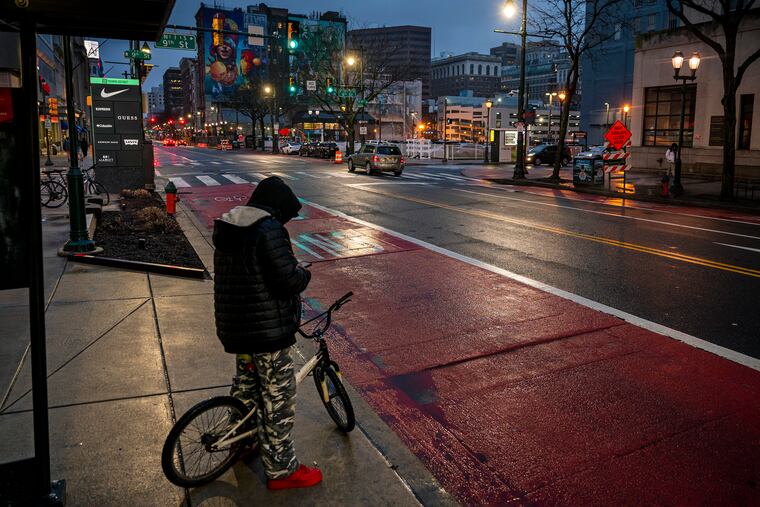
For decades, Philadelphians have asked themselves: What should we do with East Market Street?
The corridor is the historic heart of the city, linking City Hall to Independence Hall. It has quick access to five trolley lines, three subways, 13 Regional Rail routes, and two highways. These connections were all built to serve the department stores and office buildings that once dominated the thoroughfare.
Today, the area struggles with blight and vacancy.
Besides the infamous “Disney Hole” at Eighth Street, there’s a surface parking lot on the north side at 13th Street and underutilized park space between Fifth and Sixth Streets. That emptiness is growing, with the Sixers and Comcast moving to demolish a block of mostly vacant storefronts across from the Fashion District.
The rivals turned partners after a yearslong fight over building an arena on East Market Street have presented the demolition as a temporary solution. The existing buildings are low-rises, lacking the appropriate height and density for the corridor. Most of the storefronts are also empty. The resulting space could be used as part of the Semiquincentennial festivities next year, or for ancillary events connected to the different sporting championships coming to town in 2026, including the World Cup and NCAA men’s basketball tournament.
» READ MORE: Americans may go hungry, but Trump’s $300 million ballroom proceeds apace | Editorial
The development partners are reluctant to divulge any details about what their plans entail, while Councilmember Mark Squilla deferred to the East Market task force, which has its first meeting next Monday. While Market Street is definitely not getting a new basketball arena — nor the “biomedical hub” Comcast proposed as an alternative during the 76 Place debate — it remains to be seen whether the plan is to add more retail, housing, or office space, or some combination of the three to the site.
For the last 35 years, housing has driven most construction in and around Center City. There are now more than 200,000 people living between Girard Avenue to the north and Tasker Street to the south. This surge has been driven by the kind of college-educated professionals who are in high demand across many industries, but it has not been accompanied by a corresponding increase in employment opportunities. Despite strong post-pandemic job growth, Southeastern Pennsylvania is still over 100,000 jobs short, per the Brookings Institution.
It is this lack of economic activity that drives vacancies on Market Street.
» READ MORE: Voters should consider their choices carefully in judicial retention races | Editorial
To ensure all the empty lots along the corridor are sufficiently developed, the city and state should consider creating a special economic zone that offers temporary tax relief for properties and businesses, perhaps using the Keystone Opportunity Zone law, designating a Transit Revitalization Investment District, or some blend of the two. There are multiple examples to follow.
Allentown’s unique Neighborhood Improvement Zone has been credited with spurring a billion dollars’ worth of development. Similar City Revitalization Improvement Zones exist for Lancaster and Bethlehem. Additionally, Gov. Josh Shapiro and Lt. Gov. Austin Davis helped put together $600 million in public and private financing to invest in downtown Pittsburgh.
A resurgent Market Street would provide benefits for more than just Center City. As one of the most transit accessible job centers in the country, encouraging growth downtown ensures more equitable access to opportunity, produces less pollution and traffic congestion than growth elsewhere, and gives employees access to the nearby amenities that have boosted return-to-office rates elsewhere.
No matter what plan the East Market Street coalition outlines, Philadelphia can’t afford more vacant lots that sit unused for decades.