Philadelphia taxpayers keep covering the high cost of patronage | Editorial
The growing tally for lawsuit settlements against the register of wills stands at $900,000. This appalling waste would not happen if the city eliminated the office as an elected position.

If Mayor Cherelle L. Parker and City Council needed more convincing about why Philadelphia should no longer elect a register of wills, they now have $900,000 worth of reasons.
That is the amount taxpayers have shelled out in recent years to settle lawsuits by former employees who refused to play the shopworn patronage game.
This appalling waste would not happen if the city stopped electing a register of wills.
There is no logical reason for this to be an elected position. It is a back-office function that issues marriage licenses, probates wills, and maintains records of residents who got married and died.
In most world-class cities, such as New York and Los Angeles, a clerk or court office handles these mundane tasks. But in Philadelphia, the register of wills stands as a relic from the city’s corrupt and contented era of machine politics.
The sooner the elected post goes away, the sooner Philadelphia can move into the modern era. The problem is that no elected official in a one-party town has the courage to do what is right by taxpayers and push to eliminate the so-called row offices, which include the register of wills and the sheriff, another elected post with a long history of corruption and inefficiency.
» READ MORE: As nonprofits face growing pains, the city must be careful with taxpayer money | Editorial
Former Mayor Michael Nutter, who served from 2008 to 2016, was one of the few elected leaders in recent times who supported eliminating the row offices. He was successful in folding the obscure Clerk of Quarter Sessions office into the Philadelphia court system, but City Council refused to eliminate the other two row offices.
In the past decade, there has been scant talk about reforming city government or increasing efficiency — even as Philadelphia’s budget ballooned by roughly 75%.
The register of wills stands as Philly’s patronage poster child.
For four decades, the office was run by Ron Donatucci and was staffed with ward leaders, committee members, friends, and family members connected to different power players in the Democratic Party.
In 2019, Donatucci was defeated by Tracey Gordon, who previously ran for City Council, city commissioner, and state representative. Things didn’t exactly improve.
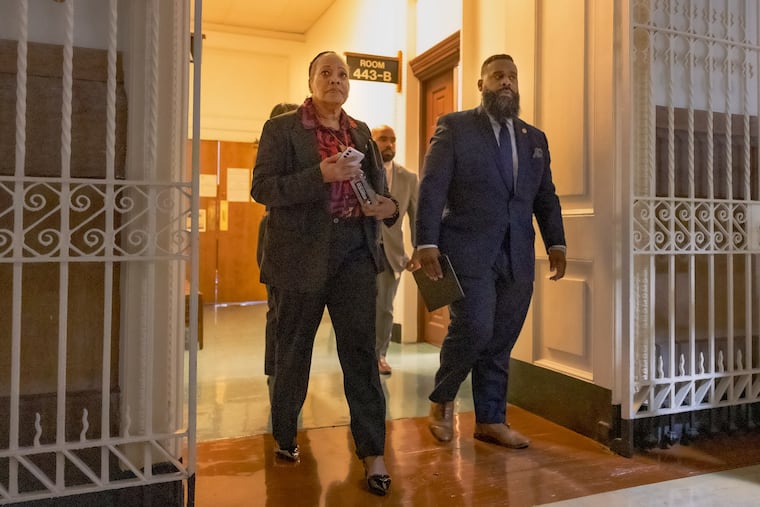
Gordon lasted only one term, but left taxpayers with a trail of lawsuits by former employees who said they were pressured to donate to her campaign.
Last week, the city agreed to pay $250,000 to a former clerk who said he was fired for refusing to contribute $150 to Gordon’s campaign. Several other former employees received six-figure payments after filing similar complaints.
Gordon told The Inquirer she “did nothing wrong.”
» READ MORE: Opening a burger place in Fishtown shouldn’t be that hard | Editorial
Gordon was defeated in the 2023 Democratic primary by John Sabatina Sr., a ward leader from the Northeast. He began swapping out old patronage hires for new ones, which led to more lawsuits.
The city has paid out $256,000 in settlements to nine former register of wills employees who filed lawsuits alleging Sabatina fired them.
Five cases are still pending, which means taxpayers will keep paying.
This Editorial Board has long called for the elimination of the register of wills and the sheriff’s office, moves that would save the city tax dollars and unending embarrassment.
The Committee of Seventy and the Pennsylvania Intergovernmental Cooperation Agency both issued reports in 2009 calling for the elimination of row offices. (The title of one was “Needless Jobs.” The title of the other was “A history we can no longer afford: Consolidating Philadelphia’s Row Offices.”)
But until voters demand change, the inefficient patronage system will grind on.

Inquirer Opinion Newsletter