Improving safety on Philadelphia’s roads is just as important as preventing violent crime in its streets | Editorial
Despite the promise of successive administrations to eliminate traffic deaths, the toll remains stubbornly high.
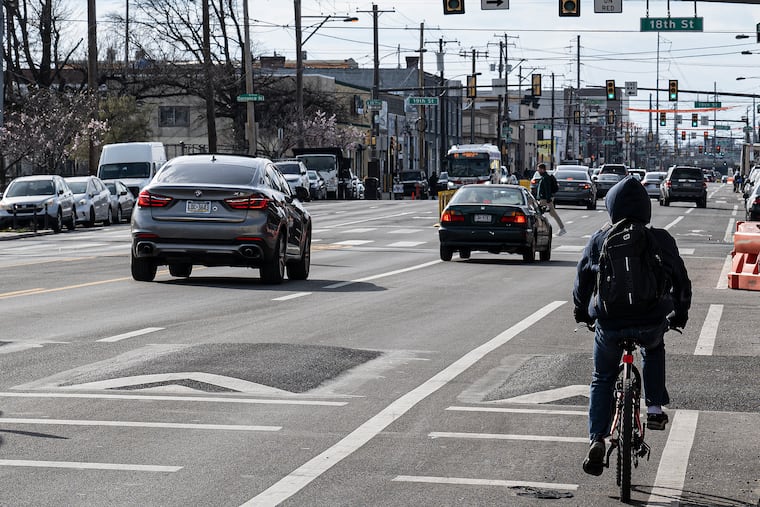
As of Sunday, there had been 21 homicides this year in Philadelphia. During the same period, 21 people died in traffic collisions in the city. It is startling that, as violent crime continues to drop to levels not seen in generations, another source of danger may now come on four wheels.
Traffic fatalities include pedestrians, motorcyclists, drivers, and their passengers, according to a tracker created by the Bicycle Coalition of Greater Philadelphia. Despite the promise of successive administrations to eliminate traffic deaths — which, like violent crime, surged during the pandemic — the toll remains stubbornly high, with 100 traffic-related fatalities recorded in 2025.
Some of this is outside of city control. Erratic driving increased nationwide after 2019, and vehicle heights and weights are increasing more rapidly than ever. This trend toward bigger cars and trucks reduces pedestrian visibility and increases the chances that a collision will result in serious injuries or death. To its credit, the city has been trying to make streets safer.
Speed cameras on Roosevelt Boulevard have saved an average of one life per month, per city estimates, since the program launched in 2020. The devices are now also present along Broad Street and in a few school zones. Despite some political hiccups, City Hall and Philadelphia’s Harrisburg delegation seem committed to gradually expanding the cameras thanks to their proven safety record.
» READ MORE: Pete Hegseth’s holy war | Editorial
A harder sell to a driving public has been so-called road diets — the reduction of travel lanes on a roadway to reduce speed — on the city’s most dangerous throughways. Although road diets can lead to as much as a 47% reduction in crashes, City Council President Kenyatta Johnson blocked the implementation of a safety proposal along the stretch of Washington Avenue that runs through his district, citing insufficient community support.
The same debate is now coming to Northeast Philadelphia’s Castor Avenue, where PennDot is planning to revamp the commercial district from Cottman Avenue to Oxford Circle.
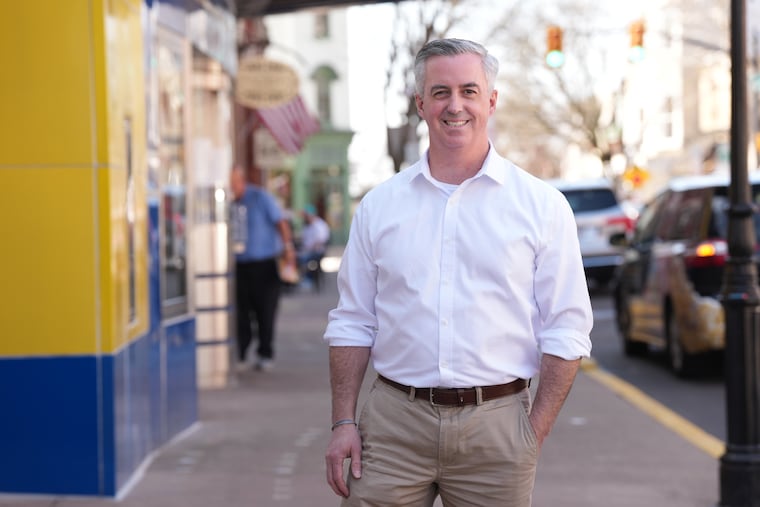
Thankfully, this plan has an advocate in State Rep. Jared Solomon. While firmly committed to public safety, Solomon has presented the revamp as an opportunity to produce a more serene and welcoming corridor that could help attract new entrepreneurs and provide a boost to existing businesses. After all, no one wants to take a stroll next to traffic whizzing by at 50 mph. The Castor Avenue project also includes new trees, streetlights, and other aesthetic upgrades.
» READ MORE: SAVE America Act is GOP’s latest attempt at voter suppression | Editorial
That is, if the courts allow it to proceed. An organization called Take Back Your Neighborhood has sued to stop the plan, claiming “irreparable harm, lack of lawful process, and disregard for public safety.” The group maintains that it doesn’t oppose the concept as a whole, just the narrowing of the road from four lanes to three. Like many road diet opponents in neighborhoods around the country, they believe the result will be a traffic nightmare.
PennDot disagrees, arguing the plan will only increase trip times by, at most, 38 seconds. By eliminating the swerving that can occur as impatient motorists navigate between buses and left-turning vehicles, the plan should make traveling more predictable. It will also make it easier to walk to or take transit in the area.
Meanwhile, the unsafe conditions continue. On Sunday, a 58-year-old man was struck by a minivan at Castor and Cottman. According to police, he is in critical condition.
Just as officials and communities welcome and support strategies to prevent violent crime, it is essential to embrace plans that prioritize road safety.