One crazy day that defined the decline and fall of the American empire
Over 24 hours, a deadly jet crash, militarized airports, insider trading, and a killer heat wave define a nation in rapid decline.
When the clock struck midnight on Monday, the day was already off to a horrific start. Rescue crews were racing in the dead-of-night darkness toward a runway at New York’s busy LaGuardia Airport. There, the cockpit of Air Canada Express Flight 8646 was a crumpled mess after it had collided 22 minutes earlier with a fire truck that had been speeding toward an unrelated emergency.
As the rescue workers frantically rushed more than 40 injured passengers to nearby hospitals, and recovered the bodies of two young Canadian pilots who died instantly in the crash, the frazzled air traffic controller who had been on duty poured out his emotions to an arriving pilot.
“We were dealing with an emergency earlier,” the controller said. “I messed up.”
“No, man,” the pilot responded, “you did the best you could.”
That pilot spoke for most of a nation, which understood that while human error might have caused America’s second fatal jetliner crash in 14 months, the true blame rests with a broken system in a broken nation whose priorities jumped the tracks a long time ago.
Airports were understaffed and poorly run even before Donald Trump returned to office and exacerbated the crisis with the DOGE-driven layoff and then partial rehiring of hundreds of newer Federal Aviation Administration employees. Pilots had been warning for months that LaGuardia’s chaotic runways and their near misses were a crisis waiting to happen. Aviation expert Brian Fielkow told the Guardian, “Let’s stop pretending we don’t understand the conditions in which this is happening.”
The rise and inevitable fall of great empires are the powerful sea currents that drive human history. Yet, unlike a world war (Sept. 1, 1939) or a massive attack (Sept. 11, 2001), there is rarely a specific time stamp for the end of great powers. The downfall comes in the Hemingway fashion — gradually, then suddenly.
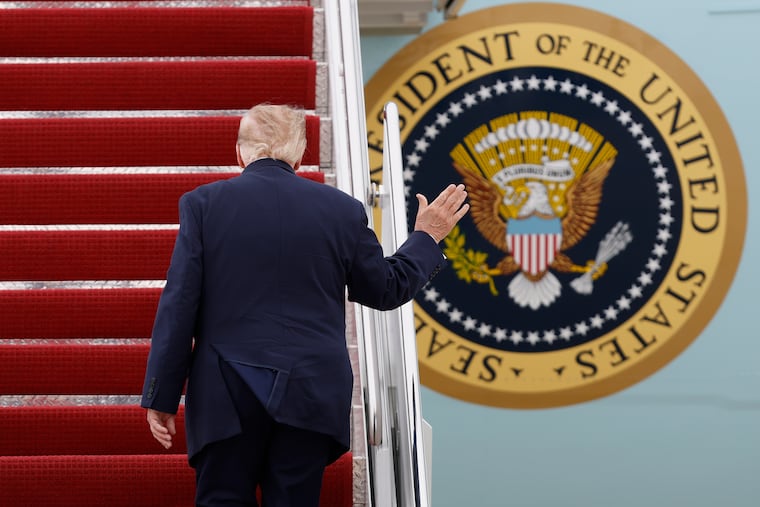
If any one day could define the hazy transition from slow to rapid decay — 24 hours that truly defined the decline of the American empire from its pedestal as a global superpower — it would have to be March 23. This was morning in Trump’s America — from waking up to the jarring news of the jetliner crash to a daylong series of aftershocks, with much of the anxiety induced by the unsteadiness of the man at the top.
But make no mistake: The daylong gyrations from the Oval Office merely shook a nation already in a long tailspin, with a dysfunctional government refusing to fund basic human needs and infrastructure while pouring the vast wealth of what was once the world’s leading economy into endless wars abroad, a police state at home, and a billionaire kleptocracy devouring the societal food chain. All while clinging to a fantasy that the planet’s ecosystem isn’t rapidly collapsing.
The midnight jet crash shut down LaGuardia — the main domestic hub for America’s biggest city — for much of the day, but a related rot was spreading across the entire U.S. aviation system.
The money for the airport security screeners of the Transportation Security Administration had dried up 38 days earlier, trapped in a stalemate over the inhumane tactics of its sister agency, U.S. Immigration and Customs Enforcement. Missing a monthly paycheck, many TSA workers had now called out or quit the agency, creating lines as long as four hours at the most understaffed airports.
“This is insane,” said one frustrated traveler who arrived Monday at Houston’s George Bush Intercontinental Airport to find lines as long as three hours at the only two open checkpoints, after 36% of its TSA staffers called out. Typical were horror stories like those of Nay Dedrick, who missed her flight home to Boston after more than six hours in line, and who finally went to sleep for the night inside the terminal.
Remarkably, the Trump regime found a way to add insult to the travelers’ injuries. Over the course of this chaotic Monday, more than 100 armed ICE agents wearing tactical gear flooded into more than a dozen major U.S. airports, including Houston and — when it finally opened in the afternoon — New York’s LaGuardia.
No matter that ICE agents don’t have any training in screening passengers and — at least at the start of the operation — largely stood around in clumps, often just looking at their phones. Their intimidating presence in military garb was a constant reminder of America’s priorities as a police state with unlimited resources for keeping people in line, even when they are trapped on a line.
“We cannot normalize ICE inserting itself into our daily lives,” U.S. Rep. Joaquin Castro of Texas wrote on Instagram. And yet, this was exactly what was happening on Monday, after a warped series of events — National Guard troops patrolling city streets from Los Angeles to Washington, D.C., masked ICE thugs snatching day laborers off city streets, the military blowing up fishing boats in the Caribbean, and the relentless bombing of faraway lands — had made militarism, death, and destruction seem as American as cherry pie.
Yet, as this immoral military monster metastasizes through the body politic, there are also vast sums of money to be made in the embers of a dying republic. At 6:50 a.m. Monday, not long after the corpses of the dead pilots had been recovered in Queens, traders across town on Wall Street noticed some unusual activity.
Trading in the oil futures market — already volatile because of the supply shocks of the Iran war — was jolted by a surge of $580 million in bets that the price of crude would fall. At almost exactly the same moment, traders in S&P 500 futures, lulled by a fairly quiet morning, suddenly saw about $2 billion in bets that the stock market would go up.
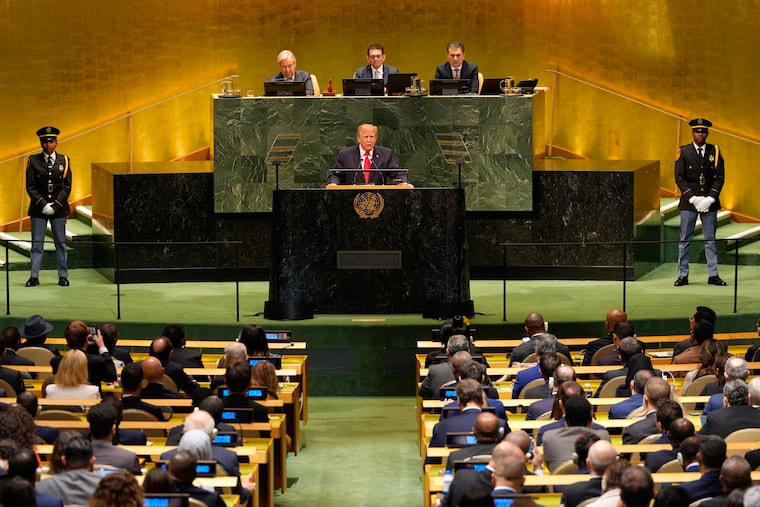
Enter Trump. On Saturday night, Trump had issued a literally bombastic threat on his Truth Social account, saying that unless Iran reopened the Strait of Hormuz to ship traffic, the United States would blow up the enemy’s power plants, which experts agreed would be a war crime. At 7:05 a.m. Monday came the head-spinning reversal: a claim that peace talks were underway, and the bombing plan was on hold.
» READ MORE: Death to prediction markets profiting on war | Will Bunch Newsletter
That was good news for Iran and for anyone who doesn’t like war crimes, but it was even better news for those remarkably well-timed futures traders, who reaped tens of millions of dollars from a surging Dow and a plunge in crude prices that was based solely on the president’s unsupported claims.
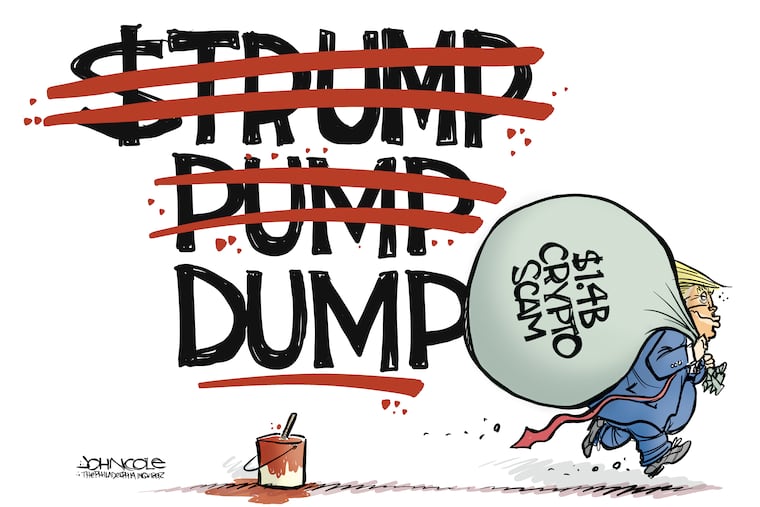
The most plausible explanation was insider trading by friends or family or even officials in the Trump regime who knew the market-moving news from POTUS was coming. But good luck finding out who did it. Just like the FAA and TSA, the U.S. Securities and Exchange Commission has been downsized and neutered within Trump World, and its enforcement chief up and quit after reportedly clashing with higher-ups about investigating trades tied to the Trump family.
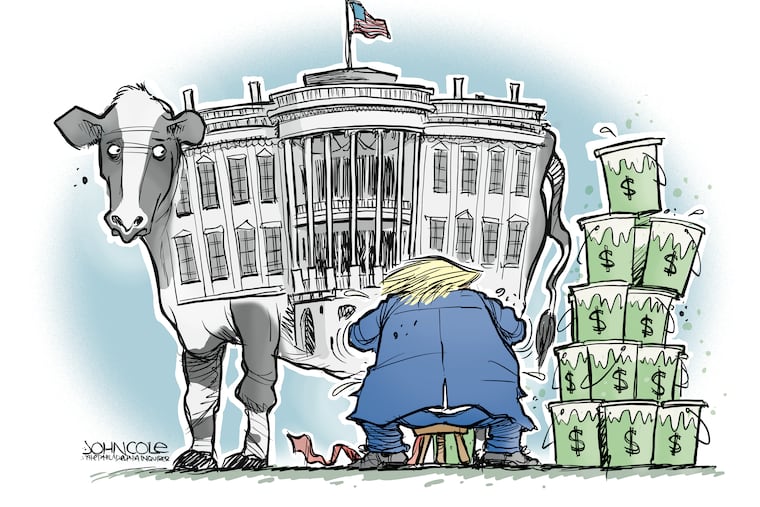
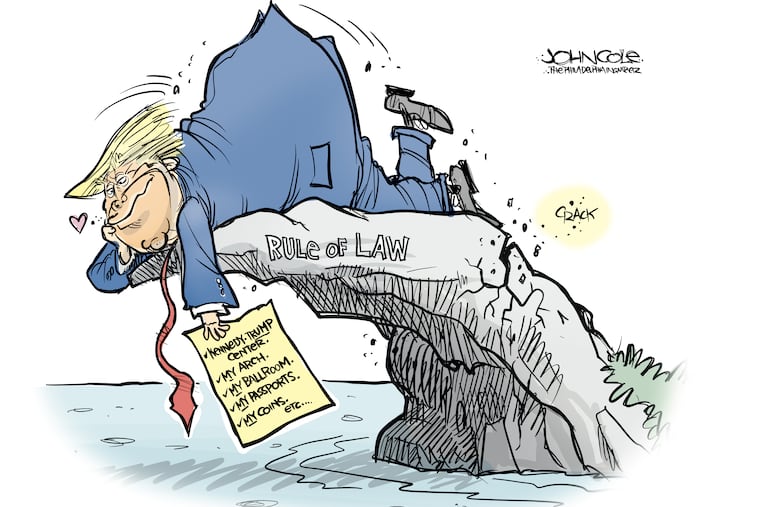
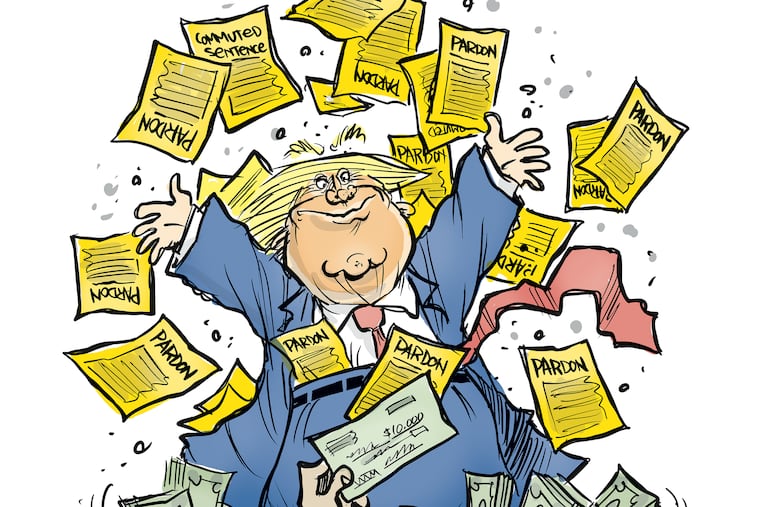
Monday was a window into the world dictators want to see, with a public intimidated by armed men in airports and too demoralized to fight blatant corruption, amid a race to extract every last dime as America becomes just another failing Trump casino.
And yet, the ultimate cancer that will destroy a depraved and decadent America from within didn’t even make the front page or the top of the hour on Monday’s news. While the Wall Street grifters were still counting their dollar bills, the sun rose over Phoenix and pummeled the Arizona desert with record March heat for a sixth straight day.
By 11:55 a.m. local time, the mercury at Phoenix Sky Harbor International Airport had hit 94 degrees — an all-time record for March 23 — on the way to a high of 100. The scientific group World Weather Attribution reported that the over-the-top heat wave baking the American West this month is driven by fossil-fuel production, that “without climate change it would have been virtually impossible for the event to occur.”
The irony that this was happening as the president of the United States was threatening war crimes to keep oil tankers afloat while his cronies were getting rich trading oil futures was almost unbearable — but it gets worse. As Phoenix burned, the Trump regime announced it was spending $1 billion in tax dollars to prevent a French firm from building offshore U.S. wind farms that would have reduced our dependence on the fuels causing both climate change and world war.
This is how liberty dies — with thunderous denial. Denial that oil, coal, and gas are destroying the planet. Denial that America is addicted to gambling. Denial that a citizenry deprived of butter but shown guns won’t rise up to overthrow a king. Denial that the insiders can’t take their ill-gotten gains with them when they are as dead as the democracy they’ve cremated.
It was 6:30 p.m. local time when one last jolt of karma shook Port Arthur, Texas, the epicenter of American oil production. The rattling of windows and an order to shelter-in-place shocked a community that looked out to see a plume of black smoke from an explosion at the massive Valero refinery.
The good news that no one was seriously hurt, and that the blast seemed to be an industrial accident and not war-related terrorism, only slightly diminished the latest outpouring of toxic pollution — and the power of metaphor. The stench of burning oil choked the airways of a hopelessly addicted nation as the sun set not only on March 23, but on an American century.

Sign up for the Will Bunch Newsletter