Letters to the Editor | April 8, 2026
Inquirer readers on Philadelphia’s parking glut and the SAVE America Act.
The war at home
I greatly enjoyed Albert M. Carter’s fascinating piece about his experience transitioning from growing up in Philly to living in Dubai, United Arab Emirates. Mr. Carter is a talented writer, and his article was so full of feeling that it was extremely impactful. What he wrote and the beautiful photos he included — two of them taken with beautiful mosques in the background — illustrate the fact that Islam is, for the most part, a peaceful religion, a fact many Americans must come to accept.
Left unmentioned in his fascinating piece was the complicated history of our country, especially with regard to racial and ethnic prejudice. Islam is the official religion of the UAE, but the country is by no means intolerant at present with, for example, a large Christian population.
The chaos Mr. Carter experienced in Germantown is, of course, one legacy of America’s greatest sin — our adoption of slavery — the forced migration of large numbers of people, and the tragic fact that those enslaved were torn away from their cultural roots. As expressed in Woody Allen’s brilliant film Zelig and other works like Alex Haley’s Roots, forcing people to deny their heritage can produce severe consequences. Mr. Carter’s description of a relatively peaceful Dubai, even at a time of war, provides us with a powerful incentive to learn to truly respect one another’s cultural origins, and finally make the U.S. a peaceful melting pot.
John Baxter, Toano, Va.
Reduce lot parking
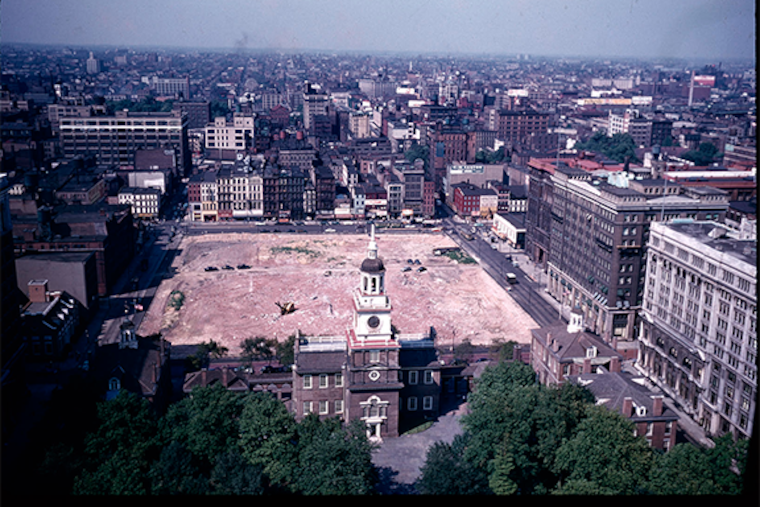
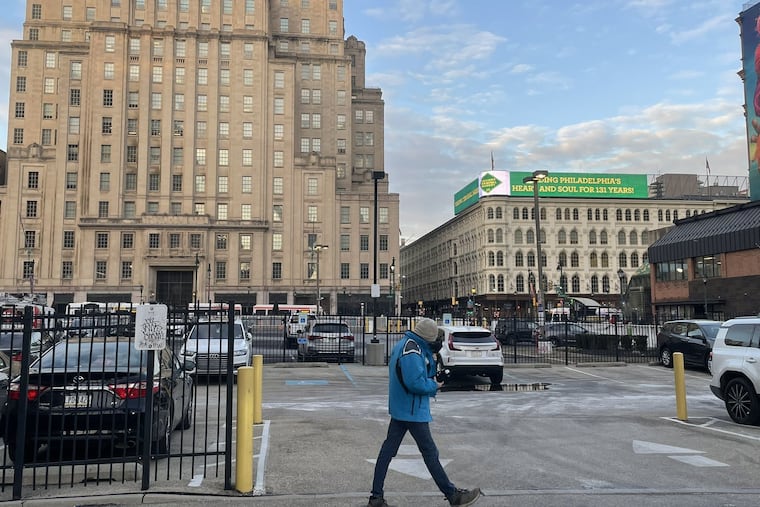
As Inga Saffron noted, sacrificing Center City’s real estate to parking lots is a dead-end proposition. The lots are undertaxed, and they rob residents of potential housing locations, transit access, green space, and basic beauty. Surrendering acres of real estate to cars obstructs the interests of our residents, neighborhoods, and quality-of-life considerations.
The solution: end parking minimums, stop approving new surface lots in Center City, and prioritize mixed-use development. Moreover, limiting the incentives to drive into Center City can also help, especially improvements to public transit and building more (and safer) bike lanes. I would not rule out congestion pricing, which has been effective in Manhattan.
This is not just a question of planning; it’s about justice, housing, and basic aesthetics. Philadelphia should phase out downtown parking lots, put that land to more productive use, and ensure every public parcel truly serves the public good.
Maron Fenico, Philadelphia
. . .
Inga Saffron’s latest column comes tantalizingly close to identifying a solution for Center City’s parking glut before veering away. She quotes experts saying the city’s property tax “under-assesses vacant land,” and that fixing this imbalance “might nudge” owners to build. That’s right, but there’s a more precise name for the appropriate fix: a land value tax.
Land value tax means taxing land more and taxing buildings less. This would directly attack the holding pattern Saffron describes. Owners who pocket parking revenue on long-paid-off lots while awaiting a “big payday” would face costs proportional to their site’s location value. The 17th and Pine lot, surrounded by Rittenhouse Square homes worth millions, would become expensive to leave idle via the increased land tax and cheaper to develop through the decreased building tax.
Unlike license caps or variance reform, the column’s main suggestions, a land value tax works through the price system continuously, without requiring the city to guess which lots are “ready.” It makes land hoarding costly everywhere, automatically.
Pittsburgh had a land value tax for most of the 20th century, helping it avoid the worst of Rust Belt decline. Now, there is talk of bringing it back. Philadelphia should consider the same.
Russell Richie, director of strategy and impact, Progress and Poverty Institute, board treasurer, 5th Square Advocacy, Philadelphia
If not now, when?
If there ever is a time to employ the Constitution’s 25th Amendment, it has to be now. The amendment, which outlines the process for removing a sitting president from office, could and should have been used during Donald Trump’s first term. There was talk about the need to invoke it because of questions about the soundness of his mind. If Vice President Mike Pence and a handful of cabinet members had an ounce of political courage, Trump’s presidency would have abruptly come to an end long before he was voted out of office in 2020. The insurrection he spurred on Jan. 6, 2021, wouldn’t have happened. Today, it is not even debatable that mentally, intellectually, and morally, this version of Trump has become a wrecking ball — a wanton lawbreaker whose every statement must be fact-checked. With most of the Republicans in Congress as his accomplices, he tramples democratic norms, has undermined the economy, devastated the environment, tainted the courts, weaponized the U.S. Department of Justice, and eroded whatever trust the rest of the world might have once had in America’s credo: “E pluribus unum” — “Out of many, one.” Imagining 2 1/2 more years of a declining, insensible Donald Trump in the White House is a dreadful thought.
David Kahn, Boca Raton, Fla.
Temple makes the grade
I am writing to applaud the recent announcement that Temple University has earned an “A” grade in the Anti-Defamation League’s 2026 “Campus Antisemitism Report Card.” This prestigious rating, which recognized Temple as being “Ahead of the Pack,” is a testament to a concerted, top-down effort to ensure Jewish students, staff, and faculty feel safe, respected, and welcomed on campus.
This accomplishment is a direct result of strong, proactive leadership. Board Chairman Mitchell Morgan and President John Fry have shown unwavering dedication to making Temple an inclusive institution. Under their guidance, the university took decisive actions to revamp its campus policies, explicitly addressing antisemitism in its student conduct codes and tightening policies on discrimination, harassment, and even masked harassment.
In a time when antisemitism has unfortunately risen on many college campuses, Temple’s improvement from a “C” grade to an “A” demonstrates that proactive, swift, and consistent leadership can create real, positive change.
By investing in safe campus spaces, condemning acts of hate, and enforcing policy, Chairman Morgan and President Fry have set a standard for universities nationwide. Their dedication to combating hate and fostering a welcoming environment for all is a model for our community.
Bart Blatstein, founder and chief executive officer, Tower Investments Inc., Philadelphia
Can’t withstand scrutiny
Sen. Dave McCormick has taken issue with a recent Inquirer editorial critical of the controversial SAVE America Act. In doing so, he revealed a woeful lack of familiarity with Pennsylvania’s history relating to voter ID legislation. A voter ID law was enacted in Pennsylvania in 2012. Within two years, the law was challenged in court and found in Applewhite v. Commonwealth that it created unwarranted impediments to voting, in violation of the Pennsylvania Constitution. The court’s ruling was compelling enough that then-Gov. Tom Corbett, a Republican, did not seek an appeal. Based on a thoughtful and thorough assessment of the evidentiary record, the court determined that “[Proponents] have not identified a sufficient state interest to justify the Voter ID Law’s incursion into the fundamental right to vote, since a speculative harm [voter fraud], for which there is no evidence, does not suffice.” The Applewhite opinion should be recommended reading for anyone harboring genuine concern over voting process integrity in Pennsylvania (or elsewhere), as it clearly shows that the pro-voter ID position, as articulated by Sen. McCormick, cannot withstand scrutiny.
Patrick J. Hagan, Ardmore
. . .
How thoughtful of Sen. Dave McCormick to mansplain to us girls who were silly enough to take our husbands’ names how easy it will be to vote under the proposed SAVE America Act. For a while there, I’ll admit, I was nervous, even seeking my husband’s wise counsel instead of my own.
But McCormick assures us that states will be directed to “accommodate” married women who change their name by “allowing” applicants (like me) to sign sworn statements, submit supporting evidence, and be certified by an election official.
I have been voting under my married name for 47 years, casting my first vote when McCormick was in grade school. I have served as a poll worker for over 10 years, have never missed an election, and just attended my second No Kings march. Women like me don’t need to dig up their marriage licenses to prove anything.
McCormick shows his hand, admitting that “I lost my first statewide election by 950 votes.” He says every vote counts — but not the votes of females like me, who make up about three-fourths of married women.
I have so much more to say — but it’s time for me to scrub the toilet, cook dinner, and do all that other womanly stuff that is so much more important than voting.
Rosemary McDonough, Narberth
Join the conversation: Send letters to letters@inquirer.com. Limit length to 150 words and include home address and day and evening phone number. Letters run in The Inquirer six days a week on the editorial pages and online.