Letters to the Editor | Dec. 29, 2025
Inquirer readers on the redactions in the Epstein files and a proposal to ban cell phones in Pennsylvania's schools.
To ban or not to ban
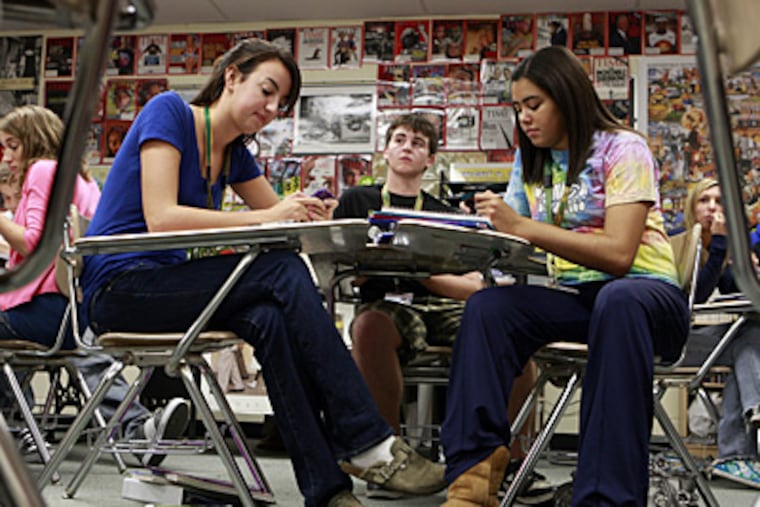
As a high school teacher of over 20 years, I read with great interest the opinions of State Rep. Mandy Steele and professor Christopher J. Ferguson about a possible cell phone ban in schools. While both raise valid points, each of their pieces reflects one of the biggest problems in education today. Like so many other articles and opinion pieces about education, there is a glaring lack of input from classroom teachers. More than anybody else in the field of education, teachers see and feel the impact of phones on students in the classroom. How refreshing it would be if policymakers and so-called experts started giving teachers more input into such important decisions. It never ceases to amaze me how many people suggest what is best for students, yet have little to no experience actually teaching in a K-12 classroom. Teachers do not all agree, and they are not always right, but they are certainly worth listening to. Classroom teachers are experts; it’s just a shame they aren’t treated as such.
Patrick Oswald, Downingtown
. . .
In his recent op-ed, Christopher J. Ferguson argues against banning cell phones, characterizing them as “one-size-fits-all” approaches and suggesting that their efficacy is not supported by research. Ferguson maintains that “intuition” has motivated support for school cell phone restrictions, and notes that “intuition is often wrong, which is why we need good science studies.” As a retired clinical psychologist, I couldn’t agree with him more on that point; however, the evidence he cites to support his anti-ban position is thin and vague at best. In contrast, psychologist Jonathan Haidt’s widely acclaimed and meticulously researched 2024 book, The Anxious Generation, sets the gold standard for scientific analysis of this important topic. Haidt’s evidence-based documentation of smartphone harms clashes directly with several statements Ferguson makes without providing any specific supporting evidence. In the end, he jumps to his own conclusion, that “the problem with schools is schools, not cell phones,” and claims that “the data are already in,” showing that cell phone bans fail to produce benefits. Of course, we will need more data to conclusively demonstrate their effectiveness, because bell-to-bell bans are still in their infancy and have been enacted in a minority of states. In the meantime, however, the evidence of adverse social and emotional consequences associated with children’s access to smartphones is too compelling to casually dismiss.
Marcie G. Lowe, Oreland
Redacted Epstein files
It’s the 18 and a half minute gap from the Watergate tapes all over again.
Sam Goldwasser, Bala Cynwyd
Join the conversation: Send letters to letters@inquirer.com. Limit length to 150 words and include home address and day and evening phone number. Letters run in The Inquirer six days a week on the editorial pages and online.