Letters to the Editor | March 9, 2026
Inquirer readers on the war in Iran and the hypocrisy in some quarters over the removal of historic landmarks.
War in Iran
For decades, Iran has been a persistent adversary of the United States and its allies. Since the 1979 seizure of American hostages, the Islamic Republic has emerged as one of the world’s leading state sponsors of terrorism, backing groups such as Hezbollah in Lebanon, Hamas in the Palestinian territories, and the Houthis in Yemen.
The record is extensive. In 2011, Iran plotted to assassinate the Saudi ambassador to the United States. It has also been implicated in repeated attacks on exiled dissidents in Europe (such as the murders of Mohammad Reza Kolahi Samadi in Almere, Netherlands, Shapour Bakhtiar in Paris, and Fereydoun Farrokhzad in Bonn, Germany). U.S. courts have also found the regime responsible for providing direct assistance to al-Qaeda in the 1998 bombings of American embassies in Nairobi, Kenya, and Dar es Salaam, Tanzania, and the 2000 attack on the USS Cole. This is in addition to Iran’s long-running pursuit of nuclear weapons and its pattern of bad-faith negotiations on that front.
Seen in this light, the events of the past week were neither sudden nor surprising. History suggests the world is safest when the United States plays an active role in making it so.
C. Manuel Contente, Philadelphia
. . .
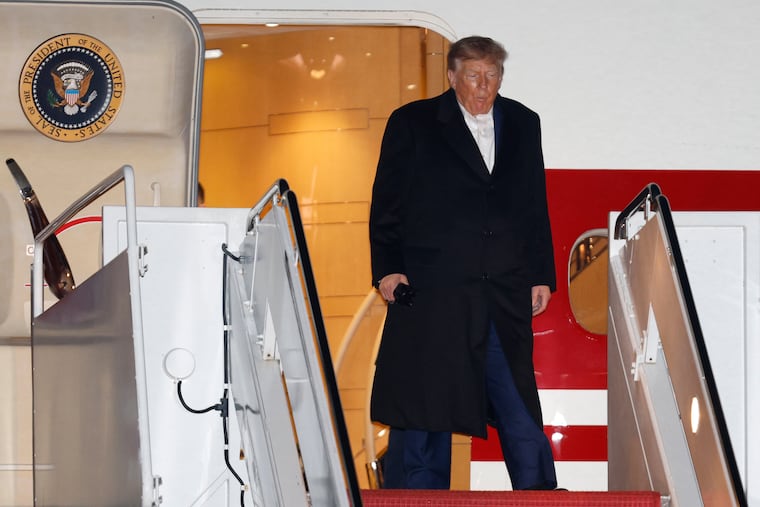
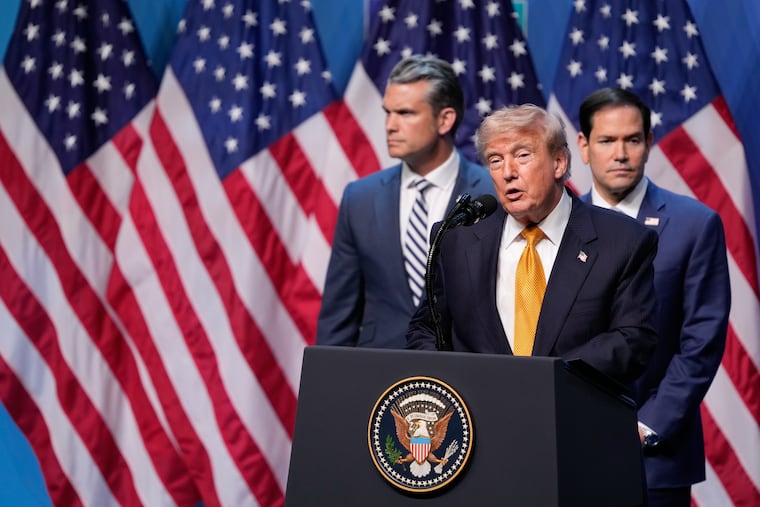
Both Pennsylvania senators voted against the war powers resolution to limit the Trump administration’s ability to wage war.
I was working in the U.S. Embassy in Baghdad when it was attacked in late 2019. Eight days later, I had evacuated to a U.S. Consulate guesthouse in Irbil when Iran launched ballistic missiles at Iraq; some hit U.S. forces in Irbil. Both attacks were responses to escalating violence on the part of the first Trump administration. After repeatedly downplaying what happened to the troops, the Pentagon admitted that more than 100 service members suffered traumatic brain injuries; one later died by suicide.
When the sirens went off, I realized the guesthouse’s body armor was too big for me to move in. But moving didn’t matter; nothing on the compound could withstand a missile attack. Neither could any of the buildings Iraqi families huddled together in, typing out text messages on their phones to their loved ones, like I was.
Civilians all over the Middle East, as well as U.S. troops there, have been thrown into that state of needless vulnerability, terror, and chaos because President Donald Trump acted without congressional approval to attack another nation. He’s started an illegal war and, in doing so, set off cycles of uncontrollable violence and immeasurable cost to everyday Americans.
We have more in common with people all over the world than we do with the tiny handful of elites and their enablers — including both John Fetterman and Dave McCormick, who are gambling with all of our lives.
Maura O’Brien, Ardmore
. . .
The war in Iran has spread to a dozen Middle East countries. The bombing campaign has no endgame strategy. We are having trouble getting U.S. citizens out of harm’s way. There’s a likelihood that conservative leadership will continue in Iran. U.S. casualties have just begun. And our allies are, at best, dumbfounded. What possibly could go wrong?
The Rev. Richard Fernandez, Philadelphia
. . .
The goal in the war against Iran is ostensibly to remove the current regime and destroy that nation’s infrastructure so that it can no longer threaten Israel and other Western nations. The strategy is akin to that used in the Israeli attacks and destruction of Gaza. These may work in the short term, with the main side effect of propping up the increasingly unpopular Trump and Netanyahu regimes. The long-term price tag will not come due in perhaps either of their lifetimes. That price is the creation of a generation of bitter and uncompromising foes, who have, as children and young people, watched their families, homes, and hopes be devastated by the blunt force trauma of the U.S. and Israeli war machines. This new generation, now in their teens and 20s, will form an even more implacable and united force as their humanity is arrogantly dismissed and their resolve hardened.
The result, I fear, will be not the spread of peace throughout this troubled region (bombings will continue until peace is restored), but the spread of hatred among a people, many of whom had once looked to America as a beacon of hope and promise of a future in which they could participate and thrive. Instead, a rising generation of hardened resistance will make the current regimes, which the U.S. and Israel are trying to exterminate, look benign in comparison. The true path to peace in the Mideast is not the wide road of indiscriminate war, but the narrow path of diplomacy, which requires patience and an appreciation of the long game. Donald Trump and his enablers in Congress are looking for quick results, but the long-term repercussions of their actions will affect us for generations to come.
Joe Sundeen, Yardley
Taking a stand
I am a lifelong Phillies fan. Each spring, I wait with anticipation for the sights and sounds of the baseball season and make plans to attend games at Citizens Bank Park. This year, however, I cannot reconcile my love of the Phillies with my disgust at Citizens Bank’s financial investment in the companies that build and operate immigrant detention centers. The poor conditions and mistreatment at these centers have been well-documented in the media, and they have no place in our democratic society.
In 2019, most lenders, including JPMorganChase and Wells Fargo, ceased their investments with GEO and CoreCivic, companies that build and operate private prisons and immigrant detention centers. Citizens Bank, on the other hand, is still doing business with them.
I am heartsick to think that support for our Fightin’ Phils could, in any way, flow to these inhumane detention centers. I will not be purchasing any Phillies tickets or merchandise until Citizens Bank stops its financial relationship with GEO and CoreCivic, and I urge all Phillies fans to do the same.
Mira Rabin, Philadelphia
Erasing history
I totally disagree with Jonathan Zimmerman’s point that liberals should agree to have statues of enslavers remain in place for there to be equity with those who sought to remove the information about the people enslaved by George Washington at the President’s House site.
Statues aren’t erected to just tell a story; they are intended to honor the subject. In 2026, can we finally agree that human slavery is immoral, reprehensible, and deserves not the slightest honor? Yes, our great leader Washington held people in bondage, so our view of him is mixed: He did some great things, but in this respect, he was terrible. That’s why we need the panels: to make sure the contradictions are clear. His case may be considered somewhat unique, but there is no reason for anyone who profited from slavery to be singled out for praise. Liberals and conservatives can surely share the same view of this.
Sandra Choukroun, Penn Valley
. . .
Jonathan Zimmerman makes an interesting point about liberals wanting to remove the statue of Caesar Rodney, but I think he misses an important distinction: A statue honors the person, and I don’t believe an enslaver should be honored. However, an informative plaque at an appropriate place, noting that he was a revolutionary hero and also kept people in bondage, would be appropriate.
The plaques at the President’s House did just that.
Barbara Gold, Philadelphia
Join the conversation: Send letters to letters@inquirer.com. Limit length to 150 words and include home address and day and evening phone number. Letters run in The Inquirer six days a week on the editorial pages and online.