Letters to the Editor | May 13, 2026
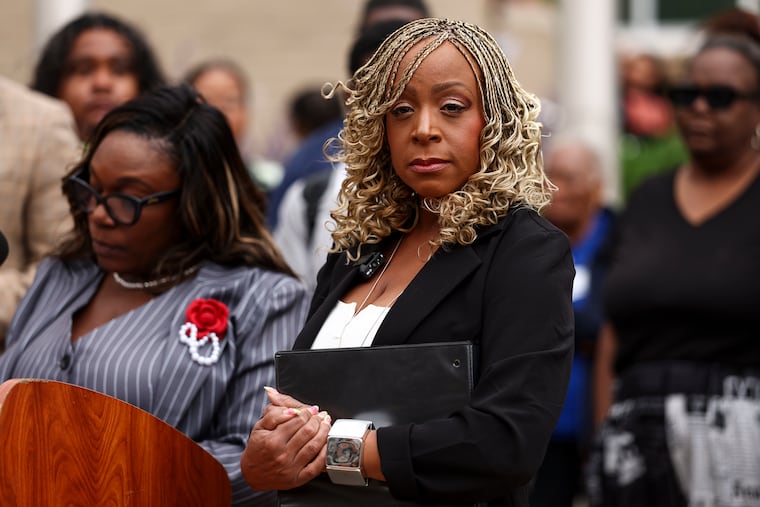
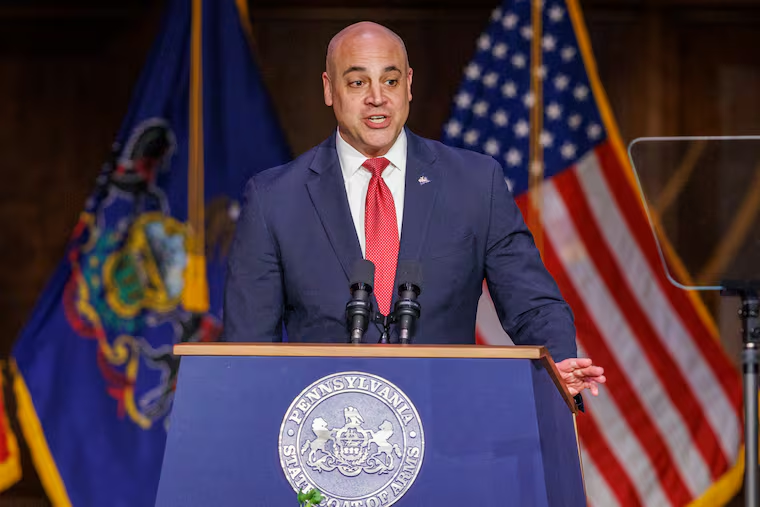
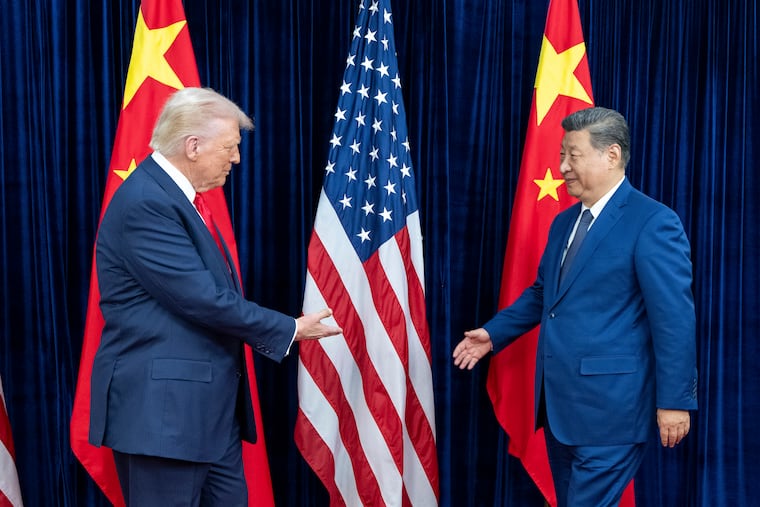
Inquirer readers on dysfunction in the Philadelphia Sheriff’s Office and President Trump’s meeting with President Xi Jinping of China.
Nation of immigrants
As the nation gears up to celebrate its 250th birthday, it’s worth noting a small historical detail: only the original 13 colonies are actually turning 250. The rest of the country joined later because people packed up, moved west, and settled in territories that were not theirs. From the perspective of the Indigenous nations already living there, those settlers looked an awful lot like immigrants.
Yet, no one is suggesting that Texas, Wisconsin, or California should politely sit out the Semiquincentennial because they weren’t around in 1776. We’re told that, for the sake of unity, everyone gets to celebrate — even the states that didn’t exist yet. Apparently, when it comes to national pride, we’re very flexible about who counts as “original.”
But when today’s immigrants seek opportunity — the same way those early Americans did — suddenly movement becomes a crisis. The country that expanded through relentless migration now treats migration as a threat. Policies meant to curb illegal immigration increasingly sweep up legal immigrants, too, as if the mere act of arriving were the problem.
As we celebrate 250 years of a nation built by people who moved, settled, and started over, maybe we should acknowledge the irony. The United States didn’t just tolerate migration — it depended on it. Without it, we’d still be hugging the Atlantic coast and arguing over who gets to use the harbor.
Steve Abramovitz, Cherry Hill
Fare is fair
Motorists are subject to many regulations, permits, driving tests, seat belts, etc. Yet, the riders of all of these e-bikes and scooters are not. I see many scooters with two occupants — which even the manufacturers say is a very bad idea. I often see scooters sailing through intersections — ignoring stop signs or red lights. Why is this allowed? And how are they not being ticketed?
Nancy Cappiello, Philadelphia
He’s incredible
In her column about China’s designs on Taiwan and the importance of continued American support for the independent island, Trudy Rubin acknowledges that a military attack — a “frontal assault” — is unlikely, and worries instead that Beijing could try to implement a maritime and air blockade, and use propaganda and threats to compel the Taiwanese to submit. Maybe we can take some comfort in observing how the U.S. has used these tactics in its own backyard since the Monroe Doctrine, and how poorly the tactics have worked. Ms. Rubin then suggests that these efforts could morph into a shooting war. Does it seem, based on recent history, that such a development would come from Beijing or Washington? It must be a difficult needle to thread for our president to convince his counterpart that blockades and economic coercion are verboten — even as he implements those same policies against Cuba. But never fear: We are fortunate that Donald Trump is a master of diplomatic nuance and building trust with world leaders.
JP Black, Philadelphia
FDR vs. Trump
President Franklin D. Roosevelt “embraced foreign allies to fight authoritarianism,” according to the recent op-ed by James Roosevelt Jr. and Henry Scott Wallace. Unfortunately, FDR did not “fight authoritarianism” until he was forced to — when Japan attacked Pearl Harbor and Nazi Germany declared war on the United States.
During the 1930s, President Roosevelt maintained normal trade and diplomatic relations with the Hitler regime. From 1933 until late 1938, he never criticized the Nazis’ persecution of German Jews. The Roosevelt administration publicly apologized to the Nazis when New York City Mayor Fiorello La Guardia criticized Adolf Hitler. The president allowed U.S. diplomats to attend the mass Nazi Party rally in Nuremberg in 1937, and his administration helped the Nazis evade the American Jewish community’s boycott of German goods in the 1930s by permitting the Nazis to deceptively label their goods with the city or province of origin instead of “Made in Germany.” FDR also pressured Interior Secretary Harold Ickes to remove sentences critical of Hitler from speeches that Ickes planned to deliver in 1935 and 1938.
President Roosevelt also supported the infamous Munich Agreement, which gave Hitler the strategic Sudetenland region of western Czechoslovakia, in exchange for empty peace promises. FDR never criticized the Nazi regime for remilitarizing the Rhineland region (1936), annexing Austria (1938), or gobbling up the city-state of Danzig (1939).
Even after the Germans launched World War II, in September 1939, FDR continued to maintain relations with Nazi Germany, and when the Germans installed their puppet Vichy regime in occupied France in 1940, Roosevelt maintained friendly relations with the Vichyites — even to the point of denouncing Charles de Gaulle’s Free French for liberating two Vichy-held islands near Newfoundland in 1941, and forcing refugee-rescuer Varian Fry to leave France because his activities annoyed the Germans and the Vichyites.
Rafael Medoff, director, The David S. Wyman Institute for Holocaust Studies, Washington, D.C.
Shutter sheriff’s office
The Philadelphia Sheriff’s Office has worn out its welcome. The Act of Consolidation in 1854 merged the two distinct entities of the City of Philadelphia and Philadelphia County. Many of the businesses of the county government have since been absorbed by the city government. The sheriff’s office is a 19th-century anachronism that continues to exist because it is a political patronage cesspool that benefits the political parties, especially the party in charge. It is beyond time to abolish the sheriff’s office and put the few remaining tasks it performs under city control.
Stephen Cooney, Pottstown
Defined by actions
As a Jewish Philadelphian, I found Jonathan Zimmerman’s recent column headlined ”Memo to Democrats” politically suspect and morally abhorrent. Anyone who is more concerned about which words are used than the horrific impact of the Israeli military’s destruction of Gaza has no business offering advice to elected officials, least of all to one like Chris Rabb, who has a track record of moral consistency.
Moreover, Zimmerman fails to acknowledge that Israel’s elected officials and leading members of the government clearly and repeatedly state their genocidal goals. Finance Minister Bezalel Smotrich said it would be “justified” to “starve two million” Palestinians in Gaza, seeking the collective destruction of a civilian population. Prime Minister Benjamin Netanyahu regularly invokes “Amalek,” a biblical tale of genocide, when calling for the destruction of Gaza.
In a supposed debate over diction, Zimmerman’s omission of the very words used by the people implementing a genocide doesn’t just debunk the premise of his argument, but lays bare its moral failures.
Sonya Meyerson-Knox, Philadelphia
Name-dropping
In a recent letter to the editor, Wayne Williams expressed his displeasure with Donald Trump wanting to put his name and picture on buildings, documents, and organizations. I’m no fan of this president, but I think it’s great: What better way for Trump to constantly remind us that he is responsible for the terrible condition of our country?
In fact, I almost wish he would put his name on every public building in Washington to ensure we don’t forget about the importance of thoroughly analyzing and vetting the person we elect to sit in the Oval Office.
So, Donald, keep reminding us of all the work we have to do to repair all the damage you have done. Sometimes we have short memories — and this is too important to forget.
Jim McGogney, Marlton
Join the conversation: Send letters to letters@inquirer.com. Limit length to 150 words and include home address and day and evening phone number. Letters run in The Inquirer six days a week on the editorial pages and online.