Letters to the Editor | May 26, 2026
Inquirer readers on charter school funding and how President Trump’s $1.8 million “anti-weaponization fund” has rekindled another compensation debate.

Families deserve more
In its recent editorial on the school district’s rightsizing efforts, The Inquirer Editorial Board got this right: The process matters. But a fair process requires something Philadelphia has never had: an authorizer with no financial stake in the outcome.
My organization, Philadelphia Charters for Excellence (PCE), represents 70 brick-and-mortar public charter schools serving approximately 65,000 students — families who exercised their right to decide where their children would learn best. We take academic accountability seriously. When a school is not delivering for children, that must be addressed.
What we cannot accept is a system in which the Philadelphia School District serves as the sole judge of whether public charter schools — who are treated as direct competitors for enrollment and funding — should continue to exist. That is not accountability. That is a proven, structural conflict of interest. A 2023 independent legal review by Ballard Spahr confirmed it. The editorial board left this entirely out of its analysis.
Public education funding in Pennsylvania follows the student. Attributing a $300 million operating deficit primarily to charter schools, while current state funding inequities and the district’s own operational costs go unexamined, is an incomplete accounting and paints an inaccurate picture of what Philadelphia’s public charter school students legally deserve.
PCE acknowledges and appreciates accountability. Our litigation is not an effort to avoid accountability, but rather to ensure standards are applied lawfully and consistently, not shifted in ways that disproportionately harm Philadelphia’s most underserved communities.
Washington, D.C., built an independent charter authorization model in 1996. It works. Philadelphia’s children deserve exactly that. Nothing less.
Cassandra St. Vil, CEO, Philadelphia Charters for Excellence
Charm exists everywhere
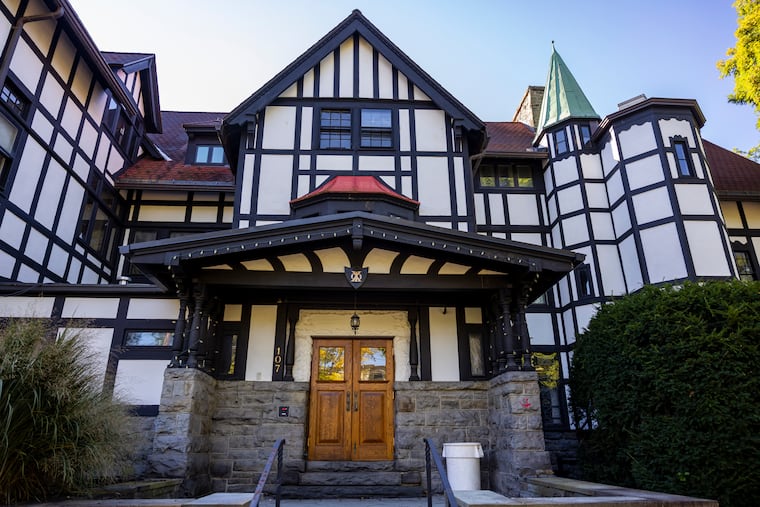
I am troubled that Black homeowners are made virtually invisible by The Inquirer’s real estate and housing writers. A glaring example of the oversight is the recent article regarding the charm of vestibules.
I lived in a home with a vestibule flanked by two French doors and an intricately designed marble floor. As a child, my best friend and I would play jacks or pick-up sticks in this very special space during bad weather. One of my fondest memories of my vestibule is that it was the site of a two-foot-tall lemon plant grown from a solitary lemon seed.
My family first bought a home in North Philadelphia in the early 1900s. Back then, it was a thriving community of aspirational Black homeowners. Over the years, negative narratives — i.e., slum, ghetto, and “Badlands” — have been attached to these neighborhoods by the mainstream media, and, in turn, there is little positive attention paid to Black homeowners. However, now that gentrification has taken hold, the unique qualities of these homes are suddenly in vogue.
Is it that The Inquirer writers have no connection to Black homeowners? Or is it that The Inquirer has no intention of being inclusive in its reporting of real estate and homeownership?
Karen Warrington, Philadelphia
An old debate
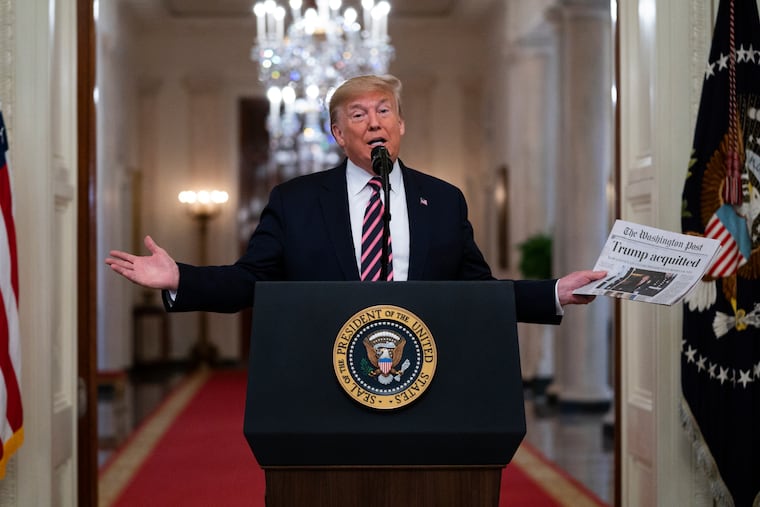
The Trump administration’s announcement of a $1.776 billion federal fund to compensate his political allies has blown open a much older debate. As Cornel West noted last week: If Washington can mobilize nearly $2 billion to redress the politically aggrieved, it can no longer claim the cupboard is bare for the descendants of the enslaved.
The truth is that both Britain and America have a long history of paying massive reparations — they simply paid them to white enslavers. The question is no longer whether a fiscal mechanism exists, but who is deemed worthy of receiving it.
In 1833, British taxpayers took on a £20 million loan — 40% of the national budget — to compensate 46,000 enslavers for their “loss of property.” Today, that sum represents an economic power of roughly £106 billion ($132 billion).
The enslaved and their descendants received nothing.
This generational wealth sustained families for centuries, including that of Richard Grosvenor Plunkett-Ernle-Erle-Drax until 2024, whose family still retains Drax Hall, the ancestral Barbados sugar plantation.
America’s record is identical. Under the 1862 D.C. Compensated Emancipation Act, enslavers in the nation’s capital received up to $300 per person. Even when enslaved men enlisted in the Union Army to fight for their freedom, the federal government paid a further $300 per person to their former captors in the border states.
Again, the enslaved and their descendants received nothing.
While governments stall, private blueprints have set a successful precedent. The Scott Trust, owner of the Guardian, committed £10 million to restorative justice to atone for its founders’ ties to cotton grown by enslaved people. Harvard has committed $100 million to address its historical ties, and the University of Glasgow established a £20 million reparative initiative.
On an individual level, aristocratic descendants like Laura Trevelyan and David Lascelles launched the Heirs of Slavery collective to pour personal wealth into Caribbean educational funds, while in America, heirs of the DeWolf family, whose ancestors were the largest merchants of the slave trade in United States history, have funded community repair and reconciliation.
The fiscal mechanisms are ready. As Washington proves this week, the missing ingredient has never been the money. It has always been the political courage to do the right thing.
Richard Romm, West Sussex, U.K.
Join the conversation: Send letters to letters@inquirer.com. Limit length to 150 words and include home address and day and evening phone number. Letters run in The Inquirer six days a week on the editorial pages and online.