As school district looks to rightsize, underperforming charters must also face scrutiny | Editorial
While demographic trends have contributed to the decline in district enrollment over the years, it is undeniable that the growth of charter schools has played an important role.
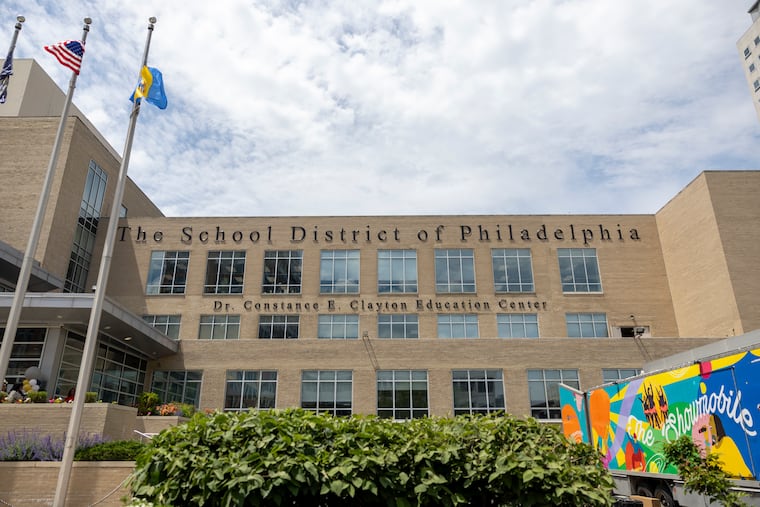
Philadelphia’s Board of Education took initial steps last week to close two charter schools, as Global Leadership Academy Southwest at Huey and Philadelphia Montessori Charter School were both recommended for nonrenewal. While this move is not directly related to the district’s facilities plan — which includes shuttering 17 traditional schools — it is also hard to separate the two.
Although demographic trends like smaller family sizes have contributed to the decline in district enrollment over the years since its post-World War II peak, it is undeniable that the growth of charter schools has played an important role.
Philadelphia charter and cyber charter schools currently educate nearly 80,000 students, roughly 40% of the district’s overall student population. That number captures nearly the entire falloff in enrollment since 1997, when district schools educated 200,000 children.
Charter schools also compete with traditional public schools for resources, making up roughly a third of the district’s overall budget. According to an analysis by the Public Interest Law Center, charter costs have risen by $587 million over the last three years, which is roughly double the district’s $300 million operating deficit.
When charters first came to Philadelphia, they were billed as a way to test out alternative educational methods and help students escape “failing schools.” The idea was that by giving parents additional options, the district could help ensure more students have access to a quality education.
In practice, the results are mixed.
Some charter schools do have sterling academic records. Others do not. In some cases, like Franklin Towne Charter, there are credible accusations of picking and choosing which students would gain acceptance. At Philadelphia Montessori, one of the schools that faces potential closure, test scores align with district averages (12% math proficiency and 22% in reading). At Global Leadership Academy Southwest at Huey, just 2% of students achieve math standards, and 10% are proficient at reading.
Meanwhile, some groups have rejected the school board’s efforts to regulate charters. Philadelphia Charters for Excellence has sued the district, arguing that enrollment caps and performance standards represent a violation of the state’s charter law. The African American Charter Schools Coalition pushed for a 2023 report into allegations of bias in the renewal process. The investigation did not find evidence of intentional acts of discrimination, but did find that Black-run schools “encountered unique challenges under its regulatory processes.”
» READ MORE: City Council’s threats over the school closure plan won’t help Philadelphia’s students | Editorial
While fairness is an essential component of any governmental process, so is accountability and fiscal responsibility. Both charters and traditional public schools share the pressure of constrained resources. In an ideal world, the district would be able to boost teacher pay, renovate all of its schools, and avoid closures. Given the fiscal realities facing the district, tough choices are required.
Still, it is also important that the board gets the process right, including examining any mitigating factors.
Roughly a third of students at Philadelphia Montessori are neurodivergent, which indicates the school is likely not engaged in the kind of selective admissions other charters have been accused of. This is similar to the situation at Lankenau Environmental Science Magnet High School, where 24% of the students have an individualized education plan. It may be the case that simply moving students into a different building will have a limited effect on overall spending, and both schools offer a unique educational offering.
As the district moves toward needed improvements and adjustments, the school board is right to apply scrutiny to all the schools under its purview.
Editor’s Note: An earlier version of this editorial misstated the percentage of students at Lankenau Environmental Science Magnet High School who have individualized education plans. The correct figure is 24%.