Letters to the Editor | May 7, 2026
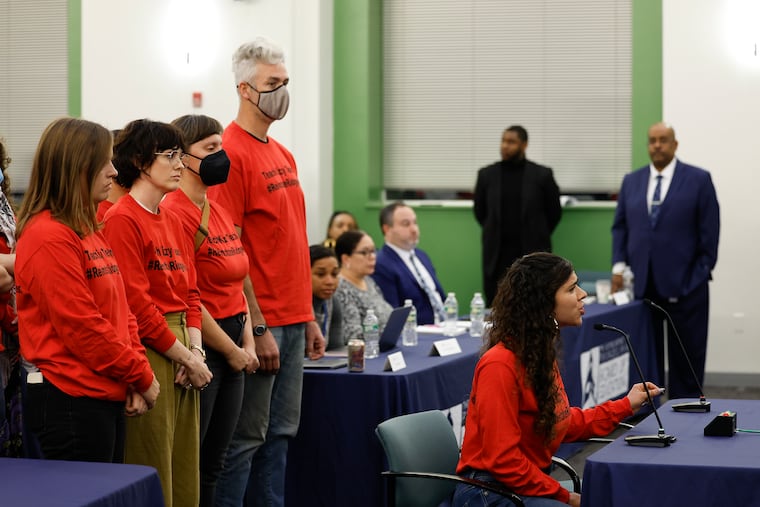
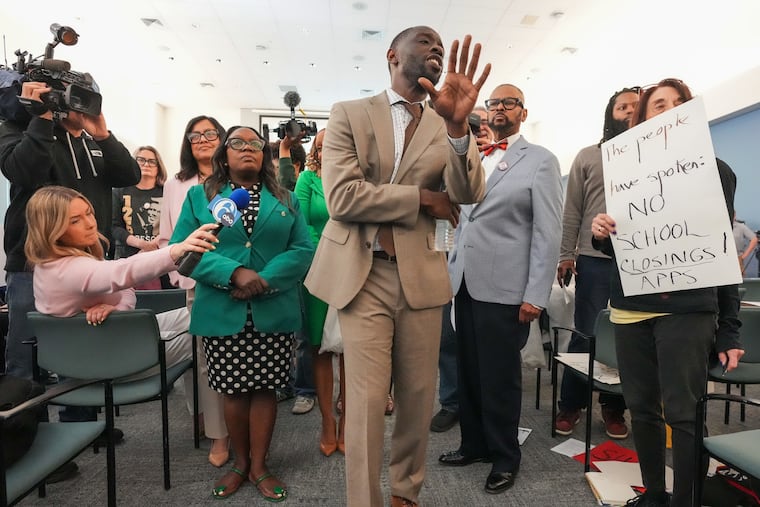
Inquirer readers on the protest by some City Council members during the Board of Education’s recent school closure vote.
Redirect energy to solutions
The protest by City Council at the recent Board of Education meeting on school closures is little more than political posturing.
Fact: The school board has a limited amount of money to solve its problems.
Fact: To a large extent, Council determines how much money the school district receives each year.
In essence, Council members are protesting their own previous funding decisions, rather than trying to understand — and, more importantly, solve — the district’s current financial problems. Balancing the need to improve existing infrastructure and keep all schools open, as Council is demanding, is a fiscally impossible situation.
Nobody wants their local school closed. However, if the system has low enrollment, the board is taking the only approach it can: close its underutilized buildings and modernize those schools that will benefit the most from additional investment.
Rather than shouting down the Board of Education, Council members would do well to conduct a deep dive into the specifics of the closure plan and explain to their constituents why it’s necessary. Their protests do little more than create an impression that they are fighting just for the sake of it, rather than being part of the solution.
Tom Elsasser, Philadelphia, elsasser64@aol.com
Outdated narrative
The recent Inquirer editorial criticizing City Council’s protest during the Board of Education’s vote to close 17 schools relies on an outdated narrative and misses the broader issue. Council members were responding to a $3 billion facilities master plan that will reshape neighborhoods and deeply affect families.
All Council members agree that improving school quality is the city’s top priority. Dismissing their actions as “petty posturing” ignores both the evolution of Council and the legitimate concerns of communities facing school closures.
The current Council comprises community organizers, lawyers, doctors, former members of the Pennsylvania House, a pastor, and Ivy League graduates. Today’s 17-member body is more diverse, policy-focused, and engaged than ever, not a relic of past dysfunction.
The April 30 protest reflected genuine fear from residents whose schools — and neighborhood anchors — are at risk. When constituents feel unheard, elected officials have a responsibility to elevate those concerns, even if it disrupts business as usual. Closing 17 schools is not routine; it has far-reaching consequences for safety, local economies, and community stability.
While declining enrollment and aging infrastructure are real challenges, the plan’s assumptions deserve scrutiny. Too many families still face limited, inequitable school options. Decisions of this magnitude require transparency and meaningful public input — something many communities feel has been lacking.
The city of Philadelphia and City Council have significantly increased their financial support, contributing over $2.1 billion since fiscal year 2018, with more to come. Local debate will not undermine state funding efforts — it underscores urgency.
If the goal is better schools, all stakeholders must engage in honest collaboration. Progress requires more than facilities upgrades. It demands trust, accountability, and a shared commitment to delivering quality education for every child.
Kenyatta Johnson, president, Philadelphia City Council
Join the conversation: Send letters to letters@inquirer.com. Limit length to 150 words and include home address and day and evening phone number. Letters run in The Inquirer six days a week on the editorial pages and online.