Even with its checkered history, City Council’s protest during the school board’s closure vote marked a new low | Editorial
Improving the quality of Philadelphia schools, not petty posturing, should be the top priority of everyone in the city — especially our elected leaders.
Philadelphia City Council regularly struggles to live down its colorful past.
Council members seemingly get indicted every few years, including Rick Mariano in 2005, Bobby Henon in 2019, and current President Kenyatta Johnson, who was later acquitted.
Decades ago, members twice got into fistfights on the Council floor. Former Mayor Bill Green once called City Council the “worst legislative body in the free world.”
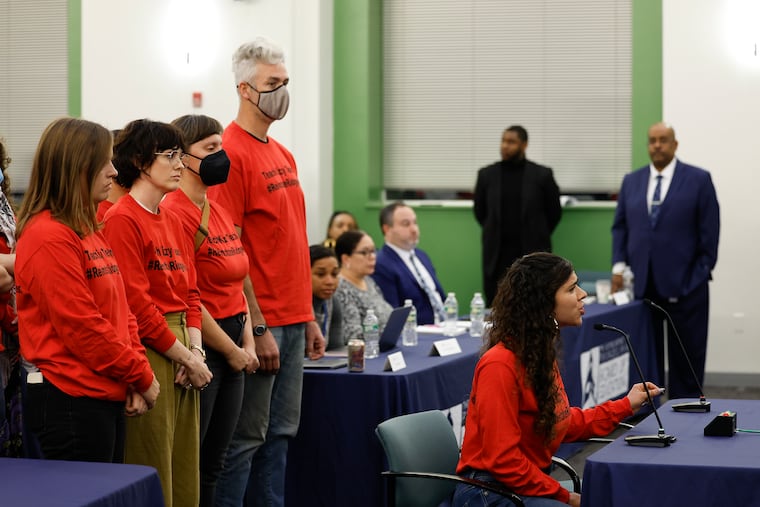
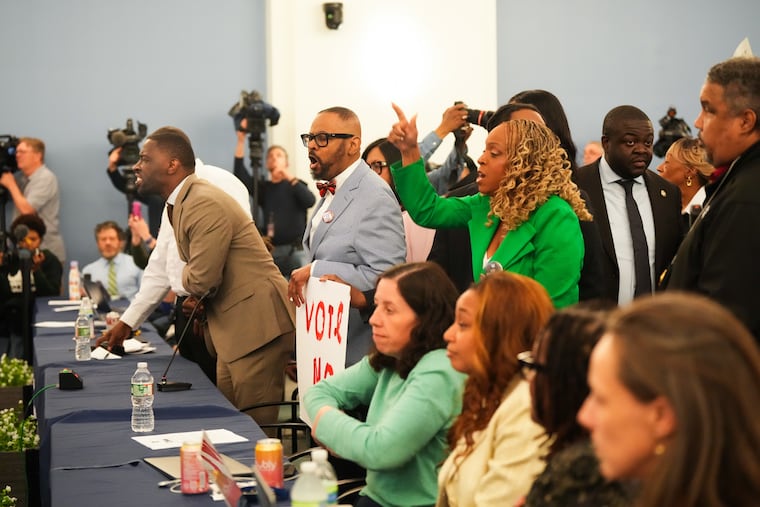
Given the low bar, the shameless display last week by 10 City Council members who disrupted a school board meeting was not a surprise. But it was no less degrading, even by Council’s minimal standards.
The school board meeting was interrupted twice by the outbursts. It was an ugly and petty display led by Council that accomplished nothing and left the city representatives looking small.
In the end, the school board voted to adopt a sweeping $3 billion facilities plan that will close 17 schools and renovate 169 over the next decade.
Council responded by threatening lawsuits, injunctions, funding cuts, and blocking the reappointment of any school board member who voted for the plan.
“Understand what your vote will come with,” Councilmember Isaiah Thomas, chair of Council’s education committee, said. “We will do everything in our legal power to put us in a position to sue you based on this decision and other issues that we know exist.”
Thomas also called for the resignation of the board members who voted for the plan.
That type of disruption is a waste of time and money and will do nothing to improve the schools.
The fierce opposition stems from the plans to close a handful of schools. To be sure, no one wants to see school closures. But the school board is trying its best — with the limited resources it has — to address a long-ignored problem of operating half-empty facilities, including many in need of repair.
Consolidating the schools is needed to meet declining enrollment. Closing some schools will also enable the school district to bolster the number of teachers and staff.
Lost in all the shouting is that the main thrust of the plan calls for the much-needed renovation of 169 schools. Many buildings still lack air-conditioning. Bathrooms, heating systems, and other basics need upgrading, along with modernized classrooms and labs.
Improving the quality of the schools will go a long way toward enhancing learning and education outcomes. That should be the top priority of everyone in the city — especially our elected leaders.
» READ MORE: SEPTA’s decision to focus on housing, not parking, is a win for Southeastern Pennsylvania | Editorial
Yes, the plan will require some students to travel further to get to class. That is an inconvenience. But continuing to operate half-empty schools that are more than half a century old is not a responsible solution.
A big part of the problem is that the state, for years, has failed to adequately fund public education in Philadelphia and across the commonwealth. In 2023, a judge ruled that Pennsylvania’s school funding system is unconstitutional.
Gov. Josh Shapiro has proposed major increases in funding for schools, but it is still far below what is needed.
The school board’s effort to rightsize the district will demonstrate fiscal responsibility to lawmakers in Harrisburg, which will help Philadelphia make the case for more state funding. But Council’s juvenile tactics only undermine the efforts.
Fixing the schools should be a top priority for everyone in the city and the state. The mayor, Council, and the school board should be working together with Harrisburg to make it happen.
Improving Philadelphia’s public schools will go a long way toward solving many of the city’s other problems, including poverty, crime, and growing the economy.
In the meantime, City Council should stop whining and figure out how to be part of the solution, instead of part of the problem.