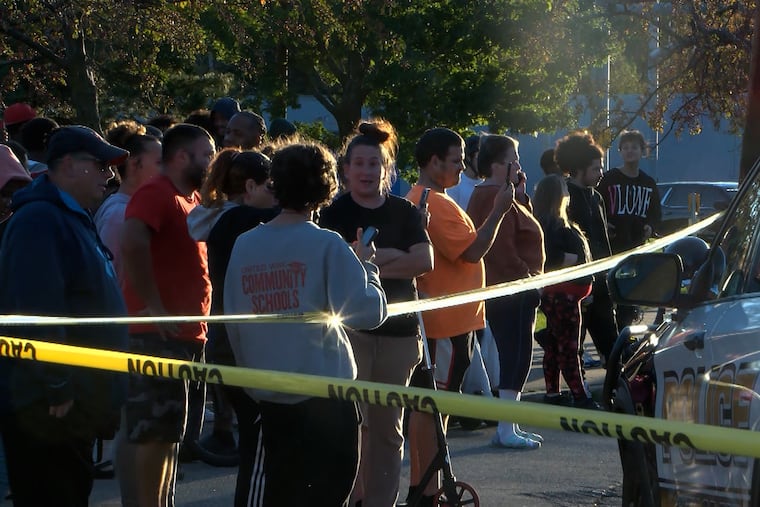
Getting ‘legal status’ in America is harder than most people think. Lorenzo Salgado Araujo was killed by ICE before he could.
A resident of the U.S. for 35 years, the construction worker was fatally shot by ICE agents while still trying to navigate the nation’s arcane immigration system.
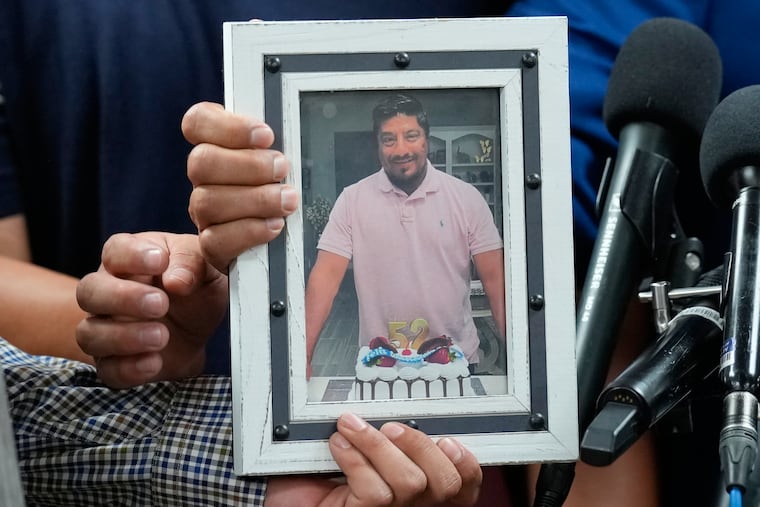
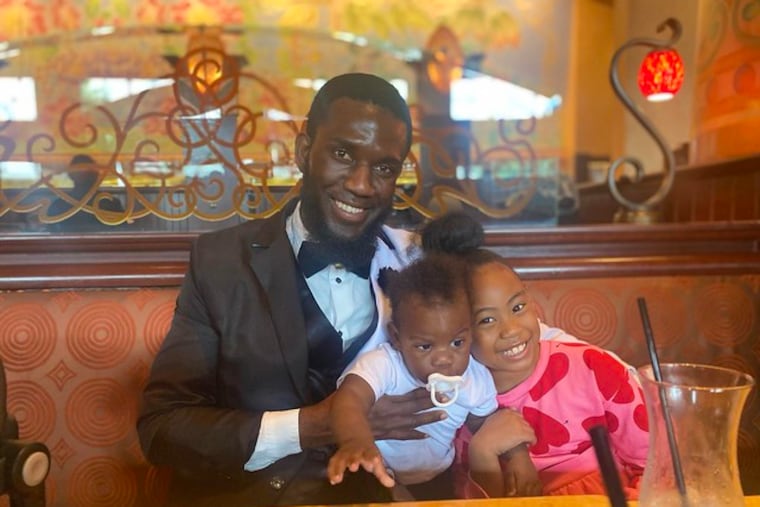
Lorenzo Salgado Araujo was killed by U.S. Immigration and Customs Enforcement agents Tuesday in Houston. He arrived in the U.S. from Mexico 35 years ago, built a construction business, and became one of five people killed by federal agents carrying out President Donald Trump’s plan of mass deportation.
As I read and listened to commentary from sources outraged by the killing, I kept bumping into their description of Salgado Araujo. Not that he was a hardworking father and loving husband who had sent his three U.S. citizen children to college, but that he was “on his way to obtaining legal status,” or was “applying for proper authorization.”
I know enough about immigration law to ask: What did that even mean? How could a man who had been in the U.S. for more than three decades as an undocumented immigrant be working to adjust his legal status?
During a news conference Wednesday, Ronaldo Salgado spoke eloquently about his father, heartbroken that the man who “wanted nothing else in life but to provide for his wife and see his sons become great people” did not deserve to be reduced to a headline. But Salgado also said this:
“After nearly 35 years of working to give us the American dream, he made the choice to begin the process of obtaining his American dream through a work permit. We dotted every ‘i,’ crossed every ‘t,’ filled every document, attended every appointment. He was close to obtaining his legal status.”
You may think this matters little. Salgado Araujo is dead, killed by a government that, in its misguided zeal for immigration enforcement, has already taken the lives of three U.S. citizens — Ruben Ray Martinez, Renee Nicole Good, and Alex Pretti — so clearly, legal status is meaningless.
Yet, in the fight to rein in the government’s abuse of power and fix America’s broken immigration system, public opinion is important. Confusion around immigration is already rampant; muddling the debate further only makes things harder.
Even a cursory look at the social media chatter around what happened in Houston finds people debating with incomplete or just plain wrong information. There are comments about how Salgado Araujo should have come here “the right way,” or how he should have tried to “become legal” sooner, or even how, until an immigrant is a citizen, they’re “considered illegal.”
Of course, there are people who will reflexively blame the Trump administration for everything, just as there are those who will unquestionably toe the MAGA line. But too many Americans are simply uninformed about how the system works, and may be skeptical of the media painting the portrait of another saintly immigrant dying at the hands of ICE.
These people may reasonably ask: If Salgado Araujo was close to obtaining legal status, why hadn’t he done so before? The answer is that he most likely couldn’t.
For someone like Salgado Araujo, with blue-collar roots in Mexico and no connection to the United States other than the drive to look for the American dream, it is virtually impossible to come here permanently.
» READ MORE: How an anti-immigrant and antisemitic conspiracy theory became U.S. policy | Luis F. Carrasco
Follow me into the weeds a bit.
Yes, the U.S. has a Diversity Visa program, in which a potential immigrant could apply and, through a lottery system, be given permanent legal residence, but Mexico does not qualify since the program is designed for countries with low rates of migration to the U.S.
If Salgado Araujo had an immediate family member (spouse or parent) who was either a legal permanent resident or a U.S. citizen, they could petition for him to immigrate. If he had a sibling, they could also petition for him to come, but there is a wait time of at least 10 years because of annual visa caps. Perhaps when people refer to immigrants getting “in line,” they mean that decade-plus-long queue.
Regardless, once Salgado Araujo was in the U.S., that “line” disappeared completely.
Let’s say Salgado Araujo had married a U.S. citizen. Since he entered illegally, he could not adjust his status inside the country. He would have to leave the U.S. and effectively risk being banned from reentry for up to 10 years. You can petition for what’s known as a hardship waiver, but they are difficult to obtain.
He could have also waited for one of his children to reach adulthood and petition for him to immigrate, but the potential to be barred for a decade remains.
Salgado Araujo’s son said his father was going to obtain a work permit, which is far from legal status. I spoke with immigration law experts who said one possibility could be to apply for asylum, which would grant a work permit while the case is adjudicated, or there are work permits available for someone who receives humanitarian parole.
» READ MORE: Trump didn’t bring impunity to immigration enforcement | Luis F. Carrasco
To be clear, I do not know what happened in Salgado Araujo’s case. I was unable to reach the family before this column went to press. But it’s clear they were going through a fraught immigration process — one that, given the existing state of the law, would likely have been unsuccessful.
That is why it’s important that people understand the immigration system better.
People like Salgado Araujo — who have built their lives here and just want to go about their business and contribute to their communities — are exactly the kind of immigrants most Americans want to allow to stay.
It was the government under Trump that killed Salgado Araujo. But it’s America’s immigration system that made sure he never had a chance.