Mayday! Can a May 1 general strike save American democracy?
The No Kings movement faces its toughest test in barely a week. Will students and workers walk out to protest Trumpism?
It’s a tough assignment to share a bill with “The Boss,” rock’s Bruce Springsteen.
In late March, Ezra Levin — cofounder of the pro-democracy Indivisible movement leading the No Kings anti-Donald Trump protests — took the stage in St. Paul, Minn., where Springsteen performed his ICE protest song “Streets of Minneapolis,” to blast out some unexpected news to the throng of as many as 200,000 people.
Levin said the No Kings movement was calling for a nationwide general strike for May 1, a Friday that was just 33 days away. He explained the May Day event “would be saying, ‘No business as usual.’ No work, no school, no shopping. We’re going to show up and say we’re putting workers over billionaires and kings.”
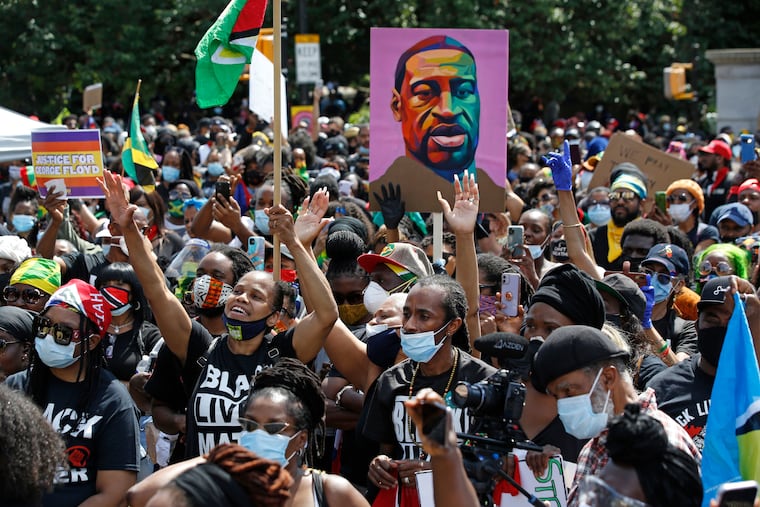
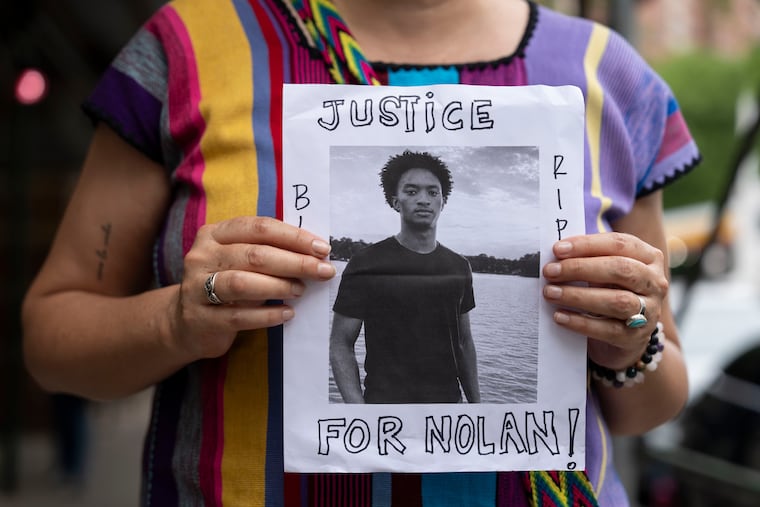
This was “a tactical escalation,” Levin said, for the No Kings movement, which over three worldwide events was peaking on that March Saturday with an estimated eight million people out in the streets. They were protesting Trump’s authoritarian presidency, inhumane immigration raids, an illegal war in Iran, and gross inequality in America.
“Tactical escalation” feels like a gross understatement. General strikes may be fairly common in France and other European nations, but there has never been a successful nationwide one across the United States for a variety of reasons, including much more restrictive labor laws.
Given the incredibly short time span to organize the May Day event — barely more than a month — how many citizens are so disgusted with an increasingly unpopular Trump’s misrule that they would walk off their job or out of their classroom and risk disciplinary action? How many people would need to stop shopping to make a noticeable dent in the nearly $3 billion per day Americans spend?
Would a Friday turnout that appears likely to be a fraction of the eight million-strong March 28 No Kings protest be spun in the mainstream media, already too dismissive of the pro-democracy resistance, as a step backward? Or should May 1 be seen as one small step toward a bigger movement that hopes to eventually derail U.S. autocracy through increasing use of strikes, boycotts, and civil disobedience?
Like No Kings, the May Day event aims to call attention to a broad range of grievances, with calls to end immigration raids and the war in Iran, and a plea to reduce the power of billionaire oligarchs in American society.
But one thing seems clear with the nationwide action only days away: The online buzz around the event has been surprisingly small, and tamer than the buildup to the successful No Kings rallies.
I spoke Thursday with Dana R. Fisher, an American University sociologist who’s a top researcher on contemporary protest movements, including field surveys from the No Kings events. She’s followed the May 1 buildup and recently reached an agreement with the May Day Strong coalition to study the upcoming action, and she said she’s been surprised at a lack of awareness in the wider public.
Fisher said that last week she attended the annual TED conference of thought leaders in Vancouver, British Columbia, and mentioned to people in conversations that she’d be studying the May 1 general strike. “A lot of people were, like, ‘What are you talking about?’” she recounted. “’There’s going to be a strike?’ And I was, like, ‘Seriously, how can you not know about this?’” There have been a few promotional posts on Bluesky, the social media site that exploded in popularity among liberals after Trump’s 2024 reelection, but not too many as the date draws closer.
Organizers privately acknowledge the May 1 action could draw several hundred thousand people — a fraction of the No Kings weekend protests — and would be thrilled if as many as one million take part. The modest estimates perhaps reflect some of the huge hurdles facing a nationwide strike in a nation that’s never really had one.
You might have heard about general strikes in places like France — where, in 2023, millions walked off the job and caused massive disruptions because the government wanted to raise the retirement age from 62 to 64 — or Italy, where much of that nation shut down last month to protest the austerity measures of its conservative government.
Here in the United States, it’s a different story. Since the 1947 Taft-Hartley Act, political general strikes are not protected by labor laws, meaning many workers who would walk out on May 1 could risk not having a job when they return. An uptick in student walkouts already this year — many of them to protest immigration raids — has been met by school districts with threats of suspension.
There have been citywide general strikes during moments of peak U.S. labor activism in the 20th century — most notably in Seattle in 1919 and Oakland, Calif., in 1946 — but each triggered a punitive backlash from political and business leaders.
» READ MORE: What naysayers don’t get about ‘No Kings,’ the biggest protest in U.S. history | Will Bunch
Still, there is substantial work behind the scenes that could make the May 1 action a big enough success that it would surprise the more somnambulant general public, and maybe create some momentum for bigger and bolder actions down the road.
The list of groups that have signed up for May Day Strong — including the powerful American Federation of Teachers (AFT) and large locals of AFSCME (the American Federation of State, County and Municipal Employees), as well as chapters of the youth climate group Sunrise Action and the Democratic Socialists of America — is significant. It suggests a movement that will look younger and more diverse than the No Kings rallies, which have attracted some criticism for the predominance of white, educated boomers.
Vicki Miller, a group leader with Indivisible Philadelphia going back to Trump’s first term, told me local activists are planning to protest U.S. Immigration and Customs Enforcement detention facilities and other causes, and “I think anyone plugged in at all knows about the concept, and is looking for an event near them to go to.” In Philadelphia, the largest May 1 event looks to be the 4 p.m. rally outside City Hall, a “Workers Over Billionaires” march.
Still, for workers who plan to actually strike or walk out of school, Fisher noted, “the bar is higher, and you have to be more outraged to participate, because the consequences are more severe than they used to be.” She said organizers seem to see May 1 as a stepping stone to build national support for a much bigger action that would take place on Labor Day, ahead of the midterm elections.
Some of what happens this coming Friday may hinge on how outraged Americans really are. On one hand, polls show Trump is more unpopular than he’s ever been since his 2015 entry into politics, there are rising concerns around his mental and physical health, and high gas prices are squeezing the middle class. On the other hand, will the seeming end of aggressive public immigration raids like those that roiled Minnesota and the not-really ceasefire in Iran calm things for voters patiently waiting to flip Congress at the ballot box and not eager to take to the streets?
We all remember the Chinese proverb that a journey of 1,000 miles begins with a single step. May 1 won’t be the first step for the resistance to an authoritarian and undemocratic America, but it might be the most significant — with a marathon journey still ahead.
As the risk of a dangerously unstable Trump in possession of the nuclear football grows more perilous by the day, the survival of the United States and arguably the planet will hinge on our willingness to fight for it by any means necessary. They include the personal risks that come with acts of civil disobedience — like the ones our forerunners took from Selma, Ala., to Stonewall — that trade short-term pain for the long-term collective good.
Don’t let the media negativity or the passivity that’s weighed down too many citizens for far too long cloud your own feelings about a Mayday signal for a fast-sinking American democracy. Look at this action as the beginning of something. Where it ends is up to us, the people.

Sign up for the Will Bunch Newsletter