The ‘resign-to-run’ rule is a rare case where Philly provides a national model for good government. Why change it?
The arguments for allowing an elected official to remain in office while campaigning for another job — even if it’s a federal role, instead of a local one — just don’t hold up.
Here we go again.
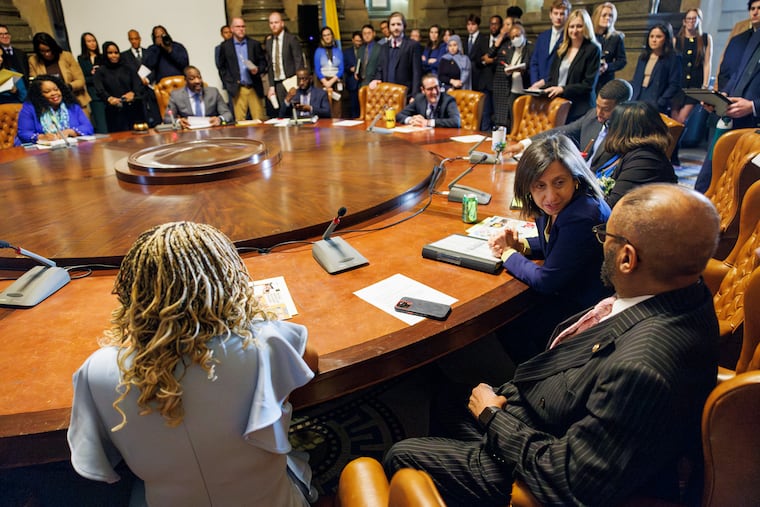
A proposal in City Council aims to amend the so-called resign-to-run rule that requires elected city officials to give up their seats if they want to run for another office.
Philadelphia voters have already rejected a similar plan twice, once in 2007 and again in 2014. A third attempt stalled out in Council in 2020.
Councilmember Isaiah Thomas, who proposed eliminating the rule last year, is back with a modified measure that would allow city officeholders to keep their seats while running for a state or federal office. They would still have to resign to run for another city office, such as mayor.
Sorry, councilman, but there’s no such thing as being a little bit pregnant. Many of the same good government reasons that require resigning to run for another office still hold.
» READ MORE: What is Philly’s resign-to-run rule?
Namely, running for office is a full-time job. The fundraising, campaign stops, debates, and town halls that take place during the day, nights, and weekends leave little time for officials to do the six-figure day job they were elected to do.
Depending on the office, running for a statewide or federal seat could also require additional travel across the state that would further distract from serving the constituents the official was elected to represent.
There would also be the temptation to use taxpayer-funded city resources — including the car, office, and staff — to help with the campaign. That is in addition to the taxpayer-funded salary and benefits elected city officials would collect while campaigning for a higher office.
Lastly, the elected official could also leverage their position against other candidates to benefit themselves or donors.
The arguments for allowing an elected official to remain in office while campaigning for another job just don’t hold up.
The main argument is that it will allow more competition. For example, Thomas said some of his Council colleagues may have entered the race to replace retiring U.S. Rep. Dwight Evans — a five-term Democrat from the 3rd District — if they did not have to resign.
But even under the current rule, there is no lack of competition for Evans’ seat. Eleven people have already announced their candidacy, and the primary is not until May 19.
The diverse field already has a number of excellent candidates, including several who have never run for office before. Voters will have plenty of good options.
» READ MORE: Ala Stanford tackled COVID-19. Will Trump be next? | Jenice Armstrong
Thomas argued voters would benefit if the field included Council members. “There could be even more great candidates,” he said in an interview.
Thomas said city officials faced an uneven playing field, since state and federal elected officials do not have to resign to run for another office. That is true.
Three of the congressional candidates hold state elected office. But the better reform is to require state and federal elected officials to resign to run for another office.
As the saying goes, two wrongs don’t make a right.
Voters are already fed up with professional politicians. It is even more annoying when an official gets reelected and months later launches a bid for another office.
That scenario may soon play out with Gov. Josh Shapiro. He faces reelection in November, and many assume he will run for president in 2028. That means if Shapiro is reelected governor, he could spend much of the first half of his second term campaigning in Iowa, New Hampshire, and beyond.
After then-New Jersey Gov. Chris Christie launched his first bid for president, he would go on to spend 262 full or partial days out of the state in 2015. He traveled with a security detail that included New Jersey state troopers driving black SUVs with the state’s license plates, costing taxpayers more than $600,000.
Likewise, when then-U.S. Sen. Marco Rubio (R., Fla.) ran for president in the same election cycle, he missed 50% of the votes in the Senate.
Thomas conceded it would be difficult to balance city duties while running for an office that would require campaigning across the state. But he said city officials running for a congressional seat in Philadelphia while holding office would “not miss a beat.”
That may be true since Council doesn’t meet in the summer. But that’s an argument for making Council a part-time job, especially since they can, and some do, hold second jobs.
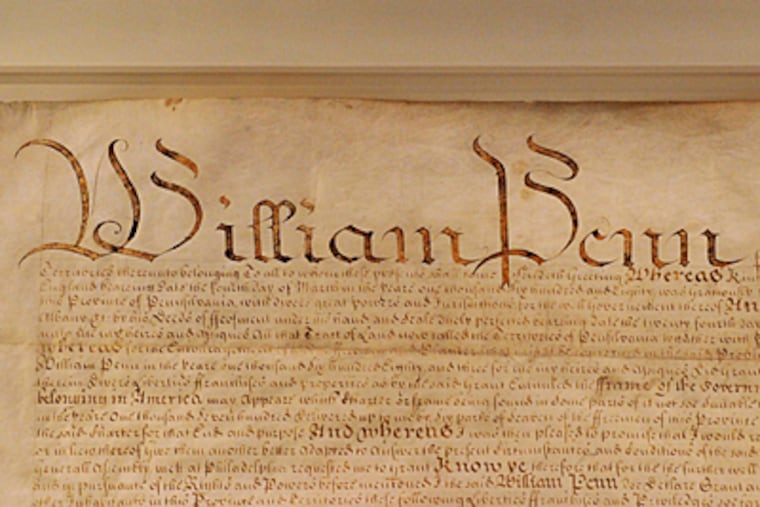
Philadelphia’s resign-to-run rule was added to the Home Rule Charter in 1951. At the time, the Committee of Seventy, a nonpartisan organization established in 1904 to combat corruption, strongly supported the rule.
Any measure that prevents corruption still seems like a good idea. But surprisingly, the good-government group’s position has “evolved,” Lauren Cristella, the head of the Committee of Seventy, said in a statement.
The organization “reluctantly” supported the repeal of the rule in 2014, citing the need for more competition.
But Philadelphia voters rejected the effort. Just as they did in 2007.
This time, the Committee of Seventy said it would only support ending the resign-to-run rule if it was part of a broader reform package that includes term limits and “stronger safeguards for ethical, transparent government.”
The Committee of Seventy said the proposed change in its current form only serves the “political interests, but not the public interest.”
Rest assured, if the resign-to-run rule were modified to allow city officials to run for state and federal office, it would just be a matter of time before Council tried to repeal it altogether.
If the resign-to-run rule were modified, it would just be a matter of time before City Council tried to repeal it altogether.
Even Thomas said he would like to see the rule eliminated, but for now, he was trying to strike a compromise.
Philadelphia has long been criticized as being “corrupt and contented.” But reforms like resign-to-run and the city’s strict campaign finance regulations passed a decade ago are models of good government.
Indeed, only a couple of cities and states have a resign-to-run rule. Philadelphia should champion its position as a good-government leader.
Harrisburg — which has no such measure and some of the worst campaign finance rules — would benefit from following the city’s lead.
The country needs more good government, not less.