Ala Stanford tackled COVID-19. Will Trump be next?
Absolutely no one is better poised to represent the interests of Philadelphians in Congress on healthcare issues than Ala Stanford.
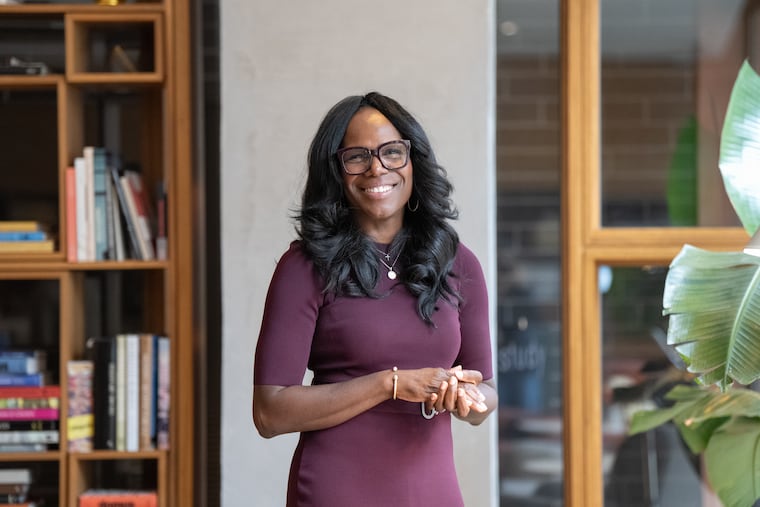
If the decision earlier this month by eight members of the Senate Democratic caucus to cave instead of standing firm to ensure continued subsidies for the Affordable Care Act proved anything, it’s that better leadership is desperately needed in Washington, particularly around the issue of healthcare.
It’s one of the top issues about which voters worry. Absolutely no one is better poised to represent the interests of Philadelphians in Congress on this issue than Ala Stanford. She was indefatigable during the pandemic. We will never know how many lives she and the other healthcare providers she convened as part of the Black Doctors COVID-19 Consortium actually saved. But the city will forever be in her debt for all she has done, and continues to do, at the eponymous health clinic she opened in 2021 in North Philly.
Now Stanford is running to replace Rep. Dwight Evans (D., Pa.), who announced in June that he will not seek reelection.
Evans, who sits on the healthcare subcommittee of the House Ways and Means Committee, has endorsed her to be his replacement. “I think in the environment that we’re in today, we need to demonstrate results, and she has done that,” Evans, 71, told me last week. If elected, Stanford will join an elite group of legislators who are also physicians, including Rep. Herb Conaway (D., N.J.).
Stanford has what it to takes to stand 10 toes down, as the saying goes, in face of stiff Republican resistance and President Donald Trump, who in his first term minimized the threat of COVID during the height of the pandemic, and in his second term has instituted policies that imperil public health — including keeping Supplemental Nutrition Assistance Program benefits from continuing during the government shutdown.
The day I caught up with Stanford last week, she was preparing to deliver a keynote address at the Fourth Annual Black Maternal Health and Neonatal Equity Conference in West Philly. “I am an example of what SNAP benefits, of what Medicaid, and a little bit of cash and food stamps and Pampers can produce when you invest in a family,” she pointed out. “Look what it produced.”
She’s a phenom all right. Stanford would fit in well with the Squad, a tight-knit group of progressive congressional lawmakers that includes Reps. Alexandria Ocasio-Cortez of New York, Ilhan Omar of Minnesota, Ayanna Pressley of Massachusetts, and Rashida Tlaib of Michigan. I get the sense, though, that some voters have developed a curious case of collective amnesia about who Stanford is and what she has done for Philadelphians, particularly during the pandemic.
» READ MORE: Ala Stanford’s new book is equal parts memoir and rallying cry for health-care equity | Jenice Armstrong
Stanford has also been the subject of social media chatter questioning her eligibility to run since she lives in Jenkintown. However, the Constitution requires only that a candidate running for Congress reside in the state they’re campaigning to represent, which she does. In addition, Stanford is renovating a property in Chestnut Hill located inside the boundaries of the 3rd Congressional District, which she will represent if she wins the seat.
For the record, although I’m a member of The Inquirer Editorial Board, this column doesn’t constitute an official endorsement. These are my own thoughts and observations. They go way back.
I’ve been singing Stanford’s praises since I first met her in 2010. She was working at Abington Hospital as a pediatric surgeon then, and poised to successfully operate on a Haitian toddler born with an anorectal malformation that left her without an anus. Thanks to Stanford’s skill and brilliance, the little girl was able to go on and live a normal life.
Over the years, I’ve watched her continue to rack up accomplishments, including finding the time to run a nonprofit mentorship program, It Takes Philly, that she cofounded with her brother, Kamau. In 2018, she opened a concierge medicine office that cared for actor Will Smith, as well as other select patients, and provided on-site medical coverage for Smith, who celebrated his 50th birthday with a bungee jump into the Grand Canyon.
But as much respect as I already had for her, it pales in comparison to what I thought after watching her in action during the pandemic.
Upon learning African Americans constituted 52% of all COVID cases in Philadelphia, Stanford went into overdrive. In the course of a week, she created the Black Doctors COVID-19 Consortium, gathered up all the testing kits she could find, and started going from home to home in a rented van, testing Philly residents.
I was beyond impressed. It turns out she was just getting started.
Realizing she could reach more people in a centralized location, her next move was to recruit a group of healthcare workers and stand with them outdoors in the cold and rain at Miller Memorial Baptist Church in North Philly. Altogether, they tested more than 130 people. In doing so, Stanford stepped into an early, huge void that had been left by city and state officials, as well as hospital and university administrators.
» READ MORE: This doctor deserves a standing ovation for her swift response to the coronavirus crisis | Jenice Armstrong
But that’s what heroes like Stanford do. While many sheltered in place or waited for federal dollars, she tied on her proverbial cape, masked up, and served thousands of people by setting up coronavirus testing sites in church parking lots and other spaces in neighborhoods with the highest COVID rates. Then, once vaccines became more widely available, she allowed herself to be inoculated on live TV — which gave me and countless others the resolve and confidence to follow suit.
Stanford also began vaccinating huge swaths of Philadelphians after the city badly fumbled the task by awarding a contract to a 22-year-old Drexel grad student with no medical background.
Once the health crisis began to wane, you’d think Stanford would have gone back to focusing on her pediatric and concierge medicine practices and her family. She had already done way more than most.
Instead, she used donations and her savings to open the neighborhood health center at 2001 W. Lehigh Ave. called the Dr. Ala Stanford Center for Health Equity.
She briefly considered becoming commissioner of the Philadelphia Department of Public Health, but decided against it due to potential conflicts with the health center. The following year, she accepted President Joe Biden’s appointment to serve as the regional director of the U.S. Department of Health and Human Services for the Mid-Atlantic region.
Stanford decided to jump into politics last summer shortly after Evans’ retirement announcement. “My phone started blowing up from my D.C. people saying, ‘Dr. Ala, it’s time,’” she recalled.
Other contenders so far include: State Sen. Sharif Street, State Reps. Chris Rabb and Morgan Cephas, and David Oxman, an intensive care physician and professor at Thomas Jefferson University Hospital.
“My phone started blowing up from my D.C. people saying, ‘Dr. Ala, it’s time.’”
The timing is right for Stanford, both personally and professionally. She said she’s more than ready to transition from the halls of medicine to the hallowed halls of the U.S. Congress. “It’s been 28 years,” Stanford said. “I’ve been a physician more than half my life.”
She views her potential move to Washington as a redirection more than anything. “This is the same mission, just a different path.”
Stanford is ready to take on Trump and Congress. It remains to be seen if Philadelphia is ready to vote for her to do so.