Rushdy out at developers association; it’s flex time for Shapiro — again | Shackamaxon
In this week's column, Mo Rushdy's three-year run at the Building Industry Association is over, and SEPTA train fires mean Gov. Josh Shapiro needs to step in.
I had planned to file a completely different column this week, but a big resignation and a public transit emergency were both too pressing to ignore.
No mo’ Mo
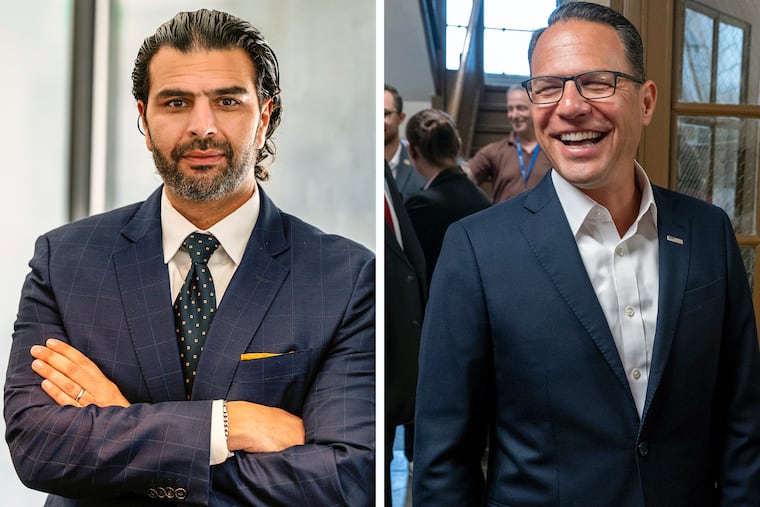
It took Mohamed “Mo” Rushdy three years to turn the Building Industry Association into a local political powerhouse. It took three minutes to create the rift that led to his resignation on Tuesday.
Rushdy used his leadership of the BIA to forge ties across communities and build political power. A workforce housing developer, he helped foster the growth of Black and brown developers in Philadelphia, and, alongside Building and Construction Trades Council head Ryan Boyer, was a major pillar of the coalition that elected Cherelle L. Parker mayor and Kenyatta Johnson City Council president. Rushdy also aided the reelection efforts of most of Council.
The alliance between suits and hard hats even managed to defeat Philadelphia’s corporate giant, Comcast, and get the Sixers’ Market Street arena approved by Council, forcing the company to go over the mayor’s head, leveraging their new NBA TV contract to stymie the plan.
Still, when I talked to him Thursday morning, it was clear the ongoing death and destruction in Gaza had become too much for him to bear. Like many Americans, he felt a responsibility to speak out. And speak out he did.
At the time, I did not expect Rushdy’s Sept. 18 speech before City Council condemning Israel’s actions in Gaza and the West Bank to provoke widespread anger. It certainly did not raise many eyebrows in the room.
Still, some BIA members seized upon one sentence in his statement, claiming that by acknowledging the decades-long mistreatment of Palestinians, he was justifying terrorism. Despite support from many BIA members, including many proudly Jewish developers, Rushdy resigned his position.
Of course, some supporters of Palestine have claimed that memorializing the innocent victims of the Oct. 7, 2023, terror attacks is a way to justify the ongoing slaughter in Gaza, going as far as ripping down posters of the dead and missing.
Both these instincts are deeply misguided. Empathy for those who have been killed and are being killed is the only way out of what has become a generational war. Like Rushdy said in his allegedly controversial speech, two states for two people, living in peace.
The ramifications of his resignation are still to be seen.
The new BIA head, Sarina Rose, comes from Post Brothers. Her firm built an incredible project at Broad and Washington, but it also has a contentious history with the building trades. If Rushdy’s resignation produces a fracture in the dynamic coalition he helped build, his three-minute speech could go down as one of the most impactful ones made at Council all year.
Fire flex
A different, more bizarre coalition of the right and the far-left got a Philadelphia Common Pleas Court judge to declare that SEPTA’s all-too-real fiscal emergency was self-imposed. It did not take long for reality to prove them wrong.
After five train fires this year, an investigation from the National Transportation Safety Board determined it’s time for SEPTA to replace its Silverliner IV rail cars, which make up two-thirds of the Regional Rail fleet.
However, Judge Sierra Thomas-Street has ruled that the transit agency cannot cut service, and the Pennsylvania Senate has declared that SEPTA does not need another dollar. Given the cost of replacing the fleet is roughly $2 billion, this presents a conundrum.
SEPTA is not perfect, but its most serious problems are not administrative or managerial; they are political. For generations, politicians have failed to prioritize transit, leading to a growing maintenance backlog.
While SEPTA’s operating deficit has gotten most of the attention, its underfunded capital budget is, if anything, a more intractable issue. Far from being the recipient of generous taxpayer support, SEPTA has so little cash that the only major expansion of the system this century has been the Wawa Station in Delaware County.
No other major transit agency has been asked to do more with less. Until politicians, whether in Harrisburg or in this region, decide to give transit the support it needs, the fires will continue.
One option Gov. Josh Shapiro should investigate is once again shifting over highway funds, this time to support capital projects like new train sets. According to a memo from Evergreen Action, the governor has a limited opportunity to use the bipartisan infrastructure bill to once again save SEPTA.
Shapiro’s last “flex” of this funding required federal approval. That’s unlikely under our current reality TV star turned transportation secretary. However, shifting funds from the National Highway Performance Program does not need the Trump administration’s permission. Pennsylvania received more than $2 billion from the program between 2022 and 2023, which are the last two years tracked by the Urban Institute.
Transferring highway money yet again would likely come with some political repercussions, but it also presents Shapiro with another chance to live up to his motto and get stuff done.
Shackamaxon, a column on state and local government by Daniel Pearson, appears Fridays.