SEPTA service cuts must be reversed immediately, judge says
The order does not include a prohibition on fare increases. A spokesperson said SEPTA hasn’t decided whether it will appeal, but that it plans to comply.

SEPTA must reverse all cuts to services immediately, a Philadelphia judge ruled Thursday.
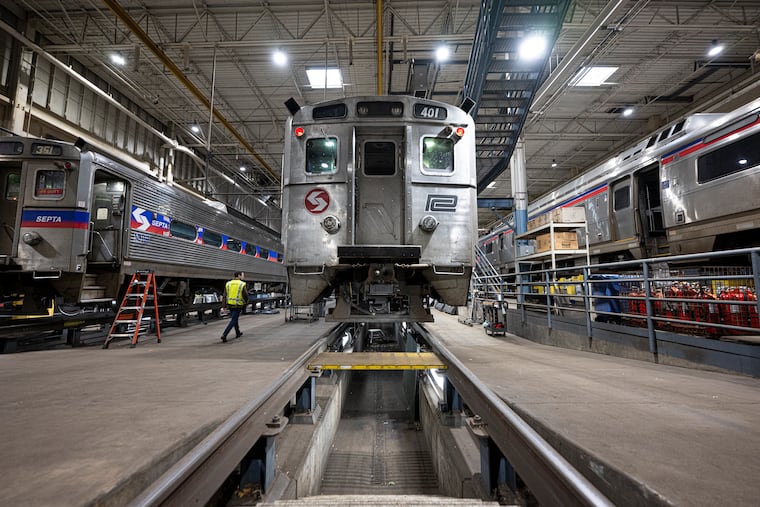
Judge Sierra Thomas Street ordered SEPTA to “immediately reverse all service cuts,” which began last month as the transit agency faces a significant financial shortfall and the state budget has not yet allocated funds amid a monthslong budget stalemate. SEPTA cut 32 bus routes, shortened 16 others, and trimmed service across the board.
The judge’s order applies to route cuts, service reductions, and staffing reductions but does not apply to proposed fare increases. The agency is also barred from implementing any new cuts.
The injunction is not accompanied with an opinion explaining the judge’s rationale in making her decision, a typical practice in the Philadelphia Court of Common Pleas.
The injunction followed a second day of testimony in a City Hall courtroom over whether the transit agency’s cuts were discriminatory toward disadvantaged communities.
What happens next?
SEPTA spokesperson Andrew Busch said the authority hasn’t yet decided whether it will file an appeal. “We’re evaluating our legal options,” he said, adding that the transit agency plans to comply with the judge’s order. SEPTA hasn’t set a date yet for restoring service or raising fares, he said.
After the hearing, but before the judge issued her order, George Bochetto, the Bochetto & Lentz attorney who sued SEPTA on behalf of three riders, said that there was no reason SEPTA couldn’t comply quickly with an injunction.
“It’s not that complicated,” Bochetto said. “You fill a bus up with a tank of gas and you put it out on the route.”
SEPTA has said it would take at least 10 days to restore full service.
Asked after the hearing how the transit system was able to comply with an injunction on Friday that halted Regional Rail cuts and fare increases that were set to take place over Labor Day weekend, General Manager Scott Sauer said it is easier to hit the breaks than restore service.
“It was easier to not do anything than it will be to change things,” Sauer said.
What was Thursday’s hearing about?
Bochetto said during the hearing that the “elephant in the room” was SEPTA’s Service Stabilization Fund, which the lawyer has described as a rainy-day fund but which SEPTA calls a working capital account that it uses daily. As of last week, the fund had more than $300 million in it.
SEPTA filed a 56-page brief Wednesday night, arguing the transit system conducted a thorough analysis of the impact of cuts on riders of color and those from low-income communities.
In court, SEPTA’s chief planning and strategy officer, Jody Holton, said that the transit system was losing $517,000 a week without planned fare increases that the transit agency was barred from enacting under a previous court order.
Holton also testified at length about the equity issues SEPTA considered when deciding what routes to cut or reduce in frequency.
In his closing argument, Matthew Glazer, a Cozen O’Connor attorney representing SEPTA, said that Bochetto was asking the court to “appoint itself as a de facto treasurer” of the mass transit agency.
Glazer rejected the notion that SEPTA could just tap into its stabilization fund to avoid the cuts. The money in it pays for ongoing bills, SEPTA has said throughout the process.
“Plaintiffs suggest there is some easy, magical fix that SEPTA has simply overlooked,” Glazer said. “If only that were true.”
What led to legal action?
The litigation began last week when a consumer advocate and two riders filed a lawsuit accusing SEPTA of concocting a fake fiscal crisis and alleging that the transit agency’s service cuts illegally harmed marginalized groups.
On Friday, Thomas Street ordered SEPTA to halt planned service cuts to Regional Rail and fare increases that were scheduled to take effect this week. The judge allowed earlier cuts to bus, subway, and trolley lines to remain in place for the time being.
That ruling set the stage for the hearing Thursday.
Why did SEPTA make service cuts?
SEPTA says the cuts were necessary to save money as the agency awaits funding from the politically divided Pennsylvania legislature, which has yet to pass a budget for the fiscal year that began July 1.
The transit agency says it has a projected $213 million annual deficit in its operating budget. It started to reduce service by 20% on Aug. 24, including by eliminating and shortening dozens of bus routes. The cuts are expected to save $5 million a month.
What’s going on with budget?
The Democratic-led Pennsylvania House and Republican-controlled state Senate have so far been unable to reach a deal on the budget. How to fund mass transit has been one — but not the only — sticking point among lawmakers in Harrisburg.
Democrats in the House passed legislation last month that would increase the share of state sales tax revenue dedicated to mass transit. Senate GOP leaders oppose that plan because, they say, it would mean less money for other worthy programs. And they note the state already spends more money that it brings in.
For their part, Senate Republicans passed a bill that would help fund SEPTA and other mass transit systems by tapping money from a part of the Public Transportation Trust Fund that pays for capital projects.
Democrats initially called that a nonstarter, but House leaders and Democratic Gov. Josh Shapiro have since said they are open to the idea as long as any legislation also includes a recurring revenue stream for transit.