The state that canceled your bus is wasting $1.6B on a polluting boondoggle
Pennsylvania officials promised a Shell plastics plant was the future, awarding a $1.6 billion tax break to an economic dud and pollution nightmare.
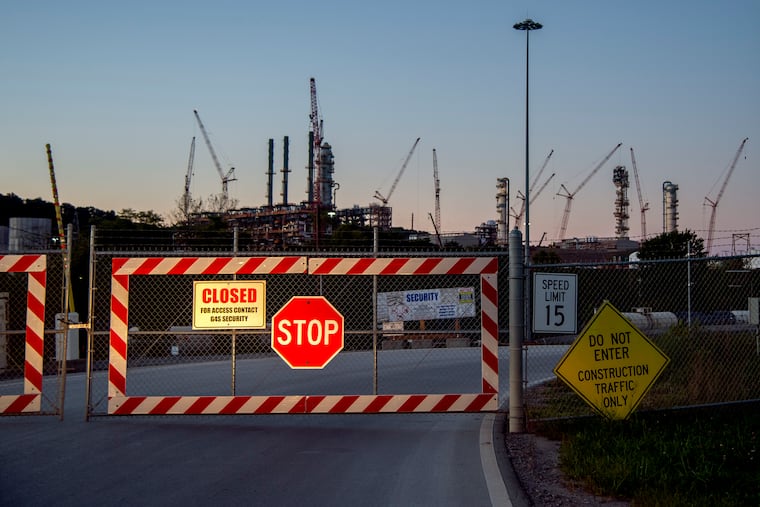
Skyler Brimmeier said he didn’t think much about the $14 billion Shell plastics plant going up in the late 2010s just across the Ohio River from his Western Pennsylvania home until he got an unexpected warning from his grandfather, who was on his deathbed.
“He told us that we should get out of the area of the plant, that it would be bad for the ecology of our region,” Brimmeier, now a 32-year-old video editor at a nearby school in Beaver County, Pa., recalled. Then the massive facility, which converts ethane from Appalachia’s fracked natural gas, opened in November 2022, and Brimmeier suddenly understood what the late family patriarch had been warning about.
“You could really smell the whole medley of odors that came out of that place‚” he said, describing a menu of olfactory experiences that resembled rotting eggs, or a tire fire, or spilled diesel fuel. Many of Brimmeier’s neighbors started complaining about headaches or watery, itchy eyes. Things got so bad that Brimmeier, his mom, and grandmother all tried living elsewhere for a while.
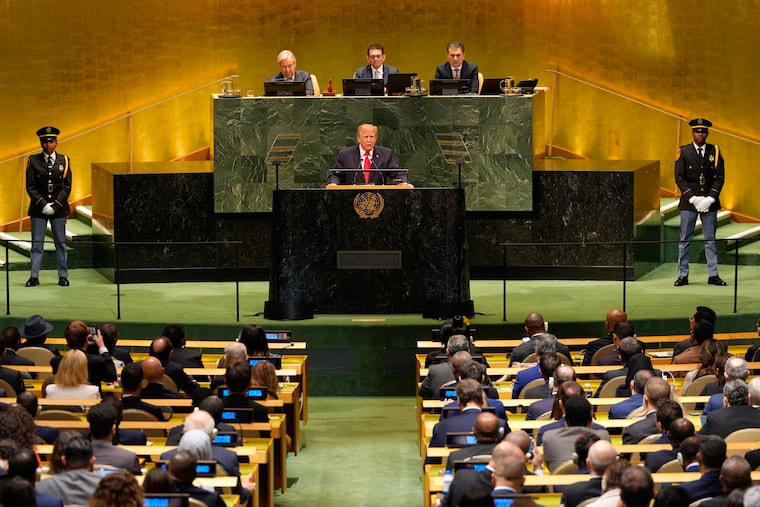
For years, Pennsylvania’s governors, both Republican and Democratic, and its top lawmakers, joined by President Donald Trump, have insisted there was one word for the state’s economic future: plastics! They backed it up with your money — the largest tax break in Pennsylvania history, with a potential $1.6 billion (with a “b”) flowing toward Shell, an already massively profitable foreign oil giant, over a quarter century.
The constant air pollution complaints from Beaver County residents like Brimmeier aren’t the only things about Shell’s massive ethane cracker that haven’t turned out the way its boosters predicted. The economy in Beaver County is actually underperforming the rest of the state. That’s not surprising given Shell’s employment is just about 500 jobs — the minimum required for its sweetheart tax break — and none of the surrounding factories predicted by state officials have materialized.
The market for polyethylene, the plastic that the plant in the town of Monaca, Pa., produces, hasn’t boomed as Shell promised state officials, but instead collapsed due to an oversupply of plants on the American Gulf Coast and in China. In March, Shell’s CEO shocked investors on a conference call with word that the company is looking for partners, or possibly even to sell the plant. Open less than three years, the most expensive industrial project in Pennsylvania history is increasingly looking like its biggest boondoggle.
If Brimmeier’s dying grandfather could see trouble looming, why didn’t ex-Govs. Tom Corbett or Tom Wolf, the General Assembly, Trump, or the highly paid executives of a Big Oil icon that made a $23 billion profit in 2024?
Sean O’Leary, senior researcher at the Ohio River Valley Institute, a pro-clean energy think tank, said Pennsylvania policy has fixated on “an utterly irrational premise that anything that we can do that increases markets for Pennsylvania natural gas is going to be economically beneficial. But in fact, exactly the reverse is the case.”
The ORVI’s research has found that employment in Beaver County has plunged by 13% since the Shell project was announced in 2012 — while the rest of the state and the nation saw job gains — and its population has shrunk. That is indeed the exact opposite of what was forecast 13 years ago when, urged on by the Republican then-governor Corbett, state lawmakers approved tax incentives worth as much as $66 million a year for 25 years, the largest subsidy in Pennsylvania history.
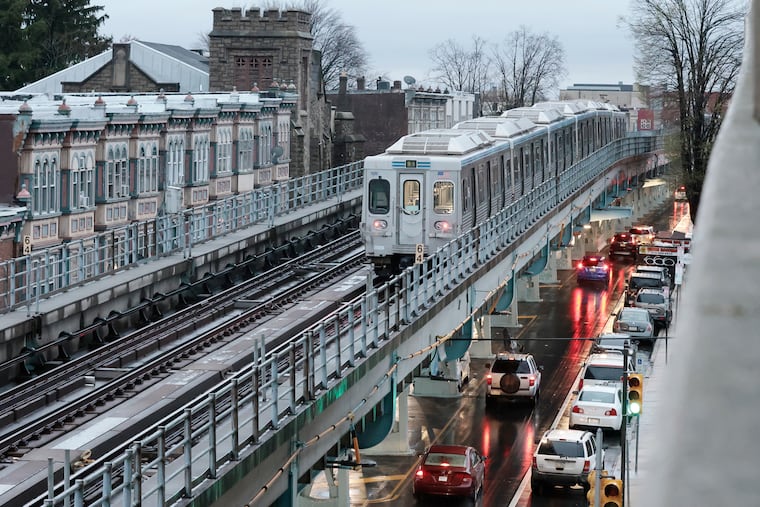
Today, the irony is painful. The state’s generosity toward a polluting, fossil-fueled project that may already be a white elephant comes at the same time lawmakers’ stinginess has created a funding crisis for Pennsylvania mass transit, and especially the Philadelphia region’s SEPTA, which has just canceled some trains and entire bus routes to deal with the lack of state support. Money that could keep thousands of commuters out of their gas-guzzling cars is instead propping up an underperforming plastics plant that has already been fined $10 million for frequent air pollution.
Shell officials more recently downplayed the imminent sale of the Beaver County plant, or questions about its long-term survival, telling Inside Climate News that the British-based oil giant is currently “exploring strategic and partnership opportunities” for the plant. The company also insists it has substantially curbed pollution since a wave of unplanned flaring incidents and other problems in the plant’s first year.
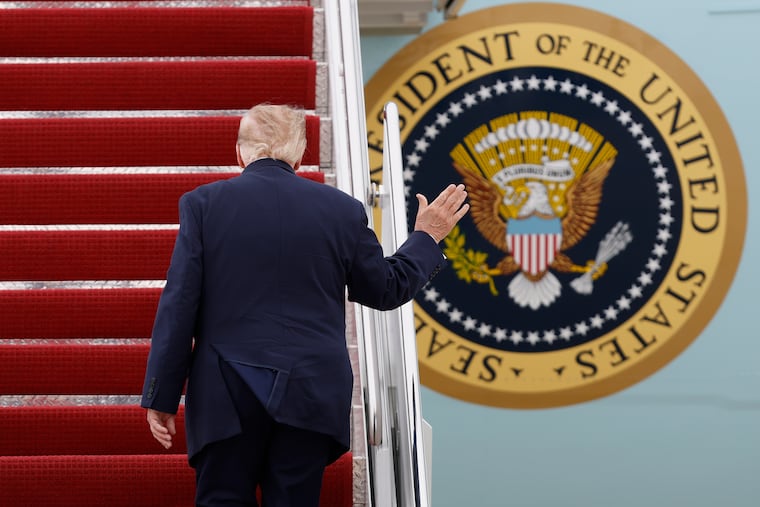
Still, few would argue that things in Beaver County have met the expectations that still loomed large in August 2019 when Trump, eyeing his first reelection campaign, chose the then-under-construction Shell site and its hard-hatted workers as backdrop for an event touting his commitment to American fossil fuels and blue-collar jobs.
“This facility will transform abundant natural gas, and we have a lot of it, fracked from Pennsylvania wells, which they never would have allowed you to take if I weren’t president,” the then-45th president told workers who later said they were coerced to attend.
» READ MORE: Trump got the Big Oil cash he wanted — so now he’s killing the planet | Will Bunch
But Trump was far from the only politician to hype the Shell ethane cracker. Years earlier, the Corbett administration had insisted the project could lead to a boom of 20,000 new jobs in and around Beaver County — largely from a forecast wave of new plants that would make products from the plastic pellets Shell produced from fracked byproducts. Wolf, Corbett’s Democratic successor, supported the Shell project and also signed a similar tax subsidy for the petrochemical industry in 2020.
Critics argued from the very beginning that the job projections were wildly overblown, and also ignored the cost to Pennsylvanians from pollution, including greenhouse gases linked to climate change. O’Leary, the ORVI researcher, said the fundamental problem with fracking, and plants that use fracked natural gas, is that they’re not labor-intensive. Shell’s $14 billion investment in Beaver County did create thousands of construction jobs for a few years — the workers who gave Trump his backdrop in 2019 — but now it takes only about 500 workers to run the plant.
Meanwhile, proposed rival plastics plants in West Virginia or Ohio never materialized — competitors concluded the region didn’t make much sense for large-scale plastics production, especially without the kind of massive subsidy Pennsylvania offered Shell. New downstream plants using Shell’s plastics to make consumer products never came.
“The facility is incredibly capital-intensive and incredibly nonlabor-intensive,” O’Leary said. “They just don’t employ very many people.” Since the dawn of the Appalachian fracking boom in the 2000s, natural-gas projects have done better at delivering profits to oil barons in Texas or Oklahoma than paychecks for Pennsylvania workers.
But the naysayers about the Shell project also warned that the rosy projections ignored the environmental cost of a plant that, even before it opened, was projected to annually produce 2.25 million tons of carbon dioxide, a greenhouse gas contributing to climate change. Still, neighbors say they weren’t fully prepared for the foul odors, nighttime flares, and blinding bright lights when the plant opened in 2022.
“I would say it’s stressful,” Rachel Meyer, a local coordinator for the environmental group Moms Clean Air Force, told me. “There’s always a concern of what is being emitted from the plant, and Shell has not been transparent about that. You see things like the orange glow in the sky at nighttime, and you know that there’s flaring, and that means that there is likely some sort of malfunction going on.”
The residents’ concerns aren’t hysteria. Shell itself has reported 80 different malfunctions at the plant since it opened, and in 2023 — its first full year of operation — the company was fined $10 million for violating its air pollution limits. Despite Shell’s efforts to repair early problems at the plant and assuage angry neighbors at a town hall meeting, citizen monitors like Meyer said pollution problems continue, and that there have been six high-priority violations — involving hazardous pollutants such as benzene, a carcinogen — so far in 2025.
“Now people are hearing that they’re going to sell, and people are just feeling rather betrayed,” Meyer said, noting that not only has Shell not created many new jobs, but that the pollution is now making many neighbors like Brimmeier want to move away.
“They’re fed up with hearing about the pollution releases,” she said. “They have been subjected to the bright lights of the facility. Shell came in saying they’re going to be a great neighbor, and then put up these lights that blast into people’s houses. They neglect to inform people when they have chemical spills. So now they’re saying, ‘OK, we are ready to move on.’ And that’s just not sitting well.”
There’s a lot to be outraged about — not just the constant pollution and the negative impact on global warming, but also our tax dollars wasted on a job boom that was projected on false promises and never materialized. But as ORVI’s O’Leary and other critics note, Shell’s struggles haven’t stopped Pennsylvania leaders from chasing the next shiny object they are so sure will turn the state’s fracking pads into gold mines — plastics, or massive export terminals, or hydrogen hubs.
The new obsession is data centers for artificial intelligence, or AI, with large energy demands that are already driving up electric bills in places where they’ve been built, and raising demand for fossil fuels at a time when America needs to be fighting climate change, not worsening it. It’s just the latest plot twist in a fracking “boom” in which the promised jobs rarely materialize, but the stench of pollution is all too real.
Adding insult to injury is Harrisburg’s failure to support the unsexy, basic building blocks of economic development — like a mass transit system that can get you to work on time. It’s true that, given Republican lawmakers’ MAGA-fried rural resentments against big cities like Philadelphia, there’s no guarantee they would have given the $66 million a year to SEPTA they’ve instead blown on a gas-fueled bender. But when it comes to getting smart about jobs and the environment, Pennsylvania’s leaders missed the bus a long time ago.
» READ MORE: SIGN UP: The Will Bunch Newsletter