Despite a long list of complaints against her office, Sheriff Rochelle Bilal can do no wrong in the eyes of Council | Shackamaxon
Plus: A year without a commerce director, the school board president feels the heat from Council, and Dean Adler speaks his mind.
This week’s column looks at power: how having it can insulate some folks from criticism, while the lack of it can leave others hanging out to dry.
Commerce pause
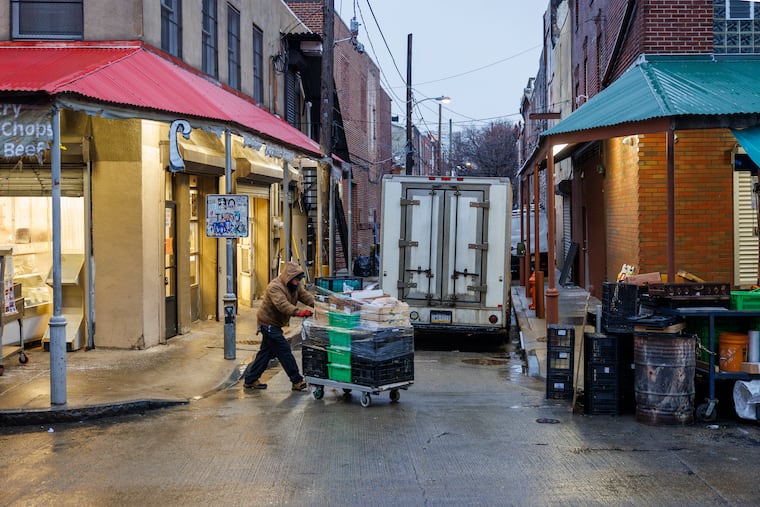
It has now been a full year since Commerce Director Alba Martinez left City Hall to produce a musical based on the way SEPTA’s 47 bus route brings together Latinos from across the city. And yet, Philadelphia is still without a permanent replacement for the role. Given Mayor Cherelle L. Parker’s emphasis on economic development — making Philadelphia the “cleanest, greenest city with economic opportunity for all” — this lack of action is a bit confusing. With the city about to enter perhaps the biggest tourism season in recent history, it is time for the mayor to rectify the situation.
This is not the first time Parker has been slow to hire. Despite having seven months in between her win in the May 2023 mayoral primary and her January 2024 inauguration to firm up her team, many key roles were initially left vacant. While Parker administration officials have said they utilize a strong vetting process, a year is simply too long to leave such a critical role unfilled on a permanent basis.
Karen Fegely, a longtime Department of Commerce staffer, has been performing the role in an acting capacity. The city’s business development community, alongside staff within the department, has given her tenure a positive review. Bryan Fenstermaker, president and CEO of the City Avenue District, told me that Fegely “brings experience and stability to a department that has faced leadership challenges. Her years of experience overseeing its programs, shaping policy, and finding solutions that help the city’s businesses thrive are not overlooked by those outside city government.”
In the past, mayors have proven reluctant to promote from within the department, to the city’s detriment. Semiretired business executives may make a splashy hire, but often struggle to work in an environment where they are not the ultimate boss. Fegely, on the other hand, understands both City Hall and Main Street. Fenstermaker and other managers of the city’s commercial corridors say she is accessible and easy to work with.
Clout before competency
For most of the public servants who are required to testify at City Council’s budget hearings, the process is one of the most stressful events of the year. Departments seek to anticipate questions in advance, and must comb through records for the details Council members want. While many of the questions are legitimate inquiries tied to the public interest, there’s also quite a bit of score-settling and grandstanding, done at the expense of those testifying.
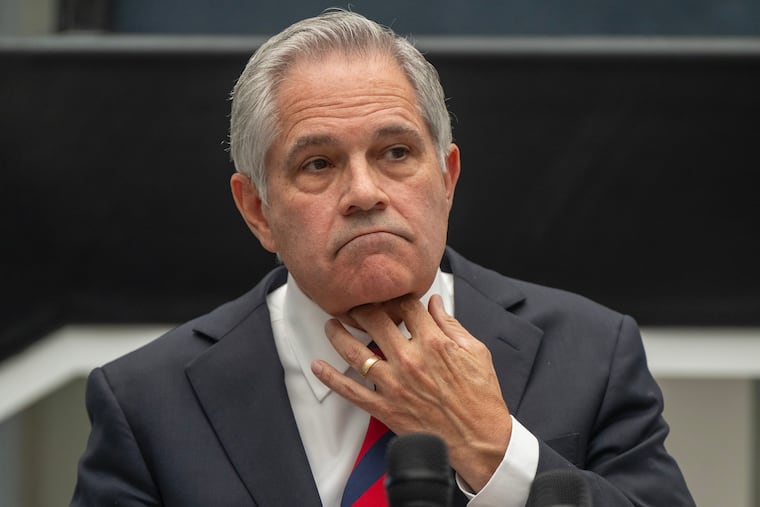
Then there’s Sheriff Rochelle Bilal, who, regardless of her record in office, doesn’t have to worry about any of that.
Bilal came to Council with the biggest request of all city departments: a 54% funding increase. She claims the money is needed to create a new training center and patrols, and to overcome long-standing staffing shortages. While her department does need to beef up the eviction unit, given the elimination of the Landlord Tenant Office, entrusting the development of a new training center to her leadership would be naive at best.
While Councilmember Cindy Bass savaged SEPTA’s leadership over the decision to give leases on five vacant and decaying railway stations to a developer, she had only positive things to say about Bilal. “The city of Philadelphia works because you all work,” she fawned.
The sheriff responded to a laundry list of criticisms regarding delayed deed transfers as just entitled and disgruntled property buyers “running to the paper.” She insisted that all is well and that they are back full blast on sheriff sales. Meanwhile, the department’s website currently lists zero properties for sale.
Bass and her colleagues let Bilal go without supplying real answers about the off-budget spending, rise in delinquent property taxes, failure to adequately protect the courts, and whistleblower lawsuits that have defined her tenure, choosing instead to allow Bilal to declare that everything is peachy.
This was particularly galling given the sheriff’s repeated refusal to make herself available to members of the media who would ask her some tough questions. Perhaps Philadelphians should write in “Ryan W. Briggs” on their at-large ballots next year and let The Inquirer investigative reporter hold Bilal to account.
The treatment of the sheriff is another reminder of how politics comes before policy at the heart of City Hall. Since Bilal is a political ally and has major influence at the Guardian Civic League, whose endorsement most of Council covets, her failures are given a pass.
Isle of Reg
While Council may praise Bilal, it has harsher words for Reginald Streater, the president of the city’s appointed school board. Members of the local legislature, which is responsible for funding the district, even went as far as disrupting the most recent school board meeting.
Unlike Bilal, Streater does not come with outside political support. That leaves him taking nearly all the heat for an unpopular facilities plan that’s the result of the decisions of a multitude of officials over the years. They say no man is an island, but Streater and his board colleagues likely felt like one during Thursday’s vote.
The Dean Adler show
The annual release of the “State of Center City” report is usually a dry affair. Local real estate developer Dean Adler was on a one-man mission to ensure 2026 was different.
In an industry filled with characters, Adler might hold the crown as the city’s most bombastic investor. The event was held at the Park Hyatt at the Bellevue, a historic hotel he himself has recently renovated. It also featured him as a panelist. That did not stop Adler from nearly derailing it.
Frustrated with the length of the presentation, Adler stormed out of the room. When the panel did begin, Adler dominated the proceedings. He bragged about working with the U.S. Department of Defense (which he referred to as the “Department of War”), called President Donald Trump his “boss,” criticized the city’s efforts to revitalize East Market Street, declared that the city should listen to him because of how much he’s invested, and complained that his co-panelist, Aramark COO Marc Bruno, had gotten such a good deal on the office space (that he rents from Adler).
Adler’s antics sadly obscured the event’s message, which is that Center City is poised to thrive — if City Hall and Harrisburg will let it.
Despite onerous business taxes driving major and minor employers away, and the lack of adequate support for SEPTA, things are going well. New housing fills up fast, the office vacancy rate is better than other downtowns across the country, crime is down citywide, and programs like Open Streets are bringing people out. If the stretch of land the report has long called “Greater Center City” were its own municipality, the more than 200,000 residents would make it Pennsylvania’s third-largest city.
The two takeaways from the presentation were that the state of Center City is good and that Dean Adler has no problem speaking his mind.