Did Amazon just deliver a blow to Josh Shapiro’s White House dreams?
As public revolts against data centers, emails expose cozy relationship between a tech giant and Pennsylvania’s governor.
There are many hurdles facing Pennsylvania Gov. Josh Shapiro if he truly hopes to make the transition from a popular governor, seemingly cruising toward reelection this November, to a Democratic presidential contender in 2028. But the tallest barriers are always the ones you never saw coming.
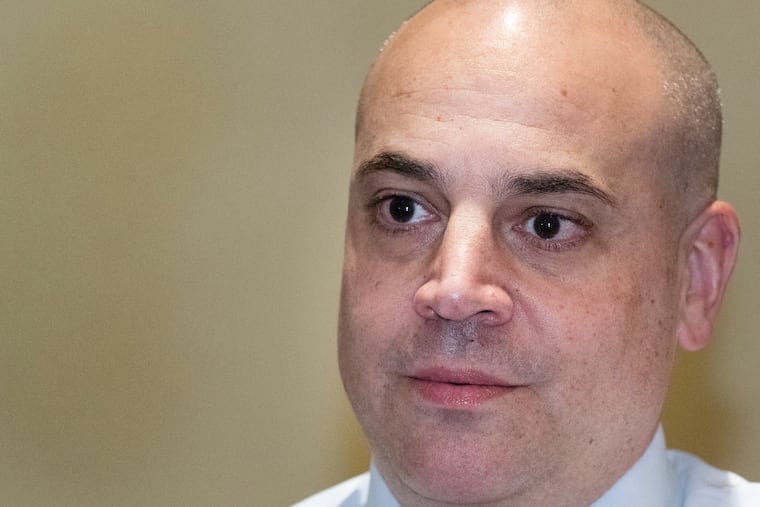
Right now, Shapiro’s worst electoral nightmare might be a 41-year-old pediatrician and backpacking enthusiast from rural Montour County who, this time a year ago, was so casual about his politics that he thinks he voted for the Democrat in 2022, but is not sure.
That was before Colby Wesner and his neighbors learned that a fracked-gas energy company was covertly buying up 800 acres of pristine farmland in their tiny north-central Pennsylvania county in a scheme to construct a massive data center to help power Amazon Web Services’ (AWS) push into artificial intelligence, or AI.
And before Wesner discovered a powerful weapon in his battle to stop a Big Tech monolith: Pennsylvania’s Right-to-Know public information law. In this kid-doctor’s new second act as a political activist, Wesner, along with hundreds of angry neighbors, has not only stopped the Talen Energy project but obtained and published emails revealing the cozy, behind-the-scenes ties between the Shapiro administration and Amazon and its lobbyists.
Wesner — whose Right-to-Know discoveries recently went viral when they were first published by climate journalist Jael Holzman for Heatmap News — told me Wednesday night he found one email particularly troubling.
At the same time Shapiro was promising stricter controls on new data centers in his 2026 budget address, the head of Pennsylvania’s Department of Community and Economic Development (DCED) wrote Amazon to reassure the giant retailer that new standards were only voluntary, and that the governor was “not proposing to ban or even discourage data centers or other large loads that don’t agree to implement them from siting here.”
“When I see these emails, it’s like, ‘Boy, like I feel like I’m getting represented without any true representation in this matter right now,’” Wesner said. “Like, our state government is just rolling out the red carpet for this” — with no real say for everyday Pennsylvanians like him or his rural neighbors.
Wesner and the so-far-successful crusade to keep Amazon and its AI facilities out of Montour County are the cutting edge of a coast-to-coast political revolution against big, noisy, water-and-electricity-sucking AI data centers. This uprising has shifted the ground under politicians like Shapiro, who originally gave a bear hug to Silicon Valley and its multibillion-dollar investments.
The issue cuts especially hard for Shapiro because Pennsylvania — now the nation’s third-largest energy-producing state because of fracking, and crisscrossed by waterways — is ground zero for the big-money surge into data centers, with dozens up and running or nearly completed, with as many as 200 more on the drawing boards.
The emails obtained by Wesner expose some of the ugly governmental sausage-making behind the AI revolution, but don’t include any huge bombshells. As recently as last year, Shapiro made no secret about his enthusiasm that data centers would provide an espresso shot of jobs and investment in Pennsylvania — including a $20 billion infusion supporting Amazon projects.
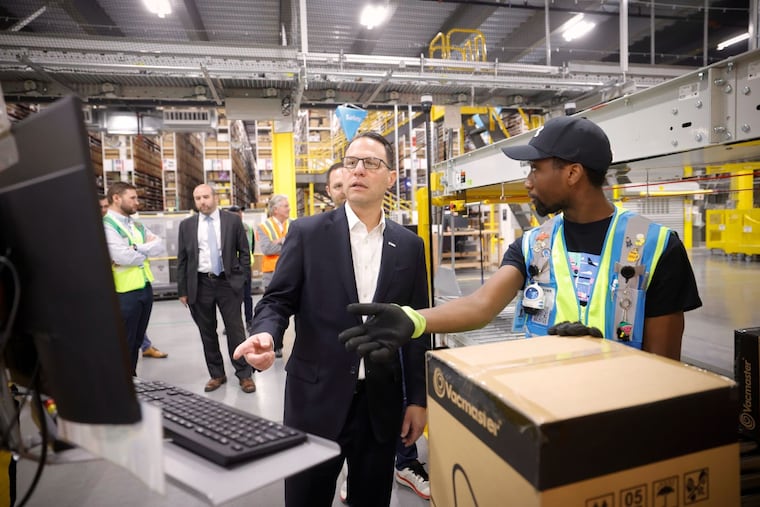
“We stand to gain so much here in Pennsylvania with this historic investment from Amazon,” Shapiro declared just 11 months ago as he stood in front of a massive yellow power shovel and hard-hatted workers in Berwick, near one of two proposed data centers with known ties to the Seattle-based corporation.
“The fact that Shapiro so wholeheartedly promotes an industry that threatens to drain local water supplies, drive up energy prices and drive down property values when people are already experiencing the pain of high prices for gas, groceries, healthcare, housing, and just about everything else just shows how out of touch he is with constituents,” Karen Feridun, a veteran anti-fracking activist who has trained her sights on data centers, told me.
» READ MORE: The annoying buzz of our AI future is keeping Vineland awake | Will Bunch
In 2026, running for a second term in a race in which he’s heavily favored, Shapiro has altered his tone on data centers. He told Politico that these tech sites need to pay their own way on energy costs, and then his budget address promised a more aggressive regulatory environment after the initial push to fast-track data centers.
“Governor Shapiro has heard directly from Pennsylvanians who are concerned about data center development, and he is committed to ensuring AI and data center growth strengthens communities, protects consumers, and puts Pennsylvanians first while taking advantage of the Commonwealth’s strengths for economic growth,” his spokesperson, Rosie Lapowsky, told me.
The Shapiro administration is calling its new regulatory agenda GRID — Governor’s Responsible Infrastructure Development — and promises to promote more transparency, environmental protection, and community input. Last month, administration officials cited a lack of transparency in removing a large planned data center — Project Gravity, one of five AI-linked facilities proposed for the tiny town of Archbold near Scranton — from a fast-track permitting program.
Still, activists like Wesner and Feridun are dubious. Indeed, it was an overbearing lack of transparency around the Talen Energy plan in Montour — which was not formally announced and only discovered by locals when the company was covertly offering farmers big bucks for their land — that converted someone like Wesner to activism. It took Wesner and his allies months just to confirm that the giant Amazon Web Services was behind the Talen project.
These revelations touched the live wire in locals’ worries about vanishing farmland, and the changing nature of the placid rural area where Wesner grew up and returned to practice pediatrics. He said the 800 acres Talen wanted to rezone included land local residents use for recreation.
“I call myself a bird nerd,” Wesner said. “I like kayaking and backpacking.” A registered Republican for a time whose politics had been limited to just voting — for candidates of both parties, he stressed — Wesner now threw himself into stopping the data center. He joined angry residents who packed local meetings, including a February session in which county commissioners denied Talen’s rezoning application.
During this successful grassroots campaign, Wesner also bombarded state agencies and eventually the governor’s office for records of their communications with Amazon and its lobbyists, Talen Energy, and other data center developers.
Some of the key findings from Wesner’s Right-to-Know campaign and the Heatmap News article:
The email that DCED’s head, Rick Siger, sent to Amazon officials suggesting the state will continue to work closely with data center developers. Other emails show an ongoing relationship with Amazon over drafting the so-called GRID agenda, with Shapiro deputy chief of staff Samuel Robinson writing Merle Madrid, an Amazon lobbyist, and company executive Becky Ford with “a feedback draft of the principles.”
Emails showing the Shapiro administration offered Amazon advance access to a newly created, accelerated state permitting process a couple of months before the program was opened up to any other applicants. Spokesperson Lapowsky told Heatmap News that AWS did not take advantage of the state’s offer.
The memo that was sent to Amazon about speedy permitting was also labeled “subject to a non-disclosure agreement dated effective as of Feb. 15, 2024.” Heatmap’s Holzman was not able to confirm whether there is indeed such an agreement between Amazon and the Shapiro administration, but this speaks to the intense secrecy that has bedeviled neighbors like those in Montour County.
The emails and other subsequent developments have shown Amazon to be tied to more than just the developments in Bucks and Luzerne Counties that Shapiro announced last June. In the case of a controversial and later rejected data center called Project Hazelnut in Luzerne County, alarmed Amazon officials who were asked by a reporter about its role, then fired off an email asking if the Shapiro administration had unintentionally “outed” their involvement.
It’s these layers of secrecy that have driven opponents like Wesner batty; indeed, he started his flurry of Right-to-Know requests after hearing that local officials in Montour County had signed NDAs not to discuss the project.
Of course, the reasons for stealth are becoming clear as more data centers come online and their unpopularity with the general public explodes. Recently, I visited Vineland, N.J., where residents are filming videos of loud buzzing from a partially opened data center serving Microsoft that keeps them up at night. Neighbors of other data centers across the country report their homes shake or their tap water runs dry — in addition to rising electric bills. A new Ipsos poll shows nearly half of Americans oppose new data centers in their community, stronger than opposition to other types of projects.
Are data centers becoming a political liability for establishment Democrats with close ties to Silicon Valley? Arguably, they already are. In Maine, Gov. Janet Mills just vetoed what would have been the first statewide moratorium on new data centers, just days before she also abandoned her Democratic Senate campaign against a progressive outsider, Graham Platner.
The core, rank-and-file Democratic primary voters who’ll be deciding the party’s presidential nominee are increasingly looking for candidates who’ll stand up to billionaire oligarchs, including Big Tech. That’s potentially bad news for Shapiro, who — in another email obtained by Wesner — personally told the AWS CEO that “my door is always open.”
Although not a Democratic primary voter, Wesner told me he has lost a lot of respect for a governor whom he credited, as a pediatrician, for promoting free school breakfasts, and whom he may or may not have voted for just four years ago.
“I have a completely different viewpoint of how this man wants to govern based on this information I’m obtaining,” he said. “And I wouldn’t cast a vote for him anywhere.”

Sign up for the Will Bunch Newsletter