Gunfire of the Vanities: Trump dinner shooting defines a violent, unserious America
Another Trump assassination try leaves dinner guests wanting to party on, in a laughingstock America, numb to violence.
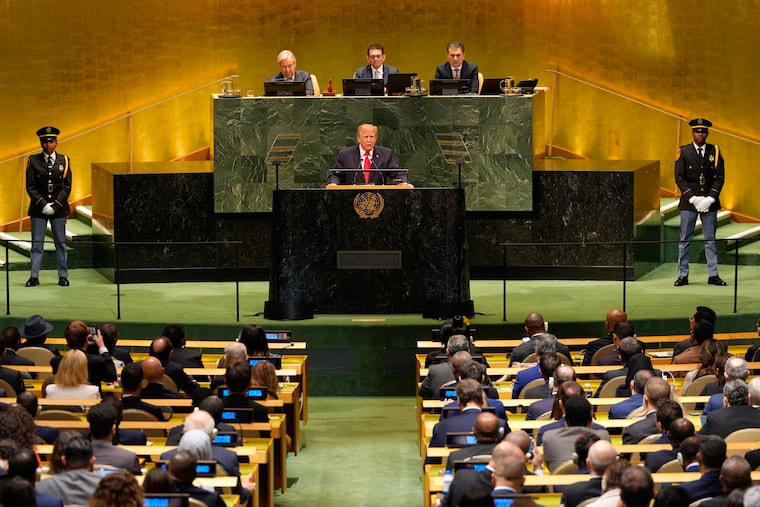
The plots to assassinate Donald Trump are becoming the stuff of American ritual now — incredible scenes of confused people running every which way, helmeted men with heavy-duty machine guns popping out from nowhere, and the muddled early news reports.
But Saturday night’s gunfire right outside the swank ballroom hosting Trump and the White House Correspondents’ Association (WHCA) dinner — with elite journalists in awkward black ties or uncomfortable high heels diving under white linen tables with half-eaten spring pea and burrata salad — went beyond metaphor for a depraved and decadent America. I kept thinking about a famous scene from the late Tom Wolfe’s 1987 magnum opus, The Bonfire of the Vanities.
Early in his chronicle of the follies of New York’s rich and famous, an information-seeking tabloid journalist meets an elderly millionaire named Arthur Ruskin at Manhattan’s hottest restaurant, La Boue d’Argent (or “mud money”). Ignoring his doctor’s orders, Ruskin eats and drinks his way into literal oblivion, collapsing from a fatal heart attack in the middle of the busy dining room and creating a conundrum for diners who’d waited weeks to get a reservation:
Stop eating until the drama had played itself out and the old man was out of sight? But the orders were in, and the food had begun to arrive, and there was no sign of any halt — and this meal was costing about $150 per person, once you added in the cost of the wine, and it was no mean trick getting a seat in a restaurant like this in the first place. Avert your eyes? Well, perhaps that was the only solution.
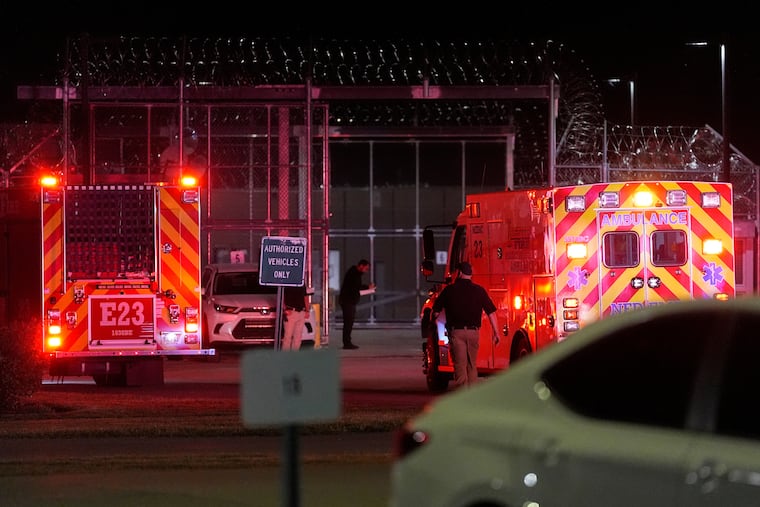
Right outside the ballroom at the Washington Hilton, the gunfire was still echoing, a Secret Service agent whose bulletproof vest apparently deflected a bullet was speeding to the hospital, and the stripped-naked alleged shooter, a 31-year-old Californian, was pressed facedown into a plush carpet. Yet, inside, the first instinct of the president and the media superstars of an America comfortably numb to gun violence was to party on.
“Please take your seat,” a disembodied voice announced over the ballroom loudspeaker. “Dinner service will resume momentarily” — even as some trays had toppled over from waitstaff who’d been ducking and covering moments earlier. Trump agreed, as the former TV reality show star posted that he wanted to “LET THE SHOW GO ON.”
Avert your eyes?
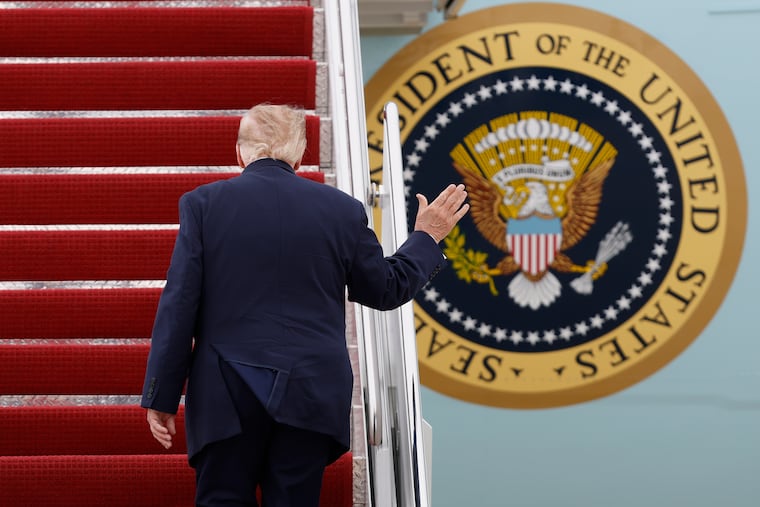
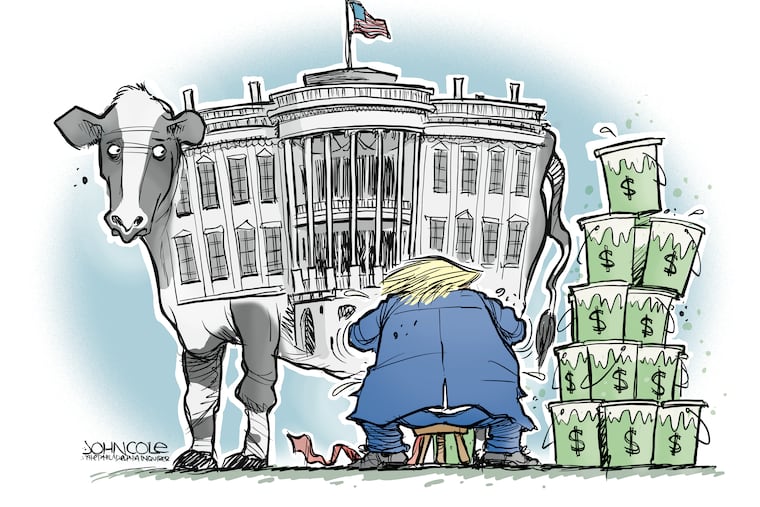
Finally, someone with that increasingly rare U.S. commodity of common sense convinced the president and the press to postpone the dinner while we figured out what the hell is going on. Ever the ABC (“always be closing”) real estate man, Trump motorcaded back to the White House, where he turned a near-tragedy into a sales pitch for his $400 million-plus ballroom-with-a-bunker. (According to the Atlantic, the president reluctantly agreed with the postponement after “his staff told him that his jokes might not land in the aftermath of the shooting.”)
Thankfully, no one was seriously injured in the third assassination attempt on Trump in less than two years. That also makes it easier on the Sunday afternoon after to take a step back and talk about what this madness revealed about our almost comically corrupt and contented government and its complicit stenographers, in a land where — in the unforgettable words of the 1960s radical then known as H. Rap Brown — violence is as American as cherry pie. Now more than ever.
Indeed, our country’s well-deserved reputation as an assassination nation has reached the stage where attempted murder sites are now getting recycled, with the would-be Trump shooter tackled just a long football throw away from the Hilton exit where John Hinckley shot and wounded Ronald Reagan in 1981. Since Trump — who faced two attempted shootings when he ran for reelection in 2024 — returned to the White House, we’ve seen the killing of a Democratic state senator, Melissa Hortman, in Minnesota, and the right-wing activist Charlie Kirk during a talk on a college campus in Utah.
Despite the dull surprise of more gunplay in a nation where firearms outnumber human beings, it does seem odd that so many in the black-tie crowd wanted to keep eating after a man with a long gun nearly burst into their ballroom. Or maybe not.
Think about how little media coverage there was this week when a mentally disturbed dad in Shreveport, La., murdered eight children, or when Baton Rouge’s Mall of Louisiana erupted in a Wild West shoot-out, or about the bullets that wounded nine people near the University of Indiana, in an America that’s come to treat mass shootings with the whatever-guy shrug.
Dinner service will resume momentarily.
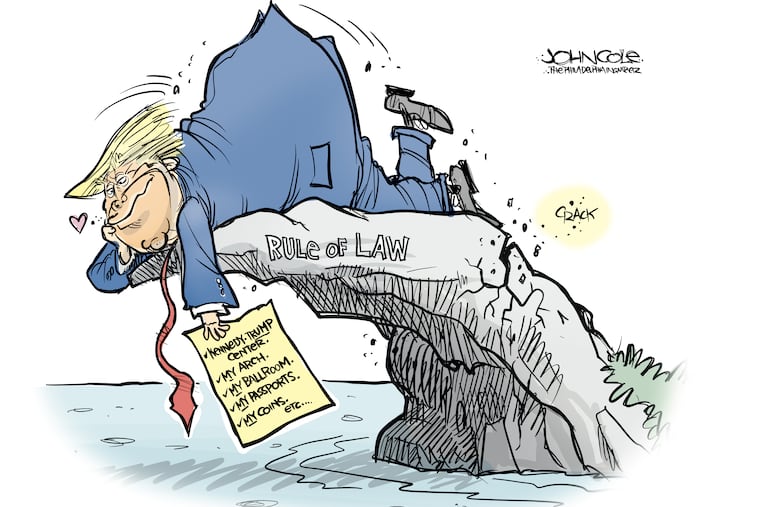
Political violence is abhorrent and is never, ever justified. You might consider Trump the worst human being ever to occupy the Oval Office — I certainly do — but we should wish him a long life. That’s not just because we need to cling to our own humanity, but because it’s going to take a long time to account for his many high crimes and misdemeanors, and to bring him and his band of thieves to justice.
The man wrestled to the carpet, Cole Tomas Allen, was a math whiz and “Teacher of the Year” with a diploma from the prestigious California Institute of Technology, who wrote a 1,000-word manifesto that read, “I am no longer willing to permit a pedophile, rapist, and traitor to coat my hands with his crimes.” Presumably, the right-wing media has already blamed “Trump Derangement Syndrome” (although neither of Trump’s earlier would-be assassins was a leftist). But it’s hard to ignore that the climate that nurtures American violence starts at the very top of the food chain.
Just the day before the White House dinner shooting, the Trump regime announced plans to bring back the firing squad as part of a broader push to execute more federal prisoners, because, apparently, lethal injection is too bloodless a method of state-sanctioned murder. Or maybe the cruelty is the point.
Also that day, Trump’s Pentagon posted yet another snuff video of a drone-strike summary execution of two men aboard a boat in the Pacific, who were alleged to be drug traffickers but who — based on other recent mishaps — could have been humble fishermen. And you already know about the Iranian schoolgirls, the ICE detainees, Renee Good, and Alex Pretti.
Like Lynyrd Skynyrd’s Ronnie Van Zant sang weeks before he perished in a plane crash, the smell of death is around you. Yet, the fact that a roomful of journalists heard gunshots and looked around for servers with the next course shows powerfully how Trump has succeeded in making appalling forms of violence feel, well, normal.
The gunplay meant America will have to wait a month or so to hear the comic stylings of Trump (and don’t forget the mentalist!), and it also muted the conversation that the politically minded expected to be having this weekend — about what self-respecting journalist would break bread with an increasingly dictatorial president who calls the media “the enemy of the people” and now investigates real reporters.
With a vibe but little underlying logic, the current head of the WHCA — CBS White House correspondent Weijia Jiang — told the journalists who were still in the room at 10 p.m. that “on a night when we are thinking about the freedoms of First Amendment, we must also think about how fragile they are.”
Incredibly, she was talking about the gunman, and not WHCA’s bizarre decision to legitimize the president who is feeding the First Amendment and the rest of the Bill of Rights into a shredder. Jiang’s words rang particularly hollow after she and other CBS journalists had the audacity to attend a smaller dinner in Trump’s honor thrown by their network’s new owner, David Ellison, who is seeking regime approval for a merger that would also hand him the keys to CNN.
I’ve been a full-time journalist for 45 years, and I’ve learned that generalizations are dangerous — including those about my own profession. There were some great reporters in that ballroom, and some of them have expanded our knowledge of Trump’s corruption and unfitness for office. But they are swimming against the currents of raw sewage that brings too much press complicity — and the averting of eyes.
There is a fierce and noble fight for press freedom, but it’s waged far from the chandeliers of the Washington Hilton. I was taken on Saturday night by a Bluesky thread from Mel Buer, a Los Angeles independent journalist I interviewed last year for a column about anti-media brutality by the LAPD.
“I think the journalists who have been traumatized the most were not sitting in that room tonight,” Buer wrote. “The feds gassed the [bleep] out of us, knocked us over, sent in the local PD to harass, detain, and hurt us, shot a teenaged photographer in the face and he lost an eye, and that’s just in LA.”
Maybe someone should buy them a spring pea and burrata salad.
» READ MORE: In LA, police nightsticks are clubbing press freedom to death | Will Bunch
There has, of course, been wall-to-wall coverage since the shots rang out, but one thing that seems unexplored is how this all looks to the rest of the world. They see what could have been the best democracy on earth destroyed by madness, in a land where guns are everywhere, and a callous elite media dons formal wear to toast its own humiliation by our narcissist king.
With fear for our democracy, I am dreading the nonstop hype and self-congratulatory backslapping as Trump and the WHCA head back to the tuxedo rental store to stage this travesty all over again in 30 days. The waitstaff, with its PTSD, will finally get to bring out their dessert course. It ought to be cherry pie.

Sign up for the Will Bunch Newsletter