Trump’s racist Truth Social post about the Obamas is meant to demean us all
Trump has chosen to use the 100th anniversary of Black History Month to send a message. It is now open season on Black people.
When Donald Trump posted a meme on his social media platform that portrayed former President Barack Obama and his wife, Michelle, as apes, it was an act of racism.
Trump engaging in this behavior during Black History Month is no accident. His childish attempt to taint the legacy of America’s most accomplished Black couple is about more than insulting the Obamas. It is meant to demean all of us.
After all, if a Black president is nothing more than a monkey, a Black doctor, lawyer, or executive is even less than that. Therefore, in the minds of those who embrace that kind of racist reasoning, Black history should not be celebrated. It should be mocked, undermined, and erased.
» READ MORE: The fraught politics behind the creation of Black History Month | Solomon Jones
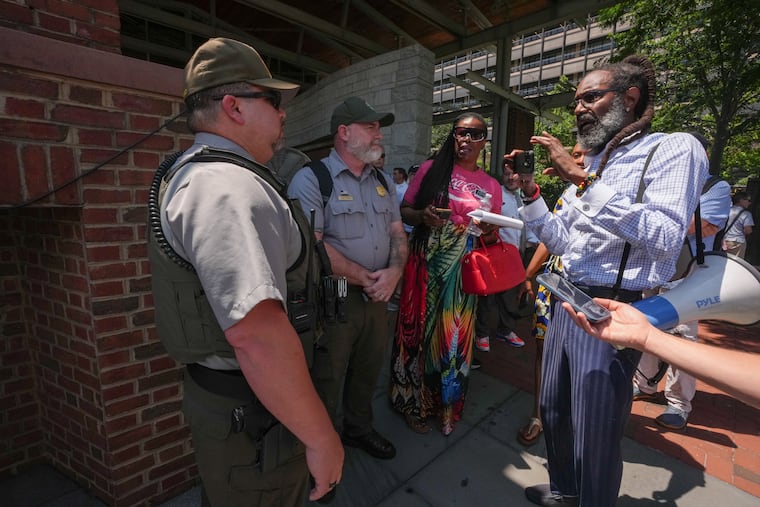
That’s why we can’t ignore the timing of Trump’s decision to pry Black history from the walls at the President’s House slavery memorial at Sixth and Market.
We must not downplay his sudden fixation with controlling the voting apparatus in cities like Philadelphia with large Black populations.
We cannot pretend that portraying the Obamas as monkeys is isolated from his ongoing attack on diversity, equity, and inclusion.
Trump has chosen to use the 100th anniversary of Black History Month to send a message: It is now open season on Black people.
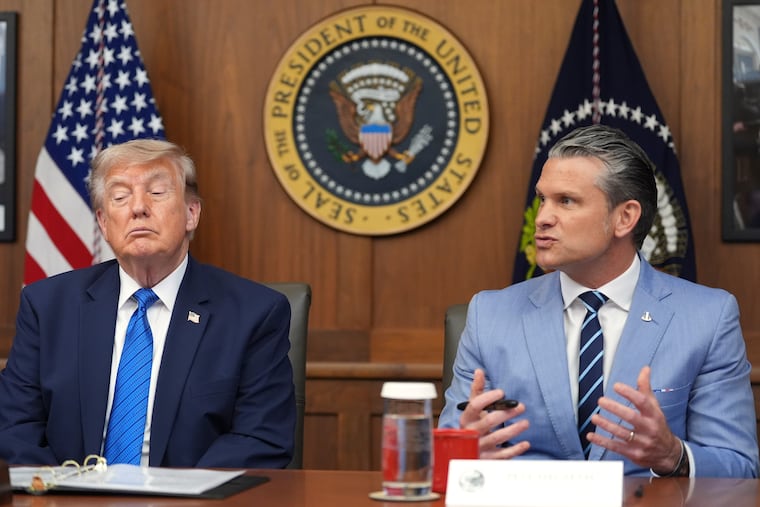
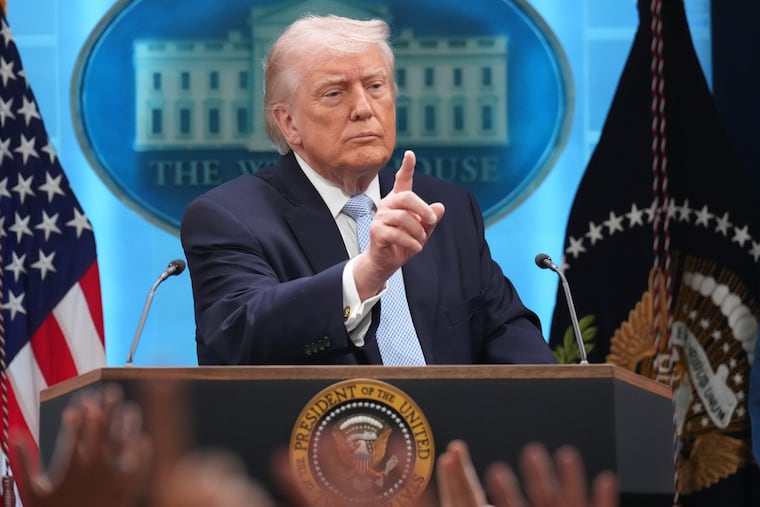
The White House, through a statement from press secretary Karoline Leavitt, initially sought to downplay the president’s social media post. “This is from an internet meme video depicting President Trump as the King of the Jungle and Democrats as characters from The Lion King,” Leavitt said. “Please stop the fake outrage and report on something today that actually matters to the American public.”
But here’s the thing. The president’s racist post does matter to the American public, as evidenced by the immediate backlash from major figures on both sides of the aisle. Even Black Republican U.S. Sen. Tim Scott, who normally declines to criticize the president’s racial broadsides, responded.
“Praying it was fake because it’s the most racist thing I’ve seen out of this White House. The President should remove it,” Scott wrote on social media.
Scott, who chairs the Senate Republicans’ midterm campaign arm, is right to pray, because with each outrageous act by the president, Republican odds in the upcoming elections get a little longer.
But Trump’s overtly racist post was never about the elections. It was about reshaping the society in which we live.
Though Trump deleted the post after Americans reacted with outrage, the message was sent. Black people are the enemy, and they are to be treated as such.
As if to underline that point, a white listener called my radio show on Friday morning and called me the N-word on the air. I was neither surprised nor angry. Rather, I experienced a moment of great clarity. America should, too.
Trump is inviting the white conservatives who comprise much of his political base to follow his lead and embrace racism. He is reaching back for vile racist tropes to get them to do so.
In some ways, I’m grateful Trump waited until Black History Month to do this. History, after all, is a strong and determined teacher. We must strive to be the kind of students who embrace history’s lessons.
In 1906, for example, the determination to portray Black people as monkeys took an unimaginably cruel turn. A young African named Ota Benga, who had been taken from what was then the Belgian Congo, was placed in a cage at the Bronx Zoo with actual monkeys. Historians speculate he may have been 12 or 13 — caged with monkeys so crowds of white people could gawk at him, laugh at him, demean and humiliate him.
Trump is inviting the white conservatives who comprise much of his political base to follow his lead and embrace racism.
Benga was freed when outraged Black ministers and others complained about his treatment. Ten years later, Benga killed himself, and the Wildlife Conservation Society, which oversees the Bronx Zoo, spent nearly a century trying to cover up what was done to him. It was only after the murder of George Floyd that the organization fully acknowledged and apologized for the incident.
History teaches us that when racism is left unchecked and unchallenged, people die.
This Black History Month, as Trump seeks to take us backward, he must know that we will not go quietly.
In fact, we will not go at all.