Trump’s bullying of female reporters won’t stop journalists from asking tough questions
Catherine Lucey is a dogged reporter. I used to work with her when she was at the Daily News. She isn’t about to let the president’s schoolyard taunts stop her.
It has long been established that some of Donald Trump’s most frequently used rhetorical weapons have been misogynistic insults. It is just as well known that the president seldom hides his contempt for journalists.
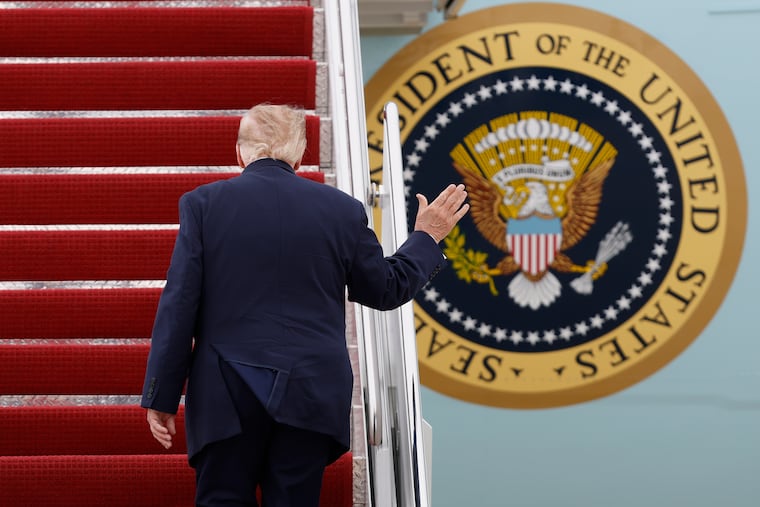
So it’s hardly surprising anymore when Trump degrades female reporters. But the president reached a new level of low even for him when he had the nerve to refer to Bloomberg News White House correspondent Catherine Lucey as “piggy” during a briefing with reporters last week aboard Air Force One.
Trump was angered when Lucey attempted to press him about the government’s case file on convicted sex offender Jeffrey Epstein. Trump literally leaned in Lucey’s direction, jabbed a pointed finger at her, and said, “Quiet! Quiet, piggy!”
Even after everything we’ve seen from Trump over the past decade, it was a startling and disgusting thing to witness coming from a sitting president of the United States.
Here’s the thing: Lucey’s a dogged reporter. I know. I used to work with Lucey when she was at the Daily News from 2000 to 2012. Lucey isn’t about to let the president’s schoolyard taunts stop her from asking tough questions.
Same thing with ABC News reporter Mary Bruce. On Tuesday, Trump accused her of being a “terrible person and a terrible reporter.” That’s not going to stop her, either. Journalists are a determined lot. The good ones in the White House pool recognize that their job is to hold him accountable and will stop at nothing short of exposing the truth.
It’s in our collective DNA.
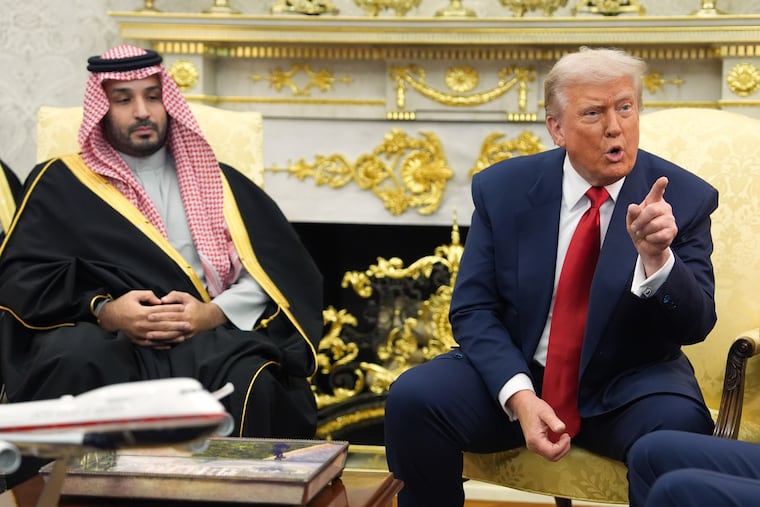
Bruce did the right thing when she challenged Trump earlier this week by asking if it was appropriate for his family to be doing business in Saudi Arabia.
She was also working in the spirit of journalism’s best traditions when she went on to also address Saudi Crown Prince Mohammed bin Salman, asking: “Your Royal Highness, the U.S. intelligence concluded that you orchestrated the brutal murder of a journalist. [The] 9/11 families are furious that you are here in the Oval Office. Why should Americans trust you? And the same to you, Mr. President.”
After asking Bruce whom she worked for, Trump accused ABC of being “fake news.” He defended his family’s business operations in Saudi Arabia, and said the reporter should not have “embarrassed our guest by asking a question like that.”
“A lot of people didn’t like that gentleman that you’re talking about,” Trump added, referring to the late Washington Post columnist Jamal Khashoggi. “Whether you like him or didn’t like him, things happen.”
A chill washed over me when I heard him say that. According to U.S. intelligence, Khashoggi reportedly was killed and dismembered on Oct. 2, 2018, in the Saudi Consulate in Istanbul.
The National Press Club issued a statement afterward, saying the organization is “deeply troubled by President Trump’s comments today regarding the killing of journalist Jamal Khashoggi. Mr. Khashoggi’s murder inside a diplomatic facility was a grave violation of human rights and a direct attack on press freedom.”
Just this past September, the president ordered NBC’s Yamiche Alcindor to be quiet and listen, and told her she was second-rate, which she is not. Alcindor had asked about his intentions for the Windy City after he posted a meme saying, in part, “Chicago about to find out why it’s called the Department of War.”
Trump’s animosity toward journalists goes way back. Following a 2015 Republican primary debate, he said of Megyn Kelly, “There was blood coming out of her eyes, blood coming out of her wherever.”
Even with the numerous lawsuits he’s filed against news outlets, Trump should have figured out by now that he’ll never stop the press. The president can insult and bar certain news organizations from the White House. But good journalists know how to work around that.
Even if a network does replace one reporter, another journalist will step in and do the exact same thing. If a newspaper fires a print journalist, these days they’ll move their work to the Substack publishing platform or social media, the way former Washington Post columnist Karen Attiah did shortly after she was let go.
Observers often wonder why journalists don’t fight back more against Trump’s verbal attacks. “Most reporters want to cover the news, not be the news,” as ABC News correspondent Jonathan Karl told Paul Fahri of the Columbia Journalism Review earlier this year. In other words, they try and stay focused on the job at hand.
And these days, getting bullied by the man-child in the Oval Office seems to come with the territory.