Fans are ‘entertained’ by ABS. Here’s how the Phillies feel about the new pitch-challenge system after one week.
The Phillies made only 11 challenges through six games with a 55% success rate that was tied for 15th in the majors. Deciding when to use it is still a work in progress.

One week into baseball’s brave new world of robot umpires, most Phillies players agree on at least one thing.
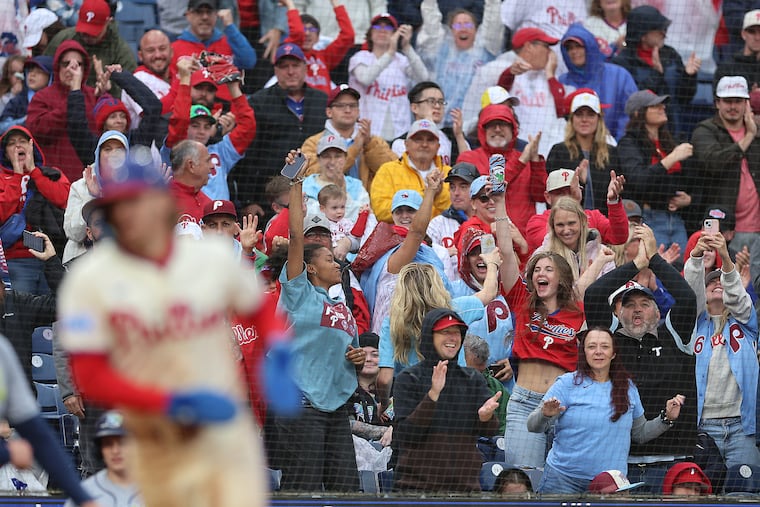
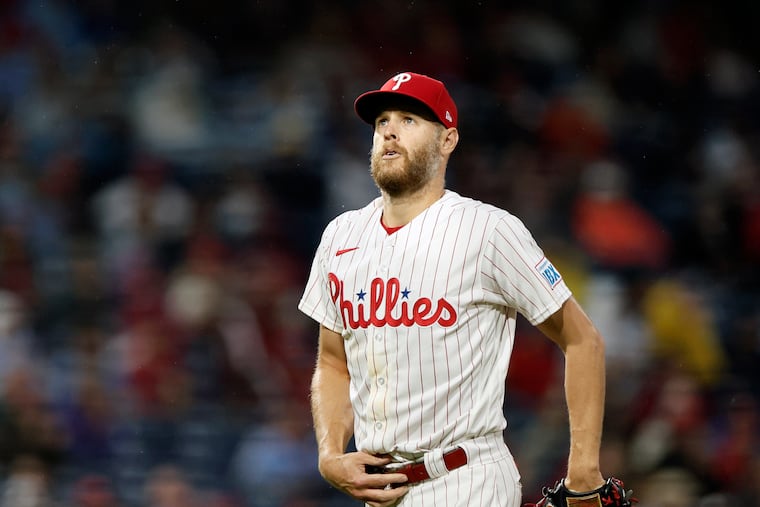
“Fans are pretty entertained by it,” Trea Turner said.
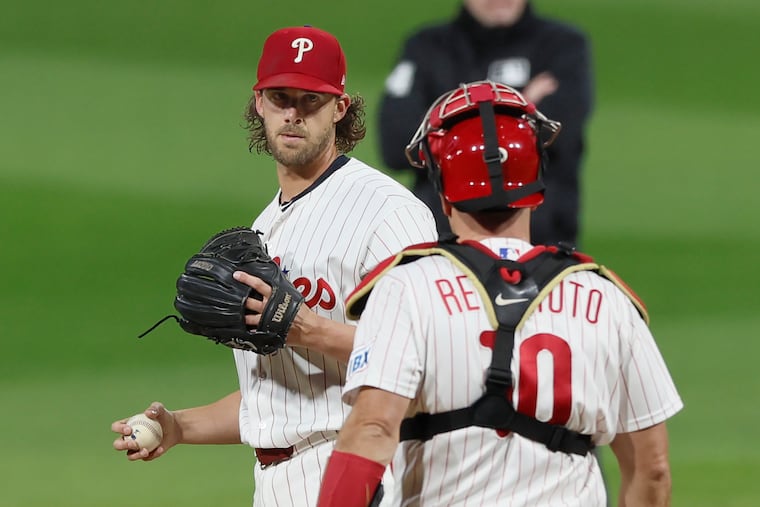
“They seem to love it,” J.T. Realmuto chimed in. “It seems like the most excited they get during the game is for overturned calls. It brings a little comedic relief.”
And from Kyle Schwarber: “It’s a spectacle, or whatever it is. On that side, obviously it’s great for fans.”
» READ MORE: Way-too-early Phillies thoughts: A big swing for Bryce Harper, importance of Adolis García’s start, and more
If somehow you haven’t seen it yet, here’s how it works: If the batter or catcher — or, occasionally, the pitcher — disagrees with the home plate umpire’s ball or strike call, he may tap his head to request an appeal. The pitch gets replayed in real time via animation on the ballpark’s videoboard, and the outcome of the challenge is announced by the living, breathing, human umpire.
The whole thing takes about 15 seconds.
And, in an unintended consequence of trying to get more calls correct, the automated ball-strike system (ABS, for short) appears to have caused some fans in our short-attention-span world to scroll through their phones less and get more engaged in the game.
“Yeah, fans love it because then they get to yell at the umpire or yell at the [opposing] player,” Turner said. “So, I think it’s entertaining for them. I know they’re pretty intrigued by it, one way or the other.”
Indeed, ABS is sparking discussion — and not only in the bleachers. Because teams start a game with two challenges and retain them only if they get them right. Across the sport, then, front offices, analytics departments, and coaching staffs are sorting through data to establish best practices for when to challenge a call and when to hold back.
And it isn’t clear cut.
The Phillies held one meeting early in spring training and another before opening day to go over ABS. They settled on this, for now:
Every player is allowed to call for a challenge, though that may change.
With a lead, it’s preferable that challenges come on defense (from the catcher or pitcher). If they’re trailing, batters should be more aggressive about challenging.
Try not to leave a challenge in your pocket.
» READ MORE: Phillies triple-A catcher Garrett Stubbs has lots of experience with robot umpires. Here’s what he says to expect.
“The front office and the coaching staff has told us to use them,” Turner said. “Because if you don’t use them, then you’re kind of wasting them.”
But the Phillies made only 11 challenges through six games entering the weekend series in Colorado. They were 6-5, a 55% success rate that was tied for 15th in the majors. The Orioles (86% on 14 challenges), Yankees (81% on 16), and Twins (73% on a majors-leading 22) went into the weekend as early ABS masters.
Realmuto, 6-for-6 on challenges behind the plate in spring training, was off to a 3-for-3 start. But he also challenged only 16% of calls that were deemed by Statcast as “reasonable” to appeal, tied for 36th among catchers.
Two of the 12 pitchers who challenged through Thursday were Phillies, with Cristopher Sánchez vowing not to do it again. Schwarber was 3-for-4, tied with Mike Trout for the most challenges among all hitters. But only two other Phillies batters had done it — Adolis García and rookie Justin Crawford (both 0-for-1).
Clearly, it’s going to take time to figure this out.
Within the clubhouse, opinions on ABS are mostly positive. The Phillies, after all, wish the system had been in place in last year’s postseason, when umpire Mark Wegner missed a strike call on Sánchez’s 2-2 pitch to the Dodgers’ Alex Call with one out in the seventh inning of Game 4 of the divisional series. Call walked for what was eventually the tying run.
» READ MORE: Robot umpires are here: What to know about the pitch challenge system, and how the Phillies will use it
But Realmuto and Schwarber, experienced voices on a veteran-filled team, say they’re more inclined to use ABS to reverse egregious misses than to contest borderline pitches. Others are still trying to decide when to pick their spots.
“You want to take away the big miss,” Schwarber said. “I’ve told guys, the things I probably want to challenge would be more obvious. It’s not like I’m there to challenge the one that’s 0.1 [inch] off, right?
“Except maybe when you go to the extra-inning game where it’s like the coin-flip thing.”
In that case, maybe the optimal use of ABS varies based on the situation. Or the vantage point. After one week, here’s how some Phillies catchers, batters, and pitchers view it.
‘More work for the catcher’
Realmuto caught the pitch that changed Game 4.
“The umpire told me right after he called it,” he said, “that it was a strike.”
Let’s be clear, then: Realmuto is in favor of ABS. But given most catchers’ list of responsibilities — calling pitches, blocking, framing, and controlling the running game — he wonders how much bandwidth remains to also check the umpire, especially on pitches that clip the plate by less than a half-inch.
“It feels like it’s more work for the catcher just because you feel like you’ve got to do two jobs,” Realmuto said. “But I do like [ABS] for the big misses. It’s going to help hitters in the long run, but I think it’s good for the game to get the big misses out and be able to overturn those.”
» READ MORE: J.T. Realmuto ‘never felt like a Plan B’ for Phillies while continuing fight to boost pay scale for catchers
Realmuto’s early success on challenges is proof of his feel for the strike zone. But it also might stem from being discerning about when to appeal.
He saved his first two challenges for the 10th inning last Saturday against the Rangers, including a 1-1 pitch from closer Jhoan Duran that was a strike by 1.4 inches. The other was a successful overturn of a Jesús Luzardo pitch that was a strike by 1.2 inches. Both seemed like obvious misses.
But Realmuto doesn’t seem likely to sweat the small stuff, regardless of how aggressive the data analysts might want the Phillies to be.
“It creates a little more stress, where I’m constantly second-guessing and having to think about every single pitch that we go through,” Realmuto said. “But overall I like it for the game.”
There will surely be games when Realmuto takes greater exception to the strike zone. Wait until the Phillies get CB Bucknor behind the plate. Bucknor grades among the worst ball-strike umpires and was challenged eight times, including six overturns, last Saturday in a Red Sox-Reds game.
But maybe another offshoot of ABS will be an improvement in the overall umpiring.
“I think it keeps them focused on every single pitch,“ said catcher Garrett Stubbs, who experienced ABS last season in triple A. ”Not to say that they’re not focused on every pitch, but it’s just like an extra layer of accountability during the game.“
‘It could flip an at-bat’
Turner faced the second-most pitches of any Phillies hitter through six games, but didn’t attempt a challenge.
“There’s a couple where I’m like, ‘Yeah, that didn’t really feel like a strike,’ or it felt 50-50 to me,” he said. “But it was a bad time to challenge anyways. I don’t know if I would have challenged even if it was good. Maybe if it was runners in scoring position, or a strike-three type deal. Then maybe.”
It begs the question: When is the best time for a hitter to challenge?
» READ MORE: Andrew Painter’s epic Phillies debut was ‘meant to be’ for one coach who was there for his road back
One trend: Hitters are tending to save challenges for later. Through Thursday, 91 of 163 batter challenges (55.8%) came in the sixth inning or later.
There wasn’t a consensus on the optimal moment within an at-bat to challenge. Some hitters tried to turn an even count into a favorable one, with 40.1% of challenges coming in 0-0, 1-1, or 2-2 counts. Two-strike counts (0-2, 1-2, 2-2, 3-2) accounted for 41.1% of batter challenges in an attempt to negate a strikeout.
“If you’re in an 0-0 [count] in the first inning or early in the game, or you have a big lead, I’m not going to challenge it even if I think it could be a ball,” Turner said. “Just because it’s more strategy later in the game. If you get to the ninth inning and you’re like, ‘Yeah, it might be [a ball],’ might as well try it.
“I think we’ve been pretty smart with it, pretty good with it early in the game, which is important. And then later in the game, I think you can kind of be aggressive with it.
“But it could flip an at-bat at any point, really.”
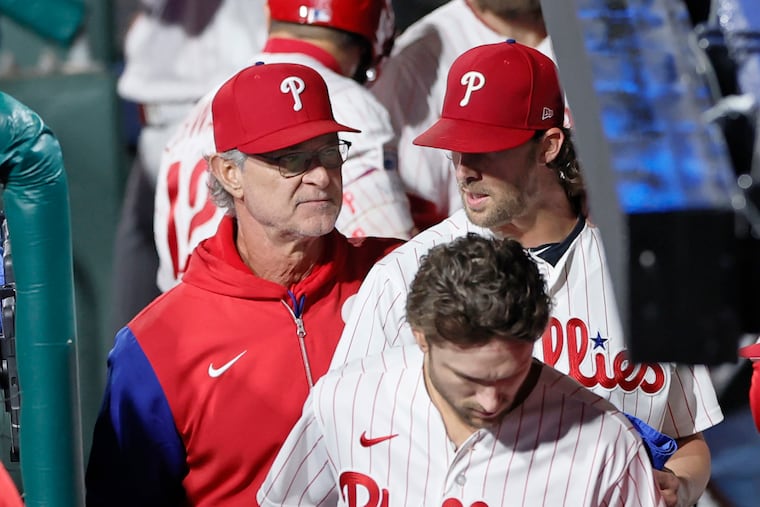
That’s how manager Rob Thomson feels.
“An at-bat in the ninth inning, because it’s the ninth, it seems like it’s more important. But it might not be,” he said. “And you can see guys, especially hitters, kind of hesitate. They’re thinking, ‘Should I do it?’ And especially after you lose the first one. Then guys really start thinking about it.”
‘The last time’
Sánchez labored in a 33-pitch second inning Wednesday, including a 10-pitch walk to the Nationals’ Jacob Young to load the bases with one out.
He looked to ABS for relief.
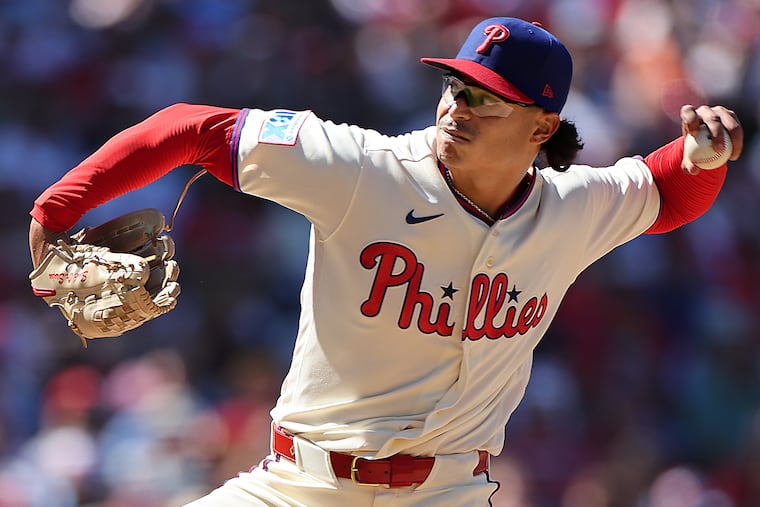
After throwing an 0-1 changeup to Drew Millas, Sánchez tapped his red cap. Most teams prefer that pitchers don’t challenge because they tend to have a worse vantage point than catchers — and a greater emotional investment in each pitch.
“I did it,” Sánchez said through a team interpreter, “because I really thought that was a strike.”
» READ MORE: Why has Dave Dombrowski invested even more in the Phillies’ starting pitching? Check his record: ‘It’s worked’
It was a ball — by 0.4 inches.
“As soon as I came back in the clubhouse,” Sánchez said, “I told the starting pitchers that is the last time I’m challenging a pitch.”
For posterity, the Phillies’ first ABS challenge came from a pitcher. Righty reliever Zach Pop tapped his cap on a full-count pitch to the Rangers’ Brandon Nimmo with two out and a 5-3 lead in the eighth inning on opening day. Pop lost the challenge by 0.1 inch.
“I thought it was great,” Turner said. “You might as well, you know? If he gets that challenge, the inning’s over. It’s real close, so I thought that was a good one. I think examples like that, if we’re doing it right, I think it’s a good thing.”

Let's talk about the Phillies' bullpen. Larry Andersen happens to be an expert on the subject. The popular Phillies radio analyst had a 17-year major-league career in which he appeared in 699 games – all but one in relief. He joins Phillies Extra to break down the biggest question standing between the Phillies and a long run through October: How will they bridge the gap to closer Jhoan Duran? Watch here.
You can also subscribe to the podcast version of Phillies Extra on Spotify or Apple Podcasts.
Previous episodes: Matt Klentak | Jeff Francoeur | Luke Murton | Mike Hazen | Tony Gwynn Jr. | Kevin Stocker | Bobby Dickerson | Jim Bowden | John Middleton | Ryan Howard