Baseball Hall of Fame: Cole Hamels’ prospects, Ryan Braun’s PED problem, and Manny Ramirez’s last ride
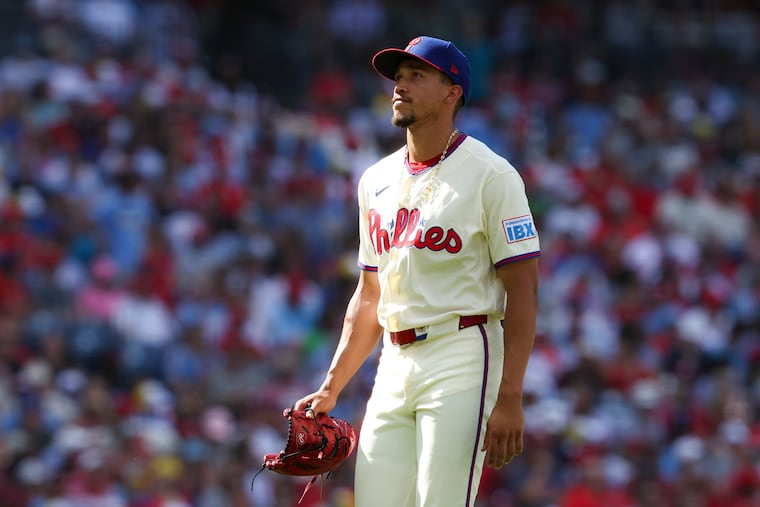
Things look good for Carlos Beltran, which is warranted, and Andruw Jones, which is not. Hamels seems like a perennial also-ran, like my favorites, Jimmy Rollins and Bobby Abreu.
Compared with the rest of the tribe of baseball writers, my criteria for Hall of Fame inclusion are undemanding. The most controversial element: I do not discriminate against the PED crowd.
I consistently have voted for Barry Bonds, Alex Rodriguez, and Manny Ramirez, titanic talents of their era who are shunned by a voting bloc — us writers — that ignored and profited from rampant steroid use. Further, I know there are plenty of players who juiced and didn’t get caught, so banning the BALCO boys never made sense.
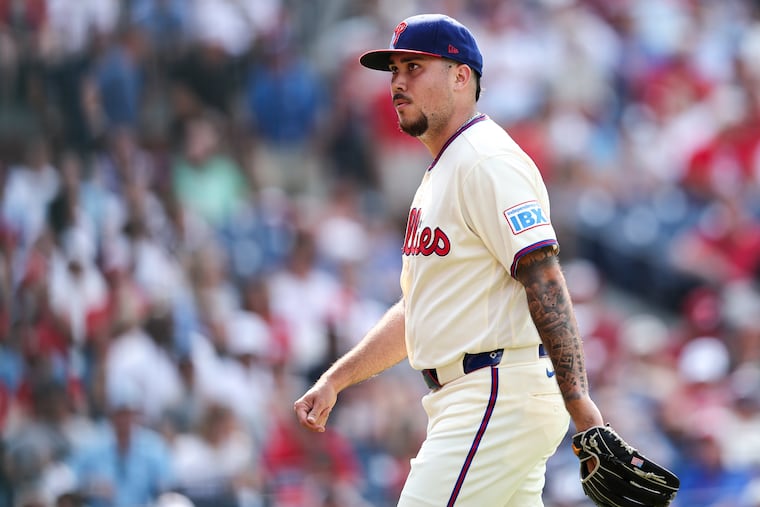
Which brings us to Ryan Braun, the best of a weak first-year class of Hall of Fame candidates — no offense, Cole Hamels. Inductees will be announced Tuesday. Don’t expect either to be on the list.
» READ MORE: Who’s next? Sizing up the Hall of Fame chances for four Phillies on the ballot
Hamels doesn’t deserve it.
Braun does, but with a generous dollop of ick.
Between 2008 and 2016, a nine-season span, Braun was, without question, one of baseball’s best players. He was a five-tool player. He twice hit at least 30 home runs and stole at least 30 bases. His .902 OPS ranks fifth in that period among players with at least 4,000 plate appearances. Ahead of him: future Hall of Fame locks Miguel Cabrera and Albert Pujols, Hall of Famer David Ortiz, and, at No. 2, Joey Votto.
Braun was Rookie of the Year in 2007 and National League MVP in 2011.
You know what else happened in 2011? Braun tested positive for synthetic testosterone, and ruined his reputation in the aftermath. He challenged the test, smeared one of the testers as being antisemitic (Braun is Jewish), and had his record cleared on a technicality involving the handling of the sample.
Then, in 2013, later, Braun tested positive again. That invalidated all of his protestations.
This time, he served a 65-day suspension. Despite excellent production over the next three seasons and despite an effort to rehabilitate his image through varied good works, he never recovered.
» READ MORE: Marcus Hayes: Can Don Mattingly save Phillies skipper Rob Thomson from himself?
There’s no way Braun will get the 75% of the vote he needs to qualify for induction; not this year, and probably not for five years or so. He’ll be the next Carlos Beltrán, the scapegoat for the Astros’ signal-stealing scandal in 2017 who should have been inducted years ago.
Braun certainly belongs in the Hall of Shame, right next to Rodriguez, who once indignantly denied that he’d ever taken steroids then later admitted to juicing as a younger player. A-Rod’s image has never recovered, either. Both belong in the Hall of Fame, too.
I vote for A-Rod every year. In fact, this is the third consecutive year he’s my No. 1 pick. The only time he wasn’t No. 1 was in 2022, when he was No. 2. Bonds was No. 1.
Braun’s situation is different. For one thing, he tested positive twice. For another, he was an absolute tool about it. For a third, PED use had plummeted by the time Braun arrived on the scene, so it’s not as if he needed to cheat to keep up. Finally, Braun tested positive in an era in which players knew the likely penalty for testing positive. Mark McGwire, who was first eligible in 2007, was being blackballed every year of Braun’s Hall of Fame run.
It is a penalty with which I always have disagreed. And, while I acknowledge that Braun’s candidacy is tainted more than any other PED user, I would be as hypocritical as my colleagues if I excluded him purely on the basis of PED use.
I will vote for him, but, more so than with A-Rod or Bonds or Roger Clemens, I will hold my nose as I check his box.
And I will think slightly less of myself for doing so.
The criteria
I not only divulge my votes, as I believe every writer should do, I also rank my votes and defend them.
I don’t vote for designated hitters because they don’t play the whole game. That included Ortiz in 2022, and it would have included Harold Baines and Edgar Martinez if I’d had a vote in 2019. Kyle Schwarber one day might make me eat those words.
I don’t vote for relievers. Traditionally, they’ve been failed starters. I backslid on that criterion in 2025 because I didn’t want to be the reason Billy Wagner didn’t get enough votes in his final year of eligibility. Thankfully, I didn’t have a vote in 2019, when Mariano Rivera was a unanimous selection. I don’t exactly know what I’d have done that year, when two designated hitters also made it. I probably would have abstained. My antireliever stance will further soften as more players who were drafted and groomed as relievers become eligible.
I use all 10 ballot slots, which means I’ve helped keep Omar Vizquel on the ballot.
I weigh defense more heavily than most voters, to Jimmy Rollins’ benefit.
I vote for players nearing the end of their 10-year candidacy limit over players who still have time left.
The last few players are usually interchangeable: This year, that interchangeability begins at No. 7, with Chase Utley.
The vote
1. Alex Rodriguez, fifth year
Hit .302 with 642 home runs from 1996 to 2012, the most homers by a margin of 85 (Jim Thome had 557). Hot or cold in his postseasons. Elite fielder. Smug, condescending, weirdo, Yankee. But still.
2. Manny Ramirez, 10th year
In his final HOF run, Ramirez will be remembered less as the most important player on the Red Sox teams that broke the Curse of the Bambino than as a juicer. He led baseball with 1,660 RBIs from 1995 to 2008. He led Cleveland in aggregate OPS from 1995 to 2000 and was fourth in baseball behind McGwire, Bonds, and Martinez among players with at least 3,000 plate appearances. He led Boston in OPS from 2001 to 2006 and was third in baseball behind Pujols and Todd Helton, again among players with 3,000 or more plate appearances. He was the best hitter on loaded teams in Cleveland, Boston, and Los Angeles. He might have been juicing the whole time — he tested positive three times — but, again, PED use was rampant during his prime years.
3. Carlos Beltrán, fourth year
In a game rife with cheating, it astounds me that so many people hold the sign-stealing scandal against him, a scandal perpetrated when he was 40, in his final season, after an 18-year run of excellence. That included the 1999 AL Rookie of the Year as a Royal; nine All-Star Game appearances, his ninth at the age of 39; three Gold Glove awards; and incredible playoff production: a 1.021 OPS, a .307 batting average, 16 home runs, 42 RBIs, and 11 steals (never caught) in 65 playoff games.
» READ MORE: ‘Phillies Extra’ Q&A: Adam Lind on working with Justin Crawford, Aidan Miller, Gabriel Rincones Jr., and more
That said, he got 70.3% of the vote last year, 57.1% in 2024, and 46.5% in his first year of eligibility. Independent preannouncement polling indicates that Beltrán will cruise into the Hall this year as effortlessly as he played the game itself.
4. Ryan Braun, first year
See above.
5. Jimmy Rollins, fifth year
I understand why, independent of their controversies, Beltrán and Braun aren’t slam-dunk Hall of Famers. I understand why Rollins isn’t, either. J-Roll is my best example of why defense, baserunning, and availability don’t get enough respect from voters. His 2007 MVP season was the best of an eight-year run in which his most consistent contributions involved superb shortstop play, base stealing, and baserunning, which helped account for his 292 stolen bases and the 395 combined doubles and triples he hit from 2001 to 2008, a league high among players with at least 5,000 plate appearances.
Rollins also played in 1,237 games in that span, second-most among shortstops (Miguel Tejada) and seventh-most among all players, including the next guy on this list, one of Rollins’ best friends.
6. Bobby Abreu, seventh year
Abreu was one of baseball’s best hitters from 1998 to 2009; his .902 OPS is third among players with at least 7,500 plate appearances, behind Helton and A-Rod. He averaged more than 28 stolen bases with a .301 batting average. He was an elite offensive player with one Gold Glove and a golden arm to boot. He got 19.5% last season, but he’s a lost cause.
7. Chase Utley, third year
He was a profoundly productive second baseman from 2005 to 2013, so why isn’t “Ut” higher? Because he was a profoundly poor second baseman who played out of position. He should have been at first base. Yes, his .881 OPS in that span ranks 11th among players who played at least 1,000 games, but he missed an average of 30 games per season in that span. He’s compared to Jeff Kent, who peaked at 46.5% in his final year of eligibility, though the new Contemporary Baseball Era Committee wrongmindedly slid him in instead of PED poster children Bonds and Clemens. However, Utley’s current popularity campaign as MLB’s ambassador to Europe — the most unlikely ambassadorship this side of Woody Johnson’s former gig in the United Kingdom — will surely help Utley blast past his 39.8% mark from last year.
8. Torii Hunter, sixth year
Hunter’s 5.1% last year barely met the 5% minimum for ballot retention, and he probably won’t be on the ballot after this year, but he was the best center fielder in baseball from 2001 to 2013 and a better player than Dustin Pedroia, Andy Pettitte, Hamels, and maybe even Utley.
9. Dustin Pedroia, second year
There’s an excellent argument that, if you’re in on Utley, you should be in on Pedroia. His 10-year peak was slightly less homer-heavy than Utley’s, but his overall play probably was better, considering his four Gold Gloves. He also won AL Rookie of the Year in 2007 and was AL MVP in 2008. He won two World Series with the Red Sox, but after his first playoff run in 2007 he hit .212 with a .628 OPS in his next 37 playoff games.
10. Omar Vizquel, ninth year
He’s the best defensive shortstop of the modern era after Ozzie Smith. However, his candidacy cratered when, in 2021, he was sued and accused of sexually harassing an autistic adult batboy while managing the White Sox’s double-A affiliate in 2019. No charges were brought, and the sides settled in 2022, but the incident, combined with previous, unproven accusations of domestic violence accusations by an ex-wife, effectively ended Vizquel’s Hall of Fame campaign.
» READ MORE: How can Don Mattingly help Bryce Harper? It starts with his star power.
He peaked at 52.6% in 2020, his third year of eligibility, but hasn’t broken 25% in the past four years, and almost certainly won’t again this year.
Honorably mentioned
If I had an 11th vote, I would throw Hamels, Pettitte, and Félix Hernández in a barrel, pick one out, and he would get that vote. None is especially Hall of Fame unworthy, and all were very good long enough to warrant consideration. Pettitte won’t make it this year, his eighth, so, in the spirit of my expiring candidacy criterion, I might vote for him in a couple of years, after some candidates drop off and after Buster Posey gets in next year as a first-ballot candidate.
Finally, Braves fans: Miss me with Andruw Jones.

Matt Klentak's fingerprints are still on the Phillies' roster six years after he was the team's general manager. These days, Klentak is part of the front office for the Brewers, who recently clinched their fourth consecutive NL Central title. With the Brewers coming to town Tuesday, Klentak joined Phillies Extra to discuss his current and former teams. Watch here.
You can also subscribe to the podcast version of Phillies Extra on Spotify or Apple Podcasts.
Previous episodes: Jeff Francoeur | Luke Murton | Mike Hazen | Tony Gwynn Jr. | Kevin Stocker | Bobby Dickerson | Jim Bowden | John Middleton | Ryan Howard | Dan Baker