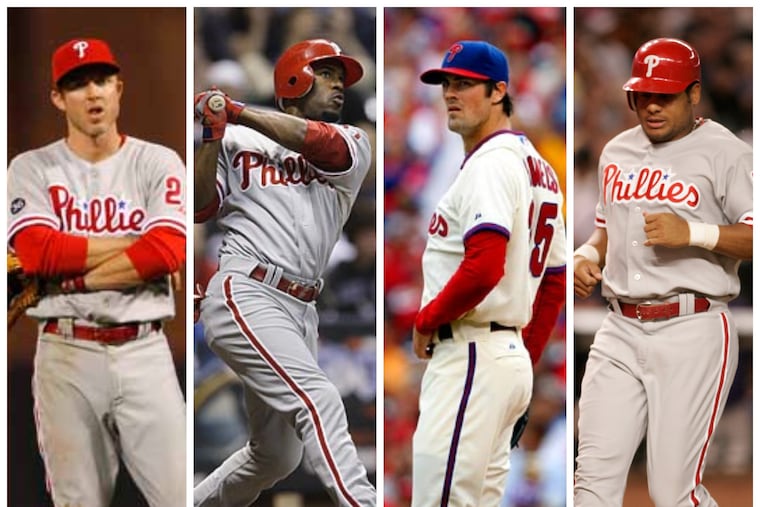
Who’s next? Sizing up the Hall of Fame chances for four Phillies on the ballot.
It's another loaded ballot for the Phillies with Chase Utley, Jimmy Rollins, Bobby Abreu, and Cole Hamels. Let's examine the Cooperstown case for each before the results are announced on Tuesday.
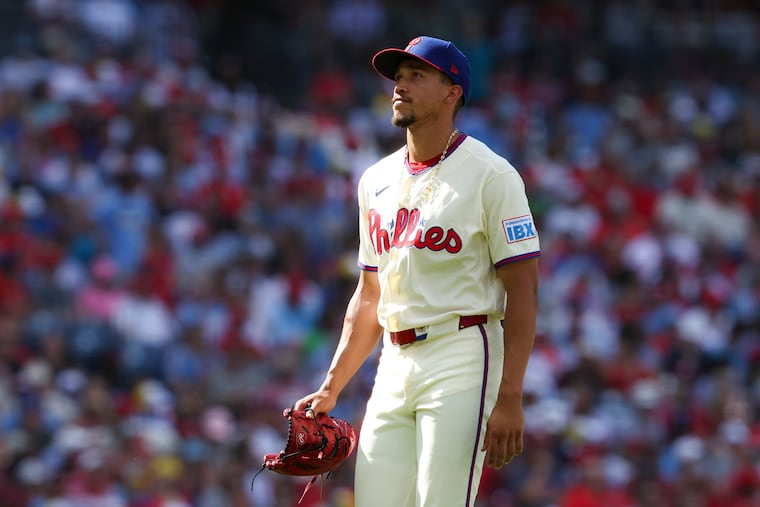
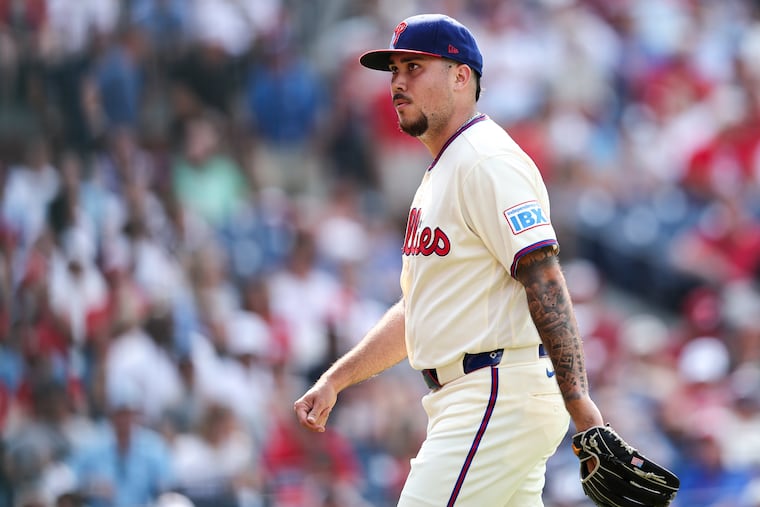
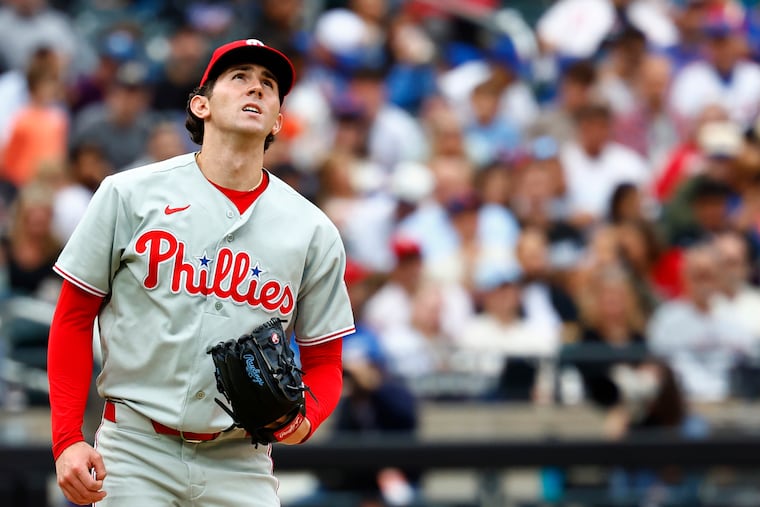
Cole Hamels knew it for years, even before pitching his last major league game. Eventually, a day would come when his name appeared on the Hall of Fame ballot.
Even so, there was something about actually seeing it.
“When they do put your name on the ballot, they send you a letter,” Hamels recently told Phillies Extra, The Inquirer’s baseball podcast. “You can frame it.”
Better yet, cast it in bronze, just like those plaques on the walls in Cooperstown, N.Y. Because although only one, maybe two former players on this year’s ballot will get elected Tuesday night and inducted this summer, all 27 had careers worth recognizing.
» READ MORE: ‘Phillies Extra’ Q&A: Cole Hamels on Kyle Schwarber’s return, his debut on the Hall of Fame ballot, and more
Take, for instance, Hamels. He finished in the top 10 in his league in ERA six times in 15 seasons, 10 of which came with the Phillies. He ranks fourth in Phillies history in strikeouts (2,560) and sixth in innings (2,698). He was the MVP of the 2008 World Series and threw a no-hitter in 2015 in his final Phillies start.
By every measure, a brilliant career.
Yet Hamels’ name might be checked on fewer than one-quarter of the 400 or so ballots — and not the one cast by this voter. Hamels was polling at 31.1% as of Friday evening, according to industrious ballot collector Ryan Thibodaux’s tracker, more than the minimum 5% to stay on the ballot, far from the 75% for election.
But here’s what makes baseball’s Hall of Fame special: the quality of the players on the 1-yard line, a Tush Push from getting in. (Too soon for the Eagles reference?)
Consider that less than 24,000 players have made it to the majors, even for one day. A fraction of those stuck around for 10 years, the minimum requirement to be considered by the screening committee that annually puts together the Hall of Fame ballot.
Whittle it all down, and only about 5% of all major leaguers see their name on that sheet of paper. And since the inaugural Hall class in 1936, a total of 279 players have been elected, only 137 on the writers’ ballot.
“It’s not a disservice to anyone that doesn’t get that checkmark in any single year,” said Hamels, making his ballot debut this year. “They’re all some of the best baseball players that I was fortunate to play against.”
Indeed, that’s helpful to remember when the results are announced at 6 p.m. Tuesday on MLB Network.
» READ MORE: Top 2026 Phillies storylines: J.T. Realmuto or Bo Bichette, Zack Wheeler’s return, and more
Full disclosure: I voted for Carlos Beltrán, Félix Hernández, Dustin Pedroia, Andy Pettitte, and Chase Utley. Pedroia was the only addition to my ballot from last year. I strongly considered Hamels, in addition to David Wright, Andruw Jones, and Jimmy Rollins and might come around on some, or all, next year.
Every voter has a threshold for where to draw the 1-yard line. Over the years, my tendency has been to favor players who had a big peak, even if they lacked the longevity of classic Hall of Famers. Hernández, Pedroia, and Utley fall into that category.
For observers of the Phillies, it was another loaded ballot, with four candidates — Bobby Abreu, Hamels, Rollins, and Utley — who spent the bulk of their careers with the team. Howie Kendrick and Hunter Pence briefly played for the Phillies; Kendrick works for them as a special assistant.
Let’s dive into the Hall of Fame candidacies of the four longtime Phillies, from the most to the least likely to eventually get elected.
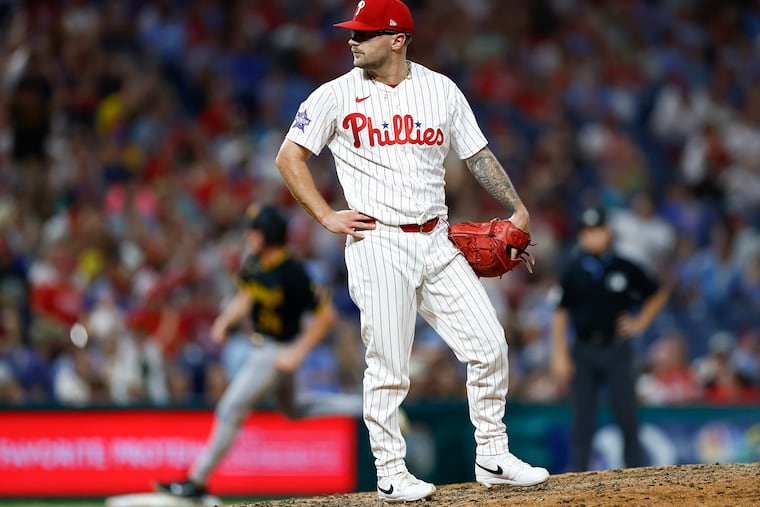
Chase Utley
Years on the ballot: Three
2025 vote total: 39.8%
The writers haven’t elected a player with fewer than 2,000 career hits since Ralph Kiner in 1975.
Utley finished with 1,885.
But Utley appears to be trending toward eventual election, likely because of the height of a peak that lasted at least six seasons and, if you squint, as many as 10. From 2005 to 2014, he had a 127 OPS+ and ranked second among second basemen in extra-base hits behind Robinson Canó, who was suspended twice for failing a drug test. Utley also had the second-most wins above replacement of any player, trailing only Albert Pujols.
Utley made a healthy ballot debut (28.8%) in 2024, then got an 11-point bump last year. Without a strong first-year candidate, he’s set for his biggest leap yet, tracking above 60% in early returns, although players don’t tend to fare as well among voters who don’t make their ballot public.
Second basemen are historically underrepresented in the Hall of Fame. The writers have elected only two (Craig Biggio and Roberto Alomar) since 2006. Jeff Kent was elected last month by an era committee after topping out at 46.5% in 10 years on the writers’ ballot. Maybe it will help Utley and Pedroia with the writers.
Utley already got to almost 40% in only his second go-around. His statistics won’t change, but voters’ perspectives often do. It wouldn’t be surprising to see Utley climb over 50% this year and get the call to Cooperstown sometime around, oh, 2028.
Cole Hamels
Years on the ballot: One
Greg Maddux, Tom Glavine, Pedro Martínez, Randy Johnson, and John Smoltz went into the Hall of Fame in a two-year parade of starting pitchers in 2014 and ’15.
Since then, the writers have elected only three starters.
Roy Halladay, Mike Mussina, and CC Sabathia will be joined in five years by Clayton Kershaw and eventually by Justin Verlander and Max Scherzer. Maybe Zack Greinke, too. But beyond that group, who’s the next surefire Hall of Fame starter?
At a time when teams ask less of their starters than before, in an age of reduced workloads and an arm-injury epidemic that has shortened careers, starters no longer reach the classic benchmarks — 300 wins, 3,000 strikeouts, etc. — that the all-time greats once did.
» READ MORE: From last year: Rethinking Andy Pettitte’s Hall of Fame case and what it might mean for Cole Hamels’ chances in 2026
It has been reflected in Hall of Fame voting. Johan Santana had a six-year peak with two Cy Young Awards and five top-five finishes but dropped off the ballot after one year because he apparently wasn’t dominant for long enough.
Voters appear to be recalibrating. Hernández’s peak lasted slightly longer than Santana’s and featured one Cy Young and two runners-up. He appeared on 20.6% of ballots as a first-time candidate last year and was tracking at better than 50%.
It’s difficult to assert that Hamels’ career, which didn’t include a top-three Cy Young finish, reached King Félix’s heights. But check out their numbers from 2007 to 2016:
Hamels: average of 208.2 innings, 126 ERA-plus, 46.5 WAR, according to Baseball-Reference.
Hernández: average of 214 innings, 129 ERA-plus, 47.2.
It’s close. Fortunately, Hamels will get additional consideration. He’s going to hang around on the ballot, maybe even topping Hernández’s first-year total.
Jimmy Rollins
Years on the ballot: Five
2025 vote total: 18.0%
Rollins’ significance to the Phillies would be undeniable even if he wasn’t their all-time hits leader. He was a soothsaying league MVP in 2007 and a World Series champion in 2008, and authored one of the biggest postseason hits in team history in the 2009 NL Championship Series.
The Phillies’ 143-year story can’t be written without their best shortstop.
But many Hall of Famers were franchise icons. Should every franchise icon be a Hall of Famer?
The writers didn’t vote in Dale Murphy and Don Mattingly, whose excellence symbolized an era for the Braves and Yankees, respectively. Lou Whitaker didn’t get into the Hall of Fame after 19 starry seasons with the Tigers.
And thus far, J-Roll hasn’t gotten much traction either.
Despite sharing the middle infield with Utley for a dozen seasons, Rollins hasn’t matched his double-play partner’s ballot momentum. He debuted at 9.4% in 2022 and made only modest increases: 12.9% in 2023, 14.8% in 2024, and 18% last year. He’s tracking at about 23%, which would signal another small bump.
Rollins’ supporters within the electorate often note that he’s the only shortstop ever with at least 2,000 hits, 200 homers, and 400 steals. He also won a league MVP, four Gold Gloves, and a World Series ring.
But it’s difficult to ignore Rollins’ below-league-average OPS+ (95), although it wouldn’t be the lowest ever for a Hall of Fame shortstop (Phil Rizzuto, Ozzie Smith, Luis Aparicio, and Rabbit Maranville were worse).
Bobby Abreu
Years on the ballot: Seven
2025 vote total: 19.5%
Twenty-one players had at least 900 extra-base hits and 1,400 walks. Here’s the list: Babe Ruth, Lou Gehrig, Mel Ott, Jimmie Foxx, Ted Williams, Stan Musial, Willie Mays, Mickey Mantle, Eddie Mathews, Hank Aaron, Frank Robinson, Carl Yastrzemski, Pete Rose, Mike Schmidt, Barry Bonds, Gary Sheffield, Frank Thomas, Jim Thome, Jeff Bagwell, Chipper Jones … and Abreu.
Good company, right?
» READ MORE: Jesús Luzardo ‘really interested’ in a contract extension with the Phillies
Yet Abreu somehow always seemed more like a supporting actor. He spent half his 18-year major league career with the Phillies but played for six teams. The Phillies won the World Series two years after he got traded; the Yankees won it one year after he left as a free agent.
Abreu built on a 5.5% debut in 2020 but has plateaued in recent years — 15.4% in 2023, 14.8% in 2024, 19.5% last year. Through Wednesday, he had picked up 12 votes and was polling at about 40%.
It would represent a decent jump for Abreu. But with only three more years on the ball, he needs a bigger leap to stand a chance at even sniffing 75%.

Matt Klentak's fingerprints are still on the Phillies' roster six years after he was the team's general manager. These days, Klentak is part of the front office for the Brewers, who recently clinched their fourth consecutive NL Central title. With the Brewers coming to town Tuesday, Klentak joined Phillies Extra to discuss his current and former teams. Watch here.
You can also subscribe to the podcast version of Phillies Extra on Spotify or Apple Podcasts.
Previous episodes: Jeff Francoeur | Luke Murton | Mike Hazen | Tony Gwynn Jr. | Kevin Stocker | Bobby Dickerson | Jim Bowden | John Middleton | Ryan Howard | Dan Baker