Passover's world traveler
Harosets in all their variety are the star fruits of the seder plate. No matter the recipe the chutney-like dish is always a favorite.
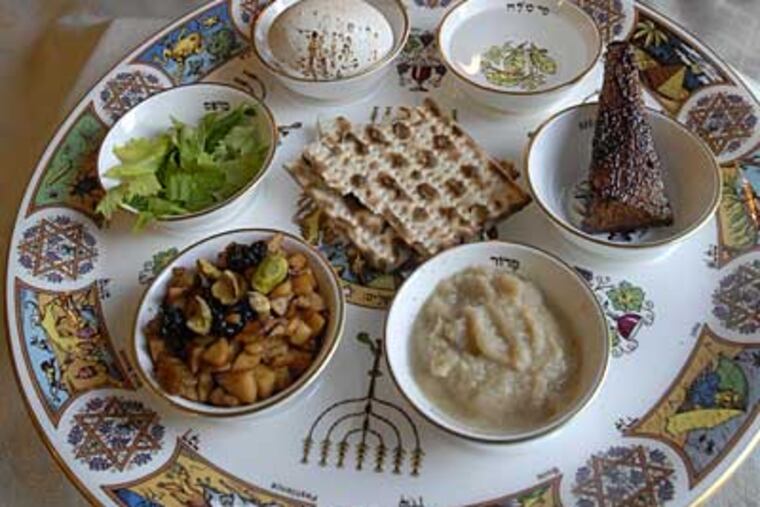
At Passover seders at Joan Nathan's home, guests tour the world through haroset.
Nathan, the food journalist and cookbook author who specializes in international Jewish cooking, serves at least five different harosets at her annual feast because she believes that presenting an assortment of the fruit-and-nut dish demonstrates the Diaspora of the Jews.
"I use my seders as teaching mechanisms, to show through food where Jews have gone in the world. Every haroset has a history," says Nathan.
Haroset, also spelled charoset, is an uncooked mixture - often sticky and pasty, but in a good way - that at its core combines fruit with nuts, spices, and sweet wine.
One of many symbolic foods eaten at Passover seders, it is meant to symbolize the mortar used by the Israelites to make bricks while they were enslaved in ancient Egypt.
I've long been curious about haroset because, when I'm a guest for Passover meals, it is the dish that most often draws the first and most complimentary remarks. It is as though guests arrived wondering if and how it would surprise them.
Unlike some recipes that persist through generations, other people's styles of haroset seem to be more readily accepted than, say, an alien take on brisket - another "Zelig," as Nathan puts it, of Jewish cooking that invites fiddling.
As with so many dishes, devotion to particular styles of haroset is largely dictated by heritage and childhood, or later if a person's formative years were not a culinary paradise. Still, Nathan has found that people are adventurous about haroset and open to idiosyncratic versions.
Nathan generally does not cotton to those that contain very, very finely chopped ingredients because they seem "mushy" to her. She concedes that this is probably because her mother's always had more texture.
Executive chef Jeffrey Nathan, no relation to Joan, sheepishly admits that he has parted company with the traditional Ashkenazi-style (lots of apples) haroset that he grew up with, finding it too sweet and useless as a leftover.
Jeffrey Nathan, executive chef for the Abigael's Group, which includes Abigael's on Broadway in New York, is also an expert on gourmet kosher cooking, and host of the public television show New Jewish Cuisine.
Jeffrey Nathan is crazy about a Caribbean style that includes mangoes (recipe below), in part because it can be used in many ways during the rest of Passover, and beyond. He uses it on grilled chicken and as a sandwich spread.
Haroset puts the non-Jewish, like me, in mind of a sweet salsa or chutney.
Joan Nathan likens it to a dipping sauce because, in fact, that is how it was used at feasts in the ancient world of Babylonia, she says.
She acknowledges that it is now eaten by many as a side dish and, like Jeffrey Nathan, finds it handy when cooking with chicken, often using it as stuffing. She also pairs it with cream cheese and matzoh for breakfasts or snacks.
Joan Nathan sometimes even amplifies her Passover offerings with a dish of halek, a member of the haroset family that goes beyond mince to jam, focuses on one fruit, and is most often purchased rather than made at home.
As she details in her cookbook Jewish American Cooking in America, halek (the Iraqi and Iranian word) or dibis (the Syrian word) is a spread made of dates, the sweetener common before the availability of sugar.
The wide range of harosets eaten during American Passovers attests to the diversity of this country's population and imagination.
Joan Nathan thinks that is also true of Passover.
"I love it. It's so much fun because it is a living holiday in that it changes all the time. . . . you can tweak things."
And, as she demonstrates, it brings the world to your table.
Soofer Family Iranian-Israeli Haroset
Makes about 10 cups or 40 servings
EndTextStartText
1/3 cup pistachio nuts, shelled
1/3 cup unblanched almonds
3/4 cup cashews
1/3 cup hazelnuts
3/4 cup walnuts
2 pears, peeled and quartered
2 red apples, peeled and quartered
3 cups seedless black raisins
1 cup golden seedless raisins
2 2/3 cups dates, pits removed
1 1/4 cups pomegranate juice
About 3 cups sweet wine
1 teaspoon cinnamon
1/2 teaspoon cayenne pepper, or to taste
1 teaspoon ground cardamom
1/2 teaspoon ground cloves
1 teaspoon ground coriander
1 teaspoon cumin
1 teaspoon ground nutmeg
1 teaspoon ground ginger
EndTextStartText
1. Roast the pistachios, almonds, cashews, hazelnuts, and walnuts by placing them in a bowl in the microwave on medium power for about 5 minutes, stirring frequently.
2. Place the nuts in a food processor and process until coarsely ground. Add the pears, apples, raisins, and dates until coarsely chopped and the nuts finely ground.
3. Gradually add the pomegranate juice, continuing to process until thick. Add the wine and spices and process once more to incorporate, adjusting to taste.
Per serving: 174 calories, 3 grams protein, 28 grams carbohydrates, 19 grams sugar, 5 grams fat, no cholesterol, 13 milligrams sodium, 3 grams dietary fiber.
EndText
Seven-Fruit Haroset From Suriname
Makes about 5 cups or about 20 servings
EndTextStartText
8 ounces unsweetened coconut
8 ounces walnuts, chopped, or almonds, grated
1 tablespoon cinnamon
8 ounces raisins
8 ounces dried apples
8 ounces prunes
8 ounces dried apricots
8 ounces dried pears
4 ounces cherry jam
Sweet red wine, such as Manischewitz
EndTextStartText
1. Combine all ingredients except the jam and wine in a large, heavy pot. Add water to cover. Simmer over low heat, stirring occasionally with a wooden spoon. Add small amounts of water periodically so the mixture does not stick to the pot. Continue stirring. Cook for at least 60 minutes.
2. When all the ingredients have come together, stir in the cherry jam. Let stand to cool.
3. Add enough sweet wine to be absorbed by the haroset mixture. Refrigerate.
Per serving: 370 calories, 4 grams protein, 58 grams carbohydrates, 38 grams sugar, 15 grams fat, no cholesterol, 39 milligrams sodium, 8 grams dietary fiber.
EndText
Mango-Date Haroset
Makes 3 1/2 cups or about 14 servings
EndTextStartText
1 cup walnut pieces
1/3 cup pecan halves
1 teaspoon ground cinnamon
3 tablespoons sugar
1 teaspoon peeled, shredded, and minced fresh ginger (use the larger holes on a box grater)
2 ripe mangoes, peeled, seeded, and cut into 1/4-inch dice
2/3 cup seedless red grapes, quartered
1/2 cup pitted dates, cut into ¼-inch dice
1/2 cup sweet white wine
2 teaspoons fresh lemon juice
EndTextStartText
1. Roughly chop the walnuts, pecans, and cinnamon in a food processor along with the sugar and ginger. Transfer the chopped-nut mixture to a medium bowl.
2. Stir in the mangoes, grapes, and dates. Gently stir in the wine and lemon juice.
3. Cover with plastic wrap and refrigerate to blend the flavors, about 2 hours. This may be made up to 1 day ahead.
Per serving: 131 calories, 2 grams protein, 15 grams carbohydrates, 12 grams sugar, 8 grams fat, no cholesterol, 1 milligram sodium, 2 grams dietary fiber.
EndText
Homemade Halek
Makes about 5 cups or 20 servings
EndTextStartText
10 cups pitted dates, preferably medjool
4 quarts water
2 teaspoons ground anise
3 cups coarsely ground walnuts
1 cup ground almonds
EndTextStartText
1. Place the dates, water, and anise in a large saucepan. Boil for about one hour, uncovered. For the first 45 minutes, stir the mixture occasionally and, for the last 15, stir it frequently. The dates will soften and reach the consistency of chunky applesauce.
2. Press the date mixture through a sieve or a food mill.
3. Return the thin, clear syrup to a smaller saucepan and simmer slowly, uncovered, over very low heat for about 3 hours, stirring frequently, until the halek thickens enough to coat a spoon.
4. Cool; just before serving, place 2 cups halek in a bowl. Sprinkle with half of the walnuts and almonds. Reserve the remaining halek and nuts. Serve as haroset at the seder and as a dip for matzoh through the Passover season.
Per serving: 399 calories, 6 grams protein, 68 grams carbohydrates, 57 grams sugar, 15 grams fat, no cholesterol, trace sodium, 8 grams dietary fiber.
EndText
Pam's Mom's Brisket
Serves 10
EndTextStartText
1 package dried onion soup mix
3 medium onions, thinly sliced
2 celery ribs, chopped
1 cup bottled chili sauce
1 bottle lager beer
1/2 cup water
1 4-to-5-pound piece of beef brisket or chuck OR 6 pounds short ribs, trimmed of most external fat
Salt and freshly ground black pepper
Water or beef stock
EndTextStartText
1. Combine the onion soup mix, onions, celery, chili sauce, beef and water in a large Dutch oven with a cover or a covered casserole. Put the meat in and spoon some of the sauce on top.
2. Cover the pot and bake in the center of the oven for 21/2 to 4 hours. Check the meat after 21/2 hours to see if it's fork tender.
3. Refrigerate overnight, and then remove the congealed fat. Slice and reheat the meat in the sauce.
Per serving (based on 10, with water instead of beef stock): 526 calories, 30 grams protein, 9 grams carbohydrates, 5 grams sugar, 38 grams fat, 138 milligrams cholesterol, 465 milligrams sodium, 2 grams dietary fiber.
EndText
Low-Carb Broccoli Kugel
Makes 4-6 servings
EndTextStartText
2 pounds broccoli
Salt
2 to 3 tablespoons vegetable or olive oil
1 large onion, chopped
2 large garlic cloves, chopped
2 or 3 large eggs, or 1 to 2 eggs and equivalent of 1 egg in egg substitute
1 tablespoon matzo meal
Freshly ground black pepper
4 to 5 tablespoons slivered almonds, coarsely chopped
About 1/2 teaspoon paprika (optional)
EndTextStartText
1. Preheat oven to 375 degrees.
2. Divide broccoli into medium florets. Cut peel from large stems and slice them. Boil broccoli in a large saucepan of boiling, salted water for 7 minutes or until very tender. Drain well and cool. Puree in a food processor, leaving a few small chunks. Transfer to a bowl.
3. Heat 1 to 2 tablespoons oil in a medium nonstick skillet. Add onion and sauté over medium-low heat for 7 minutes or until golden brown, adding 1 to 2 tablespoons hot water if pan becomes dry. Add garlic and sauté for 30 seconds.
4. Add eggs and matzo meal to broccoli mixture and mix well. Lightly stir in onion mixture and any oil in pan. Season well with salt and pepper.
5. Oil a shallow 8-inch square baking dish. Add broccoli mixture. Sprinkle 1 tablespoon oil over top. Sprinkle with almonds and paprika, if using.
6. Bake in upper third of oven for 40 minutes or until set and very lightly browned on top. Remove from oven and run a knife around edges. To serve, cut carefully in squares. Use a spoon to remove portions.
Per serving (based on 6): 164 calories, 8 grams protein, 15 grams carbohydrates, 4 grams sugar, 10 grams fat, 71 milligrams cholesterol, 74 milligrams sodium, 5 grams dietary fiber.
EndText