Harvest of joy
Trends favoring locally grown food are kindling new interest in Sukkot, the holiday sometimes called "the Jewish Thanksgiving."
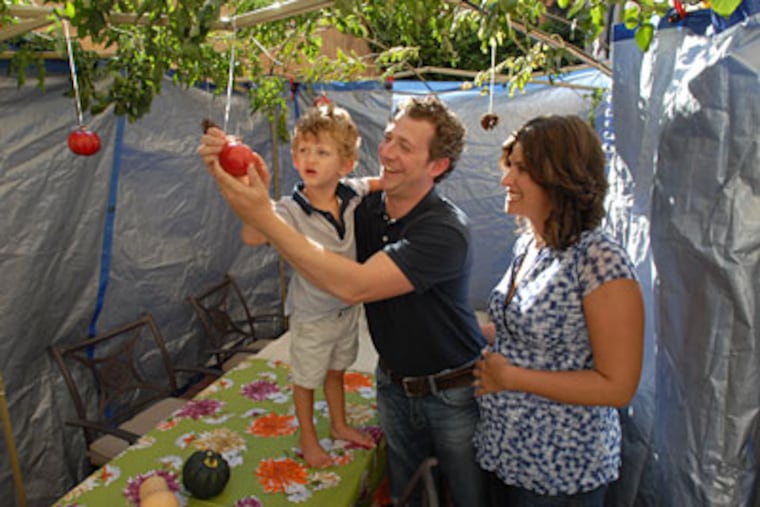
Of the holidays on the Jewish calendar, Sukkot is not, by devotional standards, one of the biggies. In fact, because this harvest celebration (which began at sunset Wednesday) so closely follows the high holy days of Rosh Hashanah and Yom Kippur, it is often overshadowed by them.
Yet a growing number of Jews, inspired by its ecological, back-to-the-earth, DIY underpinnings, are rediscovering what is sometimes referred to as the Jewish Thanksgiving.
Sukkot "has this natural sensibility to it, and since a lot of people are trying to attune themselves more to nature right now, it makes sense that they're tapping into this holiday," says Gil Marks, a rabbinically ordained food writer, most recently of the exhaustively researched compendium Encyclopedia of Jewish Foods.
"I didn't grow up celebrating this holiday," says Rebecca Karp, the 27-year-old assistant director of Philadelphia's Moishe House, a residence and nonprofit community center for young Jews. "But as I got older and learned more about it, Sukkot was a holiday that really spoke to me, and I think the idea of sustainable living, the idea of the harvest, really resonates with people of my generation."
At the heart of Sukkot is the sukkah, the temporary lean-to that celebrators build in their yard - or on their urban balcony or rooftop - which represents the fragility of life and the temporary housing of the Israelites as they wandered in the desert. These days, ready-made sukkah kits simplify matters for the construction-impaired.
For the eight days of the holiday, all meals are taken inside the sukkah's walls - many families also sleep and study in their sukkahs, weather permitting. The sukkah itself is decorated with greenery and organic materials, fruits and vegetables, lights, and all manner of crafts.
"Sukkot is underrated but it's a wonderful, joyous holiday, especially as it comes after solemn Yom Kippur. We don't go over the top, but we have fun decorating," says Sarah Kahn, who with her husband Asher, and 2-year-old son Tal adorns their Queen Village sukkah with dried fruit, strings of popcorn, and the traditional symbols the lulav (a tied bundle of date palm, willow, and myrtle branches) and etrog (citron fruit).
"The lulav and the etrog are part of a tradition of the four species, which also include the aravah, the willow branch, and the hadas, the myrtle branch, and together they represent the whole gamut of the agricultural world," Marks says.
On the culinary front, the festival is generally less prescriptive than other Jewish holidays, though ingredients and flavors tend to reflect the season and the harvest of local foods: squashes, figs, apples, pears, root vegetables.
Anne Rubin, a real estate broker in Elkins Park, serves black bean and pumpkin soup. For Suzanne Litke, a Center City medical market research professional, spices such as cinnamon and nutmeg are olfactory hallmarks of Sukkot and the months to follow. Every year she and her children make rustic anise-spiced Italian biscuits called ginetti.
Pickles and relishes, stews such as tzimmes (a mixture of vegetables and dried fruits), cobblers, and strudels are very common. Anything in a casserole dish, easily transported from kitchen to sukkah, is appealing.
"Filled foods, like the cornucopia, are symbolic of harvest and bounty, so we tend to see those a lot during this holiday," Marks says. Another interpretation is that the stuffing echoes the cramming of multiple family members into the sukkah's limited space.
Baked apples and stuffed peppers are a favorite in the Kahn home, while stuffed cabbage is a must-have meal in the family sukkah of Adam Laver, a lawyer in Center City.
Both Ashkenazic and Sephardic cooking traditions include a multitude of pastries, kreplach, and dumplings that fulfill the stuffed-foods symbolism. Stuffed pumpkins are popular in Uzbekistan, for instance, and stuffed grape leaves are found on Middle Eastern Sukkot tables. Marks notes that Polish Jews serve a stuffed roasted cow's udder, a dish that has not caught on among American Jews.
At the Moishe House on Washington Square West, Karp takes the harvest theme further and hosts a sustainable Shabbat dinner - this year held on Friday. "It's basically a meal where everything, including the wine, is produced within a radius of 200 miles or less," Karp says. "We always bring in speakers to discuss environmental and sustainability issues because we want to demonstrate the relationship between the Sukkot harvest and what's happening in our immediate area." Past speakers have included representatives from Mill Creek Farms, Greensgrow, and the Urban Nutrition Initiative.
Similarly, Branch Creek Farm in Perkasie is hosting chef Michael Solomonov of Zahav for a farm-to-table Sukkot dinner on Sunday.
For the typical modern, busy household, it's not all gorgeous, shiny produce straight from the field. A week of Sukkot meals often mimics the arc of the typical week of eating: one or two special feasts (usually on the first day and on Shabbat), maybe a takeout pizza or sandwiches, and lots of leftovers on the other nights. Still, it's the gathering in the sukkah on the fleetingly warm evenings of autumn that makes it special.
Adam Laver grew up celebrating Sukkot at his family's home in Center City, where his young family continues to celebrate it today. "For us, it's really the most beautiful and enjoyable Jewish celebration," he said. "We're still working on our condo association to see if we can build a sukkah in our garden next year."
Ashkenazic Stuffed Cabbage
Makes 16-18 servings
EndTextStartText
White or cider vinegar
1 large head (about 3
pounds) green or savoy
cabbage, cored
1 medium onion, sliced
For the stuffing:
11/2 pounds ground beef
About 1/2 cup raw rice
Dry bread crumbs or matzo
meal
1 large egg
1/2 cup water
1 medium yellow onion,
chopped
3/4 teaspoon salt
1/2 teaspoon ground black
pepper
For the sauce:
2 cups crushed tomatoes or
tomato sauce, or 1 cup of
each
3 tablespoons tomato paste
1 cup water
2 bay leaves
1 to 8 tablespoons sugar (depending on preference and the sweetness of the tomatoes)
About 1/2 teaspoon salt
Ground black pepper to taste
2 to 4 tablespoons lemon
juice or cider vinegar
EndTextStartText
1. Fill a large pot about three-fourths full with water, add a little vinegar, and bring to a rapid boil. Carefully place the cabbage in the boiling water and cook until the outer leaves are pliable enough to roll easily, about 5 minutes. Using a pair of tongs, pull off the supple leaves. Repeat the process until you have 16 to 18 untorn large leaves. Trim the tough center rib of each leaf. Shred any extra cabbage leaves and place in the bottom of a deep heavy pot or baking dish. Scatter the onion over the top.
2. To make the stuffing: Combine all the stuffing ingredients.
3. Place about 1/4 cup stuffing on each large cabbage leaf, arranging it a little off center. Use 1 to 2 tablespoons for smaller leaves. Fold the sides of the leaf over the stuffing, fold over the rib end, and roll up. Arrange the cabbage rolls, seam side down, in the prepared pot.
4. To make the sauce: Combine all the sauce ingredients. Pour over the cabbage rolls. If the sauce does not cover the cabbage rolls, add enough water to cover.
5. Cover and simmer over low heat until tender, about 11/2 hours. Or bake, covered, in a 350-degree oven for about 1½ hours, then uncover and bake until the sauce is thickened and the cabbage rolls are lightly browned, 30 to 60 minutes. Serve warm.
Per serving (based on 18): 162 calories, 10 grams protein, 17 grams carbohydrates, 7 grams sugar, 6 grams fat, 37 milligrams cholesterol, 340 milligrams sodium, 3 grams dietary fiber.EndText
Roasted Sweet Vegetables in Spicy Cinnamon Cider
Makes 6 to 8 servings
EndTextStartText
1 cup sweet apple cider
2 tablespoons white wine
vinegar
2 tablespoons margarine
2 tablespoons olive oil
1 tablespoon lemon juice
1/2 cup brown sugar, packed
41/2 teaspoons cinnamon
1/2 teaspoon nutmeg
1 tablespoon kosher salt
1/4 teaspoon cayenne pepper,
or to taste
2 large sweet potatoes,
peeled and cut into
chunks
1 pound peeled and cubed
butternut squash
25 baby carrots
1/2 cup raisins
1/2 cup golden raisins
EndTextStartText
1. Preheat oven to 375 degrees. Lightly grease a roasting pan with nonstick cooking spray.
2. In a small saucepan, place apple cider, vinegar, margarine, olive oil, lemon juice, sugar, cinnamon, nutmeg, salt, and cayenne pepper. Warm over low heat 3 to 5 minutes.
3. Place sweet potatoes, squash, carrots, and raisins in prepared pan. Pour warm sauce over vegetables.
4. Cover tightly with aluminum foil. Bake until vegetables are soft, about 1 hour and 30 minutes.
Per serving (based on 8): 251 calories, 2 grams protein, 50 grams carbohydrates, 24 grams sugar, 7 grams fat, no cholesterol, 812 milligrams sodium, 4 grams dietary fiber.EndText
Olive Fig Tart
Makes 4 to 6 servings
EndTextStartText
11/3 cups all-purpose flour
1/4 cup ground blanched
almonds
1/3 cup sugar
1/8 teaspoon salt
1/3 cup olive oil
1/3 cup cold water
12 fresh ripe figs
1/4 cup heavy cream
1/2 cup plain live yogurt
1 teaspoon almond extract
2 tablespoons honey
EndTextStartText
1. To make the pastry dough, put the flour, almonds, sugar, and salt in a food processor and blend. Add the oil and pulse until crumbly. Add water, a little bit at a time, until dough comes together into a ball. Gather up the dough, wrap in plastic, and leave at room temperature for at least one hour.
2. Preheat the oven to 350 degrees. Lightly grease a 9-inch removable-bottom fluted tart pan. Press dough into the pan and prick lightly with a fork all over. Line the dough with baking parchment, cover with dried beans, and bake for 10-15 minutes. Remove the beans and paper and bake for 5 more minutes to crisp the crust.
3. Cut the figs in half lengthwise and arrange on the crust. Whisk together the cream, yogurt, almond extract, and honey. Pour mixture over the figs and bake for 50 minutes, until the cream mixture is set. Serve warm or cold but not chilled.
Per serving (based on 6): 431 calories, 6 grams protein, 60 grams carbohydrates, 34 grams sugar, 20 grams fat, 16 milligrams cholesterol, 79 milligrams sodium, 4 grams dietary fiber.EndText
Ginetti Di Sukkot
Makes about 48 ginetti
EndTextStartText
1 cup sugar
1/3 cup olive oil
1/4 teaspoon salt
2 eggs
1 cup ground blanched
almonds
2 teaspoons anise seeds
1 teaspoon cinnamon
1 teaspoon freshly grated
orange or lemon rind
1 teaspoon vanilla extract
1/2 teaspoon almond extract
2 cups unbleached flour
EndTextStartText
1. Cream together sugar, oil, and salt. Add one egg at a time, beating after each addition. Add the ground almonds, anise seeds, cinnamon, grated rind, vanilla and almond extracts. Add enough flour to form a rather stiff dough.
2. Turn out on a floured working surface, knead for 1 minute, then roll into a rope 1 inch wide. With a sharp knife, cut diagonally into 2-inch pieces.
3. Place on a well-floured baking sheet and bake in preheated 350-degree oven for 15 minutes. Remove from oven and transfer to a wire rack to cool. Store in a tin box, at room temperature, where ginetti keep fresh at least 8 days, the duration of Sukkot.
Per ginetti: 69 calories, 1 grams protein, 9 gram carbohydrates, 4 grams sugar, 3 grams fat, 9 milligrams cholesterol, 16 milligrams sodium, trace dietary fiber.EndText