Fresh shrimp, hugely different
It's a whole other flavor-filled crustacean from the familiar frozen.
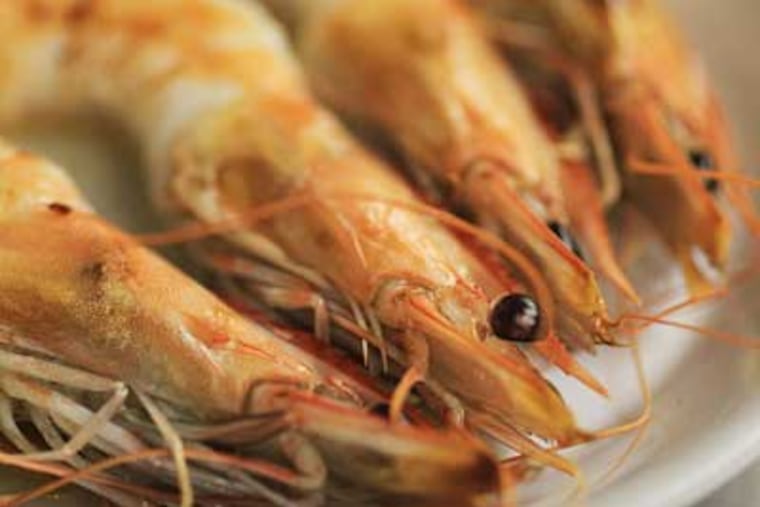
It was a transporting bite. I had recently been to the coast of Spain, where I had devoured (for breakfast, lunch, dinner - basically whenever I could) the best shrimp I had ever tasted. It wasn't the preparation or the sauce, it was the crustacean itself: sweet, soft, creamy, head-on, lobsterlike.
Which is why I was incredulous when I tasted those same qualities in my shrimp at Old City's Fork.
It turns out the incredible flavor of my Spanish shrimp had nothing to do with Mediterranean waters, and everything to do with freshness. Like the shrimp Fork chef Terence Feury is using, it has never, ever been frozen.
There's a good chance you have never had fresh shrimp. There are tanks of fresh shrimp in some Chinatown restaurants, but most shrimp, including those in the highest of high-end restaurants, has previously been frozen. Even most of the "fresh" offerings in the display counter at the supermarket are just defrosted from previously frozen.
The National Fisheries Institute, a nonprofit dedicated to seafood education, says the "vast majority of what we eat in this country is fresh-frozen." Because most commercial shrimp boats are at sea for extended periods of time, most freeze their catch on board.
Slowly, the tides are turning. Shrimp that has never known a frosty second can be found on a handful of area menus, thanks in part to chefs who practice what they preach: getting the best ingredients possible. It's worth seeking out, although you might be turned off of the other stuff forever.
"The difference is night and day," says Feury, referring to fresh versus frozen. For the chef, it's the taste, texture, and quality that make fresh shrimp superior, and the fact that unlike the frozen variety, the fresh shrimp he gets has never been treated with sodium tripolyphosphate, a preserving chemical.
"I can't even describe it," says chef Mike Stollenwerk, owner and chef of Fish. "The texture is softer, it's so tender. It just tastes like . . . shrimp." Stollenwerk spends a lot of time seeking out the best fruits of the ocean, and uses fresh shrimp whenever he can.
Amis chef Brad Spence notes that the fresh variety doesn't have that frozen-shrimp snap - a texture that is not necessarily inherent, but that we have all grown accustomed to. His diners often can't pinpoint exactly why they like the fresh-shrimp dishes so much.
Chifa, Restaurant Alba in Malvern, and Luke Palladino in Atlantic City are other restaurants that have served the fresh stuff.
There are a few ways for restaurants to get the product. Some of the fresh shrimp are wild. Most chefs consider Santa Barbara spot prawns to be the gold standard of the fresh, wild-caught variety. They are seasonal, so not always available, and being so well-regarded makes them hard to get. What isn't snapped up by West Coast chefs can be shipped overnight, an expensive and not always guaranteed option. "If you order live product and it comes in dead, you don't get your money back," says Stollenwerk.
Maine and Florida also have seasons of fresh-shrimp harvest, but many of the same issues exist.
Farmed shrimp isn't a new concept. Actually, according to the fisheries institute, 80 percent of the shrimp Americans consume is farm-raised. But those crustaceans are mostly frozen. In terms of taste, the argument might come down to fresh or frozen, instead of the usual farmed or wild-caught.
Maryland-based Marvesta Shrimp Farms, which was founded in 2002, is one of a handful of farms in the country committed to never freezing its goods. They shun antibiotics and hormones, use clean water and organic feed. Brian Mitchell of Marvesta says they can't keep up with demand. Philadelphia-based Samuels & Son is the only company that distributes their products.
Marvesta farms Gulf white shrimp, which have fat deposits in the head, adding more flavor. (These shrimp are shipped, and usually served, with the head on.)
They are kept in large indoor "raceway" tanks; each tank holds about 100,000 shrimp. Samuels & Son delivery trucks pull up a few times a week, on harvesting days, hours after the shrimp leave the water. The crustaceans are highly perishable, and because Marvesta does not use any preservatives, the goal is to have the little crustaceans in kitchens within 24 hours.
Samuels & Son sells out of the 400 pounds of Marvesta shrimp it gets a week - a number, says Samuel D'Angelo, that "is a blip" compared to the quantity of frozen shrimp they sell. "The quality is there," he says. "The biggest issue is that it's an indoor facility, so they are limited to how much they can produce."
All this TLC comes with a tariff. Per pound, Samuels & Son sells Marvesta shrimp for $2 more per pound than their frozen cousins.
"They are more expensive, but not out of reach," says Feury. "It's great to have a product that you have to do the minimal to to get great results," says Feury, who likes to simply flash them under the broiler for 30 seconds. In the past, he has paired them with a Spanish-style romesco sauce and French-inspired sea urchin butter, puff pastry, and preserved lemon.
Mike Stollenwerk recently moved Fish to a bigger, prettier space on Locust Street. The restaurant has been open more than a month, but it's not quite complete. There's a space in the open kitchen for a large tank, where the chef plans to keep his own fresh shrimp. (The tank is delayed due to vendor issues.)
"I wish people appreciated fresh shrimp more," says Stollenwerk, who is putting the tank front-and-center on purpose. "People will see it and say 'Oh, that's how shrimp are. They don't come in a block of ice.' When they go somewhere else, they'll know what they are having isn't fresh."
Shrimp shopping: Choices for cooks
Never-frozen shrimp can be hard to come by for the home cook, and possibly for good reason: They are highly perishable. So, how do you get the best-tasting crustaceans? The answer took some fishing.
Fishmongers, some Chinatown shops, and markets near the ocean may have shrimp tanks with live or never-frozen options, or carry dayboat products. Upscale markets such as Whole Foods and Wegmans occasionally carry them, too.
But most of the fresh, behind-the-counter shrimp for sale has been previously frozen and simply defrosted for you.
When it comes to frozen, there are scores of options - shell-on, shell-off, deveined, wild, farmed, domestic, international - and all of those categories come in a myriad of shrimp sizes.
Chefs have mixed feelings on the supermarket options. For Terence Feury, it comes down to sustainable practices. Brad Spence has had great-tasting farmed shrimp and less-than-stellar wild ones, and vice versa.
When speaking strictly in terms of taste, I found there to be not much of a difference between the farmed and wild versions (26/30 shrimp per pound size) sampled from Whole Foods. Both were tasty; the farmed was negligibly firmer. I preferred both of those to the larger, wild-caught U-15 size (under 15 per pound).
Since the taste is comparable, it comes down to preparation preference and price. Shell-on options require more work at home, but are better for certain things such as boiling and roasting, while peeled and deveined options take less kitchen time and are better for sauteing or grilling, so they get that nice outer char.
And all of these options need to be weighed against price. At Whole Foods, the defrosted 26/30 wild-caught and farmed shrimp were both $12.99 per pound, even though one was peeled and deveined and the other wasn't. (Note: The day I was at the Whole Foods on South Street, the wild-caught was on sale for $9.99 per pound.)
Compare that to the two-pound bag of 26/30, wild-caught, peeled, and deveined shrimp I found in the freezer, which was $19.99, or about $10 a pound. So, if you've got the time to defrost, do it: Those chilly shrimp come with big savings. - A.P.
Broiled Shrimp With Romesco Sauce
Makes four appetizer servingsEndTextStartText
1 red bell pepper
2 plum tomatoes, halved
2 tablespoons extra virgin olive oil, plus more for roasting veggies and shrimp
4 to 6 garlic cloves
2 tablespoons smoked Marcona almonds, chopped
2 or 3 guajillo or ancho chiles, soaked in hot water then pureed smooth
2 teaspoons aged sherry vinegar
Kosher salt
Ground Aleppo or Cayenne pepper, to taste
12 to 16 pieces 16/20 count shrimp (fresh and head on, if possible)
EndTextStartText
1. Preheat oven to 400 degrees. Turn burner flame on high and roast red pepper over flame, turning often with tongs, until well charred. Place pepper in a bowl, cover with plastic wrap, and let cool. Peel skin. (If you have an electric range, toss pepper with olive oil and follow instructions for roasting tomatoes.) Toss tomatoes with olive oil and lay in roasting pan, skin side up. Toss garlic cloves wtih olive oil, seal in tin-foil bundle, and place in same roasting pan. Roast tomatoes until skin blisters (about 15 minutes), pull off skin, and squeeze out seeds. Roast garlic until soft (about 35 to 45 minutes).
2. Coarsely chop roasted peppers, garlic. and tomato. Add to a mixing bowl with almonds. Add chili puree, vinegar, and 2 tablespoons olive oil. Season with salt and Aleppo or cayenne pepper. Let sit at room temperature for 30 minutes.
3. Preheat broiler to high. Line up shrimp in a neat row on a baking sheet or in a gratin dish. Drizzle each side with olive oil, and season with salt and Aleppo or cayenne pepper. Broil for 2 to 3 minutes until pink and firm. Do not overcook. Spoon sauce onto plates, and place shrimp on top. Serve.
Per serving: 256 calories, 21 grams protein, 8 grams carbohydrates, 6 grams sugar, 17 grams fat, 172 milligrams cholesterol, 789 milligrams sodium, 2 grams dietary fiber.
Spicy Garlic Shrimp Crostini
Makes two servingsEndTextStartText
8 large shrimp, about a half pound
1 tablespoon canola oil
2 cloves garlic, minced
1 teaspoon red pepper flakes
1 teaspoon smoked paprika
1 plum tomato, diced
1/2 cup white wine
4 slices of lemon, seeds removed (remove rind, optional)
3 tablespoons butter
Kosher salt
Black pepper
2 thick slices of toasted baguetteEndTextStartText
1. Peel and devein shrimp. Heat oil in a saute pan over high heat. Saute shrimp for 30 seconds. Add garlic, red pepper flakes, and paprika. Stir well and continue to cook for 30 seconds. Add tomato and cook for another 30 seconds. Add white wine and lemon slices. Reduce wine by half.
2. Remove pan from heat. Add butter, stirring constantly, until fully incorporated. Season, and serve over toasted baguette.
Per serving: 471 calories, 29 grams protein, 25 grams carbohydrates, 3 grams sugar, 26 grams fat, 267 milligrams cholesterol, 598 milligrams sodium, 2 grams dietary fiber.