Bradford at risk in read-option offense
Three years ago, defensive coordinators around the NFL found themselves playing a very different game as they tried to cope with an explosion of read-option exploits from mobile quarterbacks like Cam Newton, Russell Wilson, Colin Kaepernick and Robert Griffin III.
Three years ago, defensive coordinators around the NFL found themselves playing a very different game as they tried to cope with an explosion of read-option exploits from mobile quarterbacks like Cam Newton, Russell Wilson, Colin Kaepernick and Robert Griffin III.
Not all of what they did was true read-option - in which a quarterback run is a scripted possibility on nearly every play and not just a rip cord to pull - but there was enough of it that defenses were grappling with how to contain it, and sometimes confused about how their attempts would be officiated.
The NFL protects passers very strictly, but runners are treated differently in the rule book. So, when is a quarterback one and not the other? It is a question that is still being asked because there is no easy answer, as illustrated by the Q&A session that broke out in the first quarter of the Eagles' exhibition game against Baltimore on Saturday night.
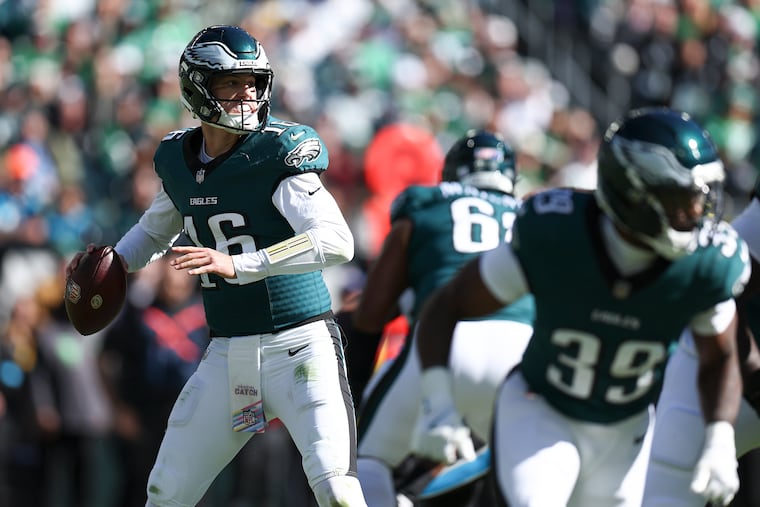
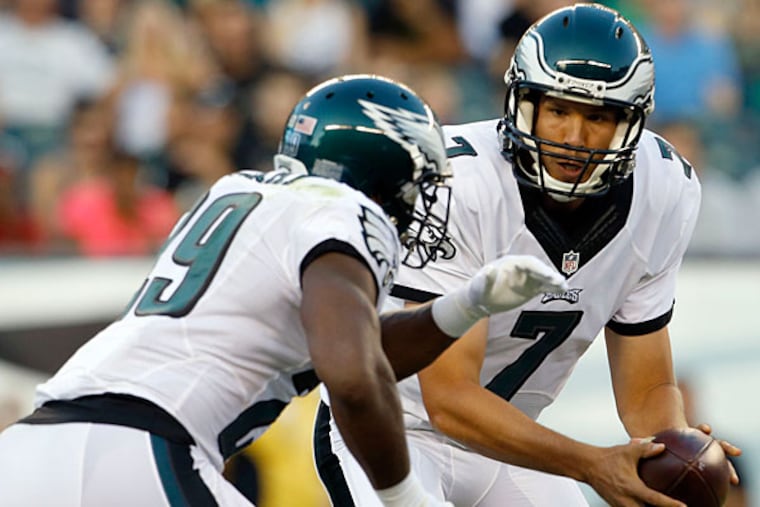
Starting quarterback Sam Bradford was hit by outside linebacker Terrell Suggs after handing off to running back Darren Sproles on the Eagles' first possession. It was a drive that started with the exact same play and, on that previous one, Bradford handed off to Sproles and then sprinted around Suggs as if he had kept the ball himself. Suggs just watched that time.
Four plays later, Suggs didn't give Bradford a chance to sprint away after making the handoff. He threw himself into the area of the quarterback's knees and took Bradford down. Referee Jerome Boger rewarded him with a flag for roughing the passer.
Two things are true about that play: Suggs is probably a jerk, and Boger was probably wrong.
When the defensive coordinators looked for those clarifications three years ago, then-NFL vice president of officiating Carl Johnson sent out a long memo to every team complete with accompanying videos. It was a detailed document, but the meat of it was that quarterbacks executing an option are covered only by the usual unnecessary roughness rules and not by the special protections given to passers in the pocket. Specifically, Johnson's memo noted: "When a quarterback hands off and continues his fake, his only protection is normal unnecessary roughness rules."
Those rules say nothing about low hits or hits around the knee area of any player, except in the case of a hit against the holder on a field goal or extra point attempt. Most of the unnecessary roughness rule is written to protect defenseless players, to prevent injuries to the head and neck areas, and to limit the use of helmet-to-helmet contact and spearing.
There's no question that what Suggs did put Bradford - and his twice-repaired left knee - in jeopardy. There's also no question that using Bradford in a read-option offense does the same thing. If the rules are applied as written and interpreted by the league, Chip Kelly's choice of offense will always make his quarterback more vulnerable and that choice as applied to a quarterback with Bradford's history layers risk upon risk.
"I'm sure that's something they're taught, to tackle the quarterback out of the read-option," Eagles center Jason Kelce said. "I don't think it was particularly dirty for him to hit the quarterback. I just thought it was a little weird that he went right after the knee area. But looking back on it, I don't think it was anything malicious. I just think that he was playing the game."
Bradford and tackle Jason Peters were more direct. Bradford said he thought Suggs intentionally went after his knees. Peters called it a "cheap shot."
"On the read-option there, [my responsibility is] the quarterback. It's not my job to be reading. It's his job to read me," Suggs said. "When you run the read-option you have to know the rules. If you want to run the read-option with your starting quarterback that has had two knee surgeries, that's on you."
Again, two things can be true here: Suggs can be a poor sportsman and he can also be right. If Sam Bradford hands off and then fakes an option run, he's fair game according to the rules.
The good news for Bradford is that NFL officials know they aren't going to get in trouble for being cautious concerning quarterbacks. The roughing the passer rule ends with this note: "If in doubt about a roughness call or potentially dangerous tactic on the quarterback, the referee should always call roughing the passer."
Of course, that applies to passers, not runners. Sorting out the difference in a split-second is often difficult for officials, and not all that interesting to edge defenders. They just react.
"I'm sure that is not the last time something like that is going to happen this year," Bradford said.
The next time could end with more than just hurt feelings, however, but that's the chance Kelly and the Eagles have chosen to take. It only took five plays to be reminded of that.
@bobfordsports