Wagner Institute: A time portal, Victorian-era scientific society and North Philly hidden gem
View of a preserved 19th century natural science museum
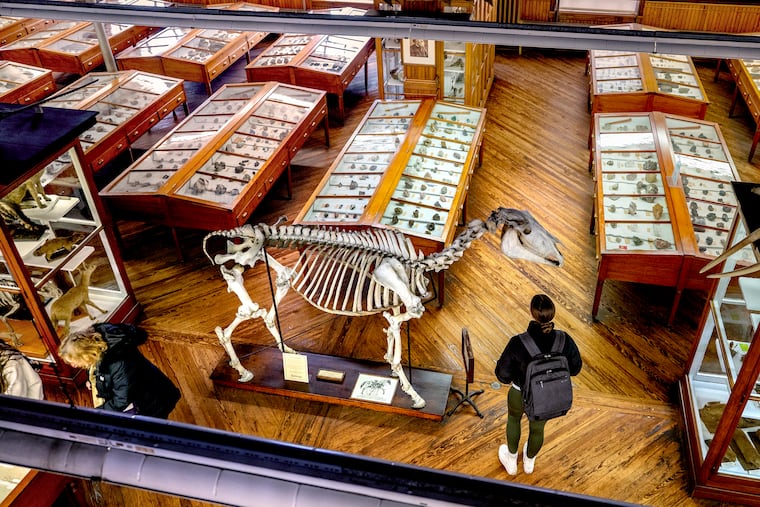
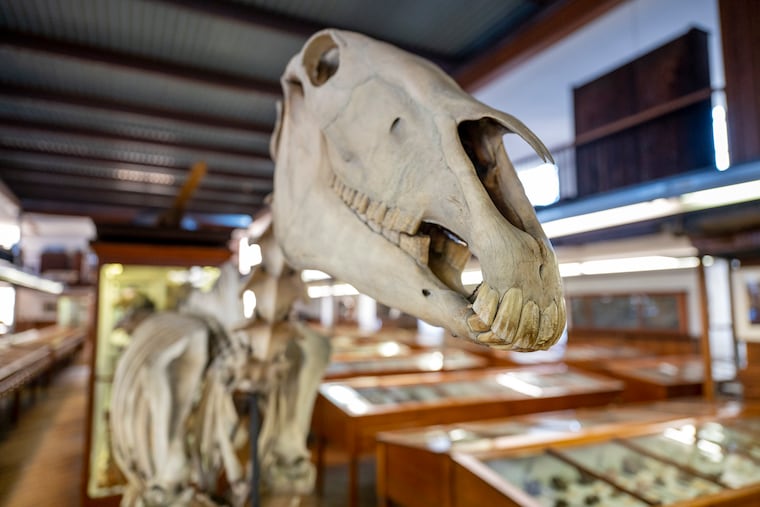
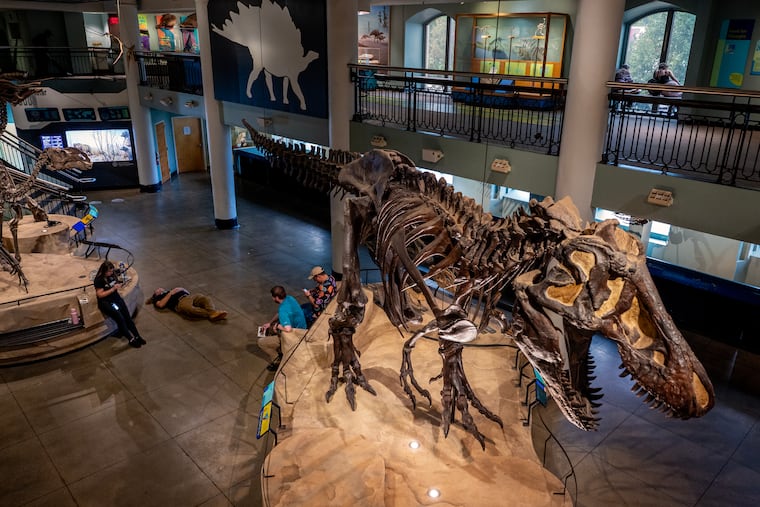
Temple University students on a field trip pause by the English draft horse skeleton that has been a highlight of the museum’s collection since 1889.Read moreTom Gralish / Staff Photographer
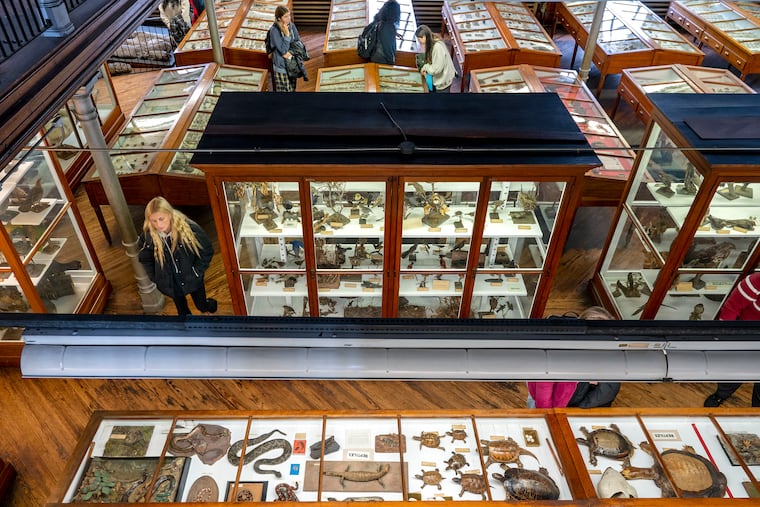
The Wagner Free Institute of Science was founded before the Civil War and remains a hidden, lesser-known tourist destination, lost in a city steeped in so much history. It’s not only a natural history museum but also a library and lecture hall. While other museums strive to keep up to date with the latest full-immersion simulations and touch screens with interactive games, Wagner’s 100,000-item collection features fossils, preserved insects, taxidermy displays, mounted skeletons, rocks, and minerals, much as it did when Philadelphia merchant, philanthropist, and amateur scientist William Wagner opened it in 1865.
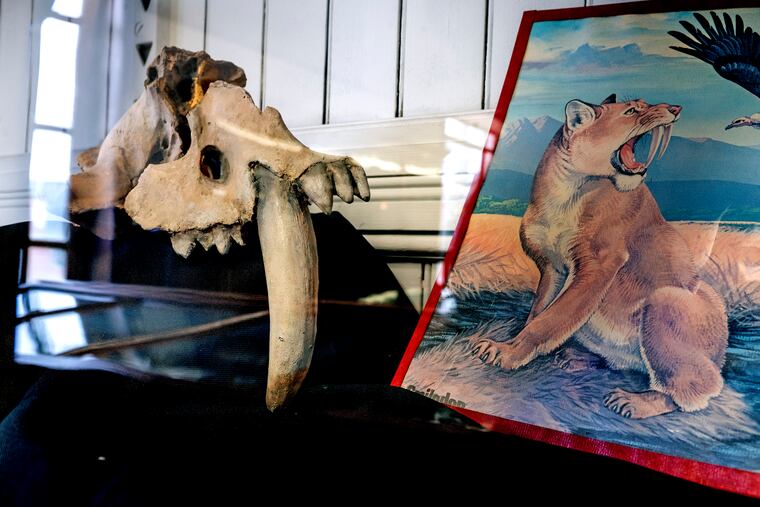
A cast of a skull of an extinct saber-toothed cat (Smilodon floridanus), the first skull of this species ever found. The original holotype skull is also on display at the museum. It was obtained in the late 19th century by a trustee of the institute, while searching for fossils in Florida.Read moreTom Gralish / Staff Photographerx
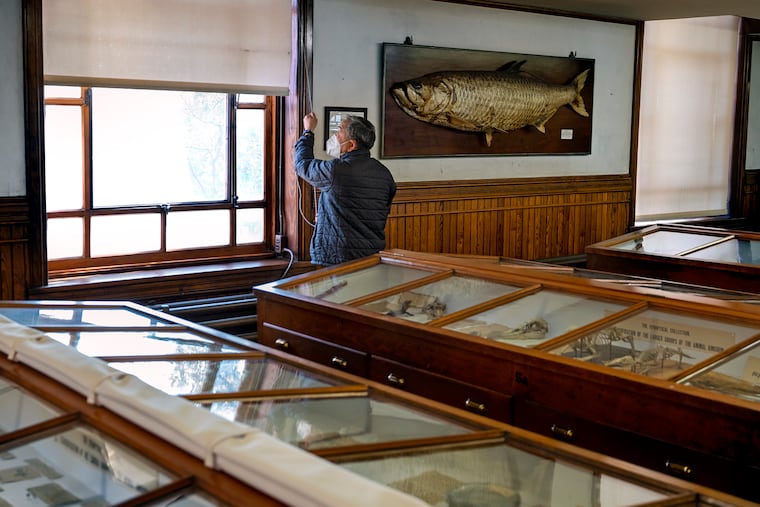
Site manager Daniel Azusa opens the blinds.Read moreTom Gralish / Staff Photographer
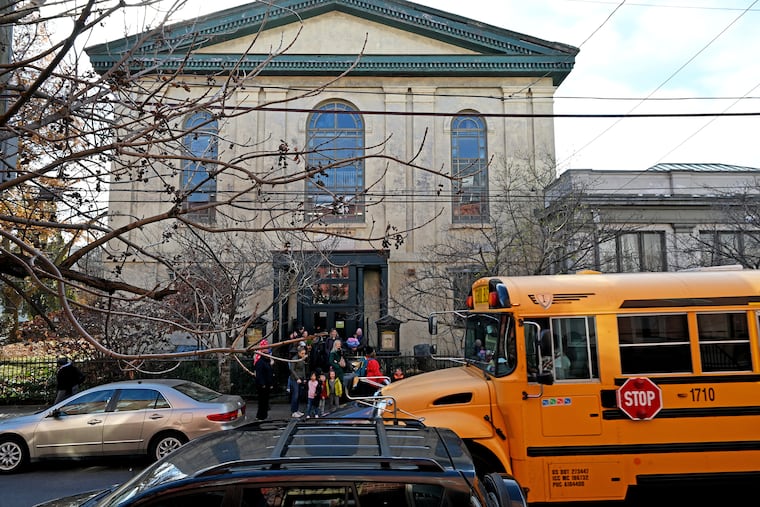
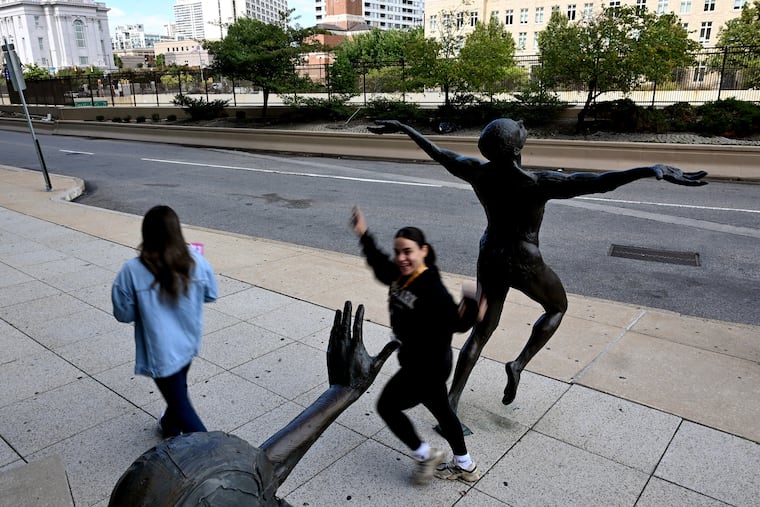
Youngsters on a school field trip wait for their bus to arrive after a visit. The Institute’s building was designed by John McArthur, the architect who designed City Hall.Read moreTom Gralish / Staff Photographer
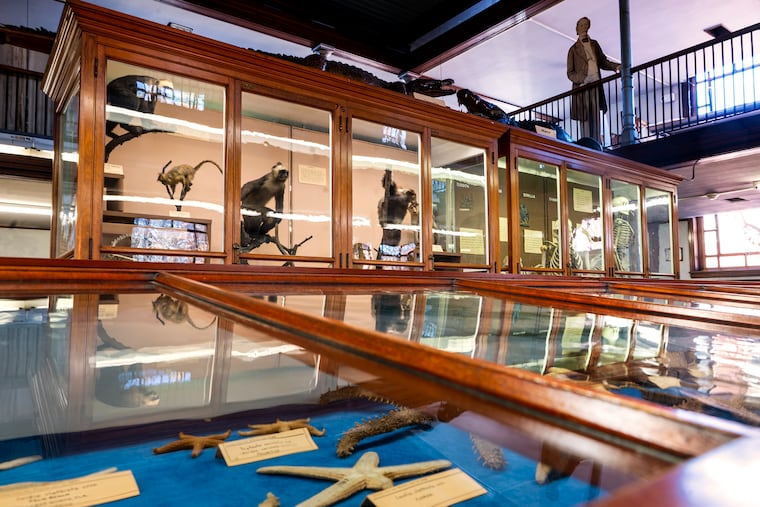
A cardboard cutout of founder William Wagner (right) overlooks the main floor of the Wagner Free Institute of Science in North Philadelphia.Read moreTom Gralish / Staff Photographer
The English draft horse on the main floor. The skeleton was purchased from the Gerrard Studio in London in 1889 for £10. Edward Gerrard was the resident taxidermist for the British Museum.Read moreTom Gralish / Staff Photographer
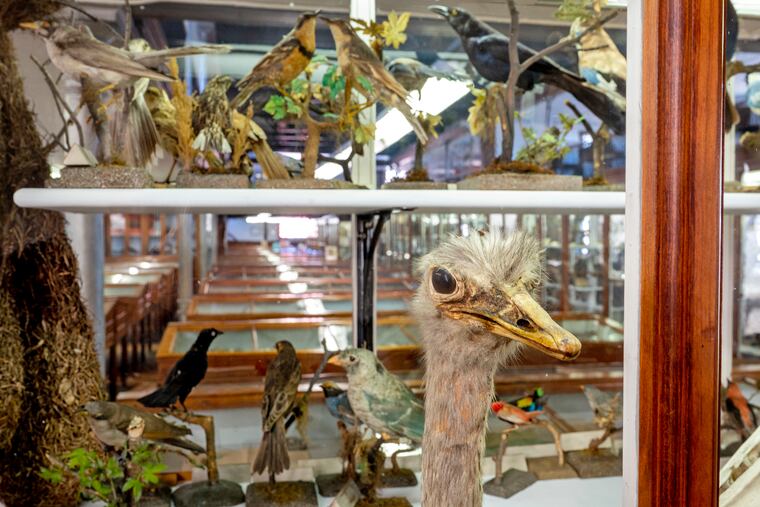
A taxidermied greater rhea (Rhea americana, also known as a South American ostrich or ñandus) displayed with other birds.Read moreTom Gralish / Staff Photographer
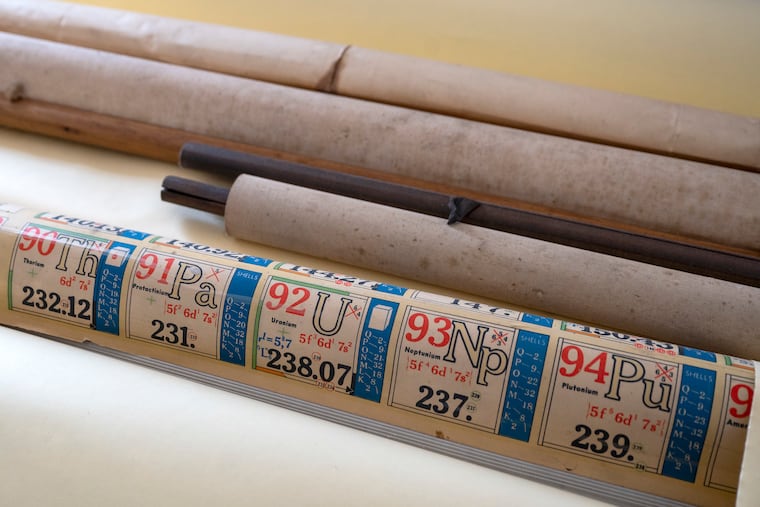
Rolled up old classroom charts, including a periodic table of the elements. At far right is plutonium (Pu, with an atomic number of 94). Periodic tables were around in Wagner’s time, but plutonium wasn’t discovered until 1940. Read moreTom Gralish / Staff Photographer
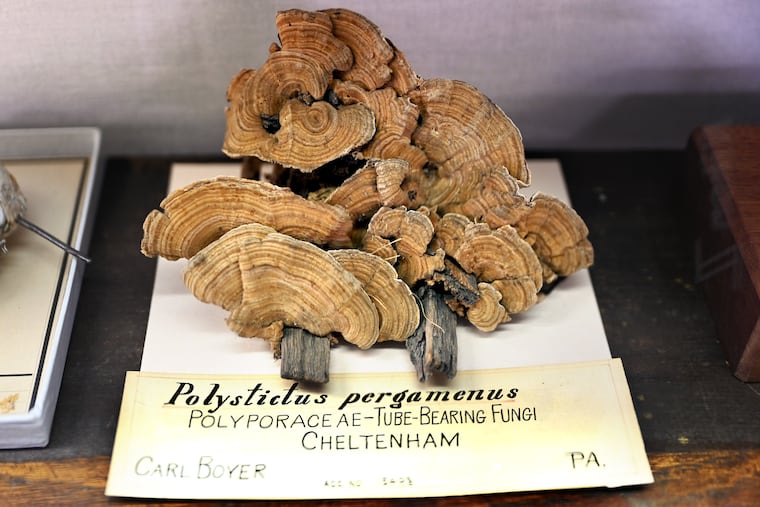
A fungus Polystictus pergamenus found in Cheltenham.Read moreTom Gralish / Staff Photographer
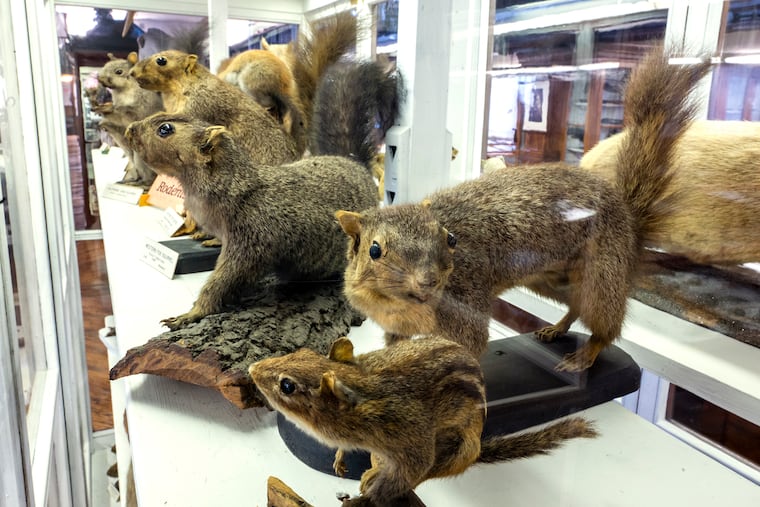
Different taxidermied sciuridae - squirrels, chipmunks and other small rodents.Read moreTom Gralish / Staff Photographer
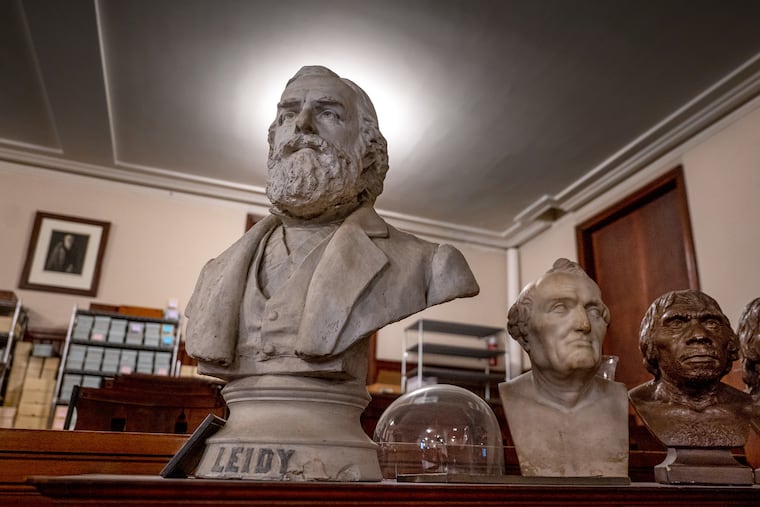
A bust of Joseph Leidy who succeeded founder William Wagner after his death in 1885 as the Institute's director. Leidy was a paleontologist, parasitologist and anatomist, and was also a pillar at the University of Pennsylvania, Penn’s medical school, the Academy of Natural Sciences and Swarthmore College. Read moreTom Gralish / Staff Photographer
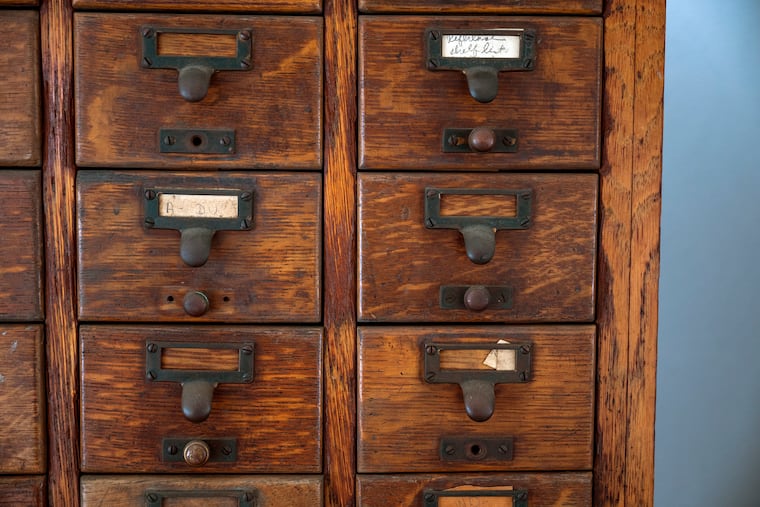
An old card catalog.Read moreTom Gralish / Staff Photographer
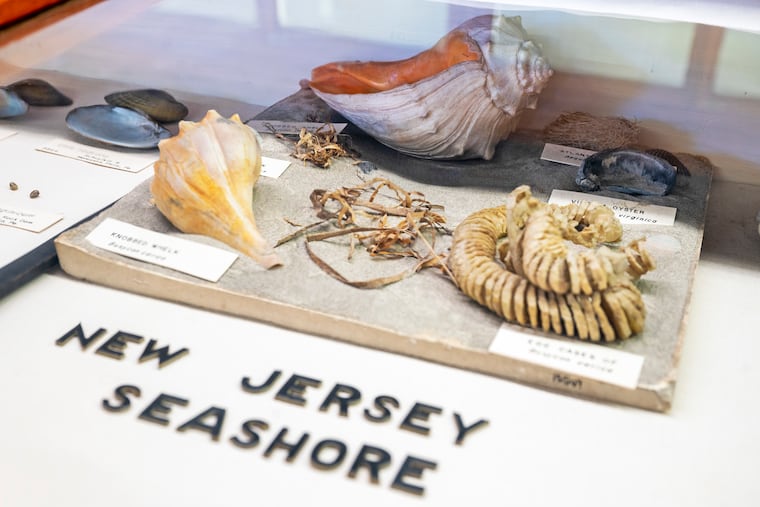
Different whelk (Busycon carica) shells and egg casings found at the Jersey Shore.Read moreTom Gralish / Staff Photographer
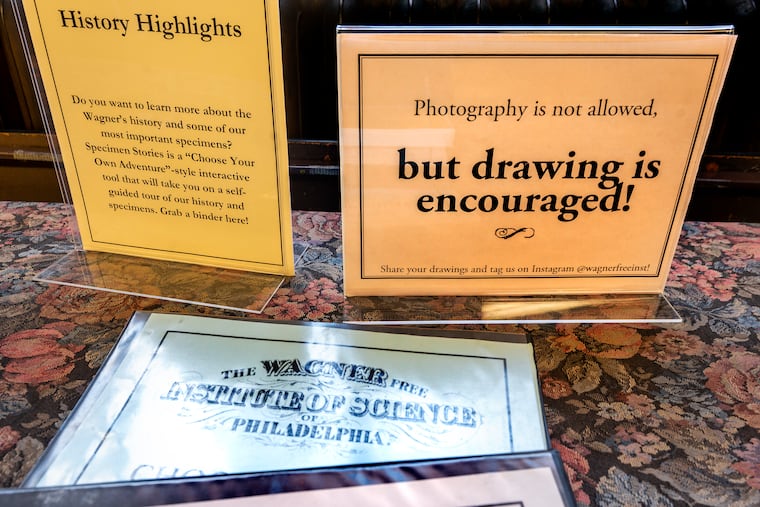
Signs for a scavenger hunt - and a “no photography allowed" reminder.Read moreTom Gralish / Staff Photographer
The museum has offered free adult science education programs for more than 160 years. Admission is free, with advance registration online or by phone, but visitors are encouraged to contribute a suggested donation of $10.Read moreTom Gralish / Staff Photographer
Advertisement
📍1700 W. Montgomery Ave., Philadelphia 📞 215-763-6529, 🕙 Tuesday to Friday, 9:30 to 4:30 p.m., first Saturday of the month, noon to 4 p.m., 🌐 wagnerfreeinstitute.org, 📷 @wagnerfreeinst