911 calls from non-English speakers in Montco dropped last year as ICE ramped up its operations
An analysis from Montgomery County shows that 9-1-1 calls for non-English speakers dropped in months where ICE was escalating its presence in Montgomery County and the country.
Within the last year, since Montgomery County became a hot spot for ICE enforcement, Denisse Agurto has heard from immigrants in the county opting to take an Uber to the hospital, fearing making a call to the police, or asking to bring a companion to a courthouse for support.
“Don’t call 911 — we don’t feel safe,” Agurto recalled the sentiments of her neighbors.
The community experiences shared by Agurto, executive director of Unides Para Servir Norristown, underscore a trend in county data showing that 911 calls from non-English speakers dropped in Montgomery County last year, especially during months when U.S. Immigration and Customs Enforcement, under President Donald Trump’s administration, made high-profile moves in the county and around the country.
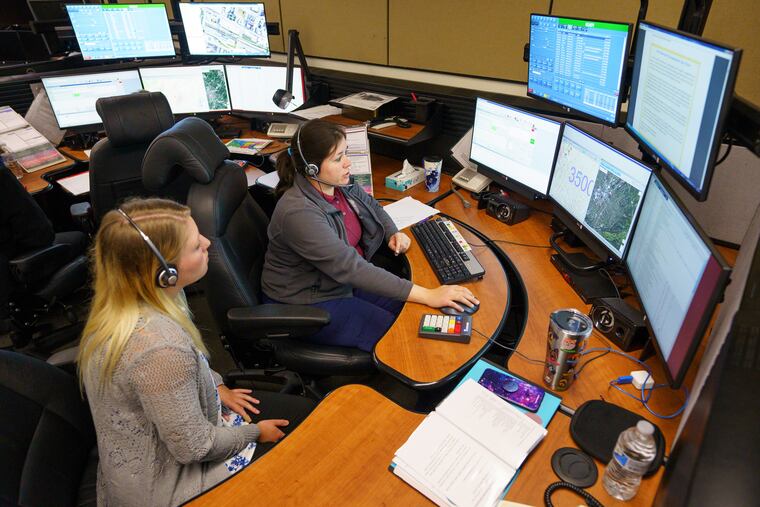
A county analysis, shared first with The Inquirer, shows that calls using Language Line, the county’s third-party language translation service for 911 calls, decreased by 12.4% — 781 calls — between 2024 and 2025.
Among Spanish speakers, the Language Line calls dropped by almost 14%, or 729 calls.
The decline in 911 calls during the periods of increased ICE activity could signal the chilling effect Trump’s immigration enforcement agenda had on public safety last year, including residents’ lack of trust in local law enforcement.
“I think that part of it is that they are scared that calling 911 will mean that they’re going to be asked a lot of questions, and they’re not trusting anyone right now,” said Nelly Jiménez-Arévalo, Montgomery County’s director of immigrant affairs.
Jiménez-Arévalo said that the hesitation to engage with 911 could lead to fewer reported crimes for all residents — regardless of immigration status — and that it is now in the county’s hands to educate community members and mend that trust with emergency services.
“When it comes to public safety, we want everyone to be on the same page, and when a category of the community is not calling and is not using that system, the other ones are going to be negatively impacted by it,” Jiménez-Arévalo said.
The drops in 911 calls were the most drastic in June, July, November, and December 2025 in comparison with the year prior, according to county data from Language Line, correlating with ICE’s visibility in the county and nationwide.
For instance, in July 2025, more than a dozen ICE agents raided Super Gigante food market in West Norriton and took 14 people into custody as part of a flurry of activity across Montgomery County.
And in December, ICE agents went into Minnesota to begin their highly publicized operation, which a month later escalated with federal agents killing two U.S. citizens, Renee Nicole Good and Alex Pretti.
In other states, immigrants have been detained after calling police for assistance.
Police departments throughout the county do not enforce civil immigration orders, according to a letter sent earlier this year from Montgomery County District Attorney Kevin Steele and the county police chiefs association.
Agurto, of Unides Para Servir Norristown, said she has encouraged community members she works with not to be afraid to reach out to 911, but many residents fear that ICE could become involved if they seek assistance and they perceive local and federal law enforcement to be working together in some capacity.
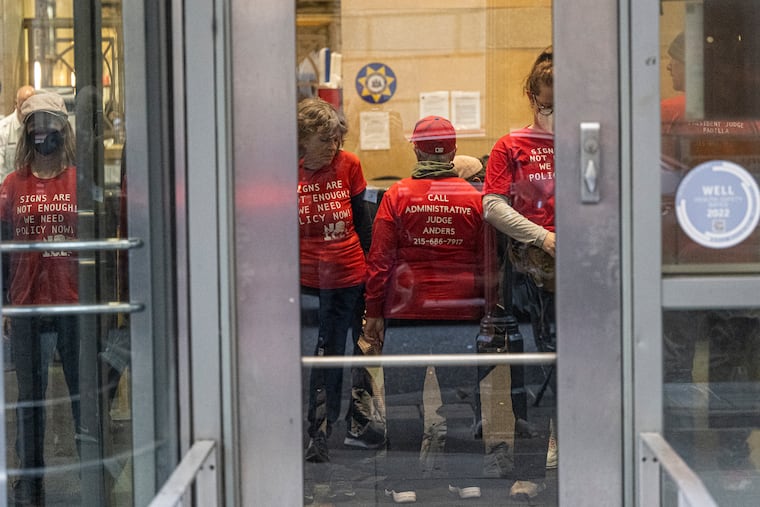
Amid residents’ apprehension with law enforcement, her group offers a person to accompany community members in various circumstances, such as needing to make a police report or going to the courthouse.
ICE has used extreme tactics that many local officials in the county have condemned as “brutality.”
“We’re now doing this because of ‘we don’t trust police,’” Agurto said.
The county has also experienced an overall decrease in 911 calls, but the drop in Language Line usage outpaces it. Despite the drop in calls, there were 3.1% and 2.8% countywide increases in EMS and fire dispatches, respectively, between 2024 and 2025, according to county data. But police dispatches decreased by 2.5%
Examining 911 data was a key priority for Jiménez-Arévalo when she became director of immigrant affairs in March 2025. She said she had a “mandate” from the county commissioners to zero in on public safety as one of her key focuses. The county spent over a year comparing the data between 2024 and 2025 and is currently tracking the numbers for 2026.
The county has used Language Line for interpreting 911 calls for over 20 years, and 83% of its calls utilize a Spanish interpreter. At least one dispatcher employed by the county is bilingual in English and Spanish, said Todd Stieritz, deputy director of public affairs for the Montgomery County Department of Public Safety.
“We never want somebody to not call 911 to report any sort of emergency for any reason, whether they think somebody else will call, or I’m scared to call, or I don’t have time to call, or I’m distrustful of the 911 dispatchers,” Stieritz said.
Now, for Montgomery County, it is a matter of outreach to restore community trust.
“I think a lot of this is that people don’t know, and we have a responsibility to educate,” said Jamila Winder, a Democrat and chair of the county commissioners.
The county has sent out flyers — offered in nine languages — that seek to inform residents on the benefits of calling 911 in an emergency and emphasize that the call takers “are not police officers, federal agents, or other local law enforcement.”
A video sharing similar information was posted to Instagram.
The county also recommended working jointly with police and first responders on “consistent messaging about non-cooperation with immigration enforcement,” according to a slide deck shared with The Inquirer, in addition to expanding language-access services and sharing materials with news outlets that non-English speakers frequent.
“We are attempting in this effort to demonstrate a broader commitment to equity language access and inclusive public safety, and we know that it’s not just a one-time effort, that it requires ongoing partnership, and that that can’t be done in a vacuum,” Winder said.
The informational materials also come as Montgomery County continues to enforce a resolution the commissioners passed in March that bars ICE from using county property or resources for noncriminal investigations. It also codifies that the county will not enter in a 287(g) cooperative agreement with ICE and restricts county employees from complying with civil immigration enforcement without a judicial warrant or subpoena.
Commissioner Neil Makhija, a Democrat, said educating residents on 911 is yet another measure the county can take as the federal immigration landscape continues to remain out of its control.
“We can’t control that,” Makhija said. “And so, at best, we can let people know that at the local level in Montgomery County, we’re looking out for them, and we represent everyone and are looking out for the public safety of the whole community.”
Staff writer Jeff Gammage contributed to this article.