Power Play
Millions in subsidies. Big campaign donations. How a coal magnate won over Harrisburg — and Josh Shapiro’s administration
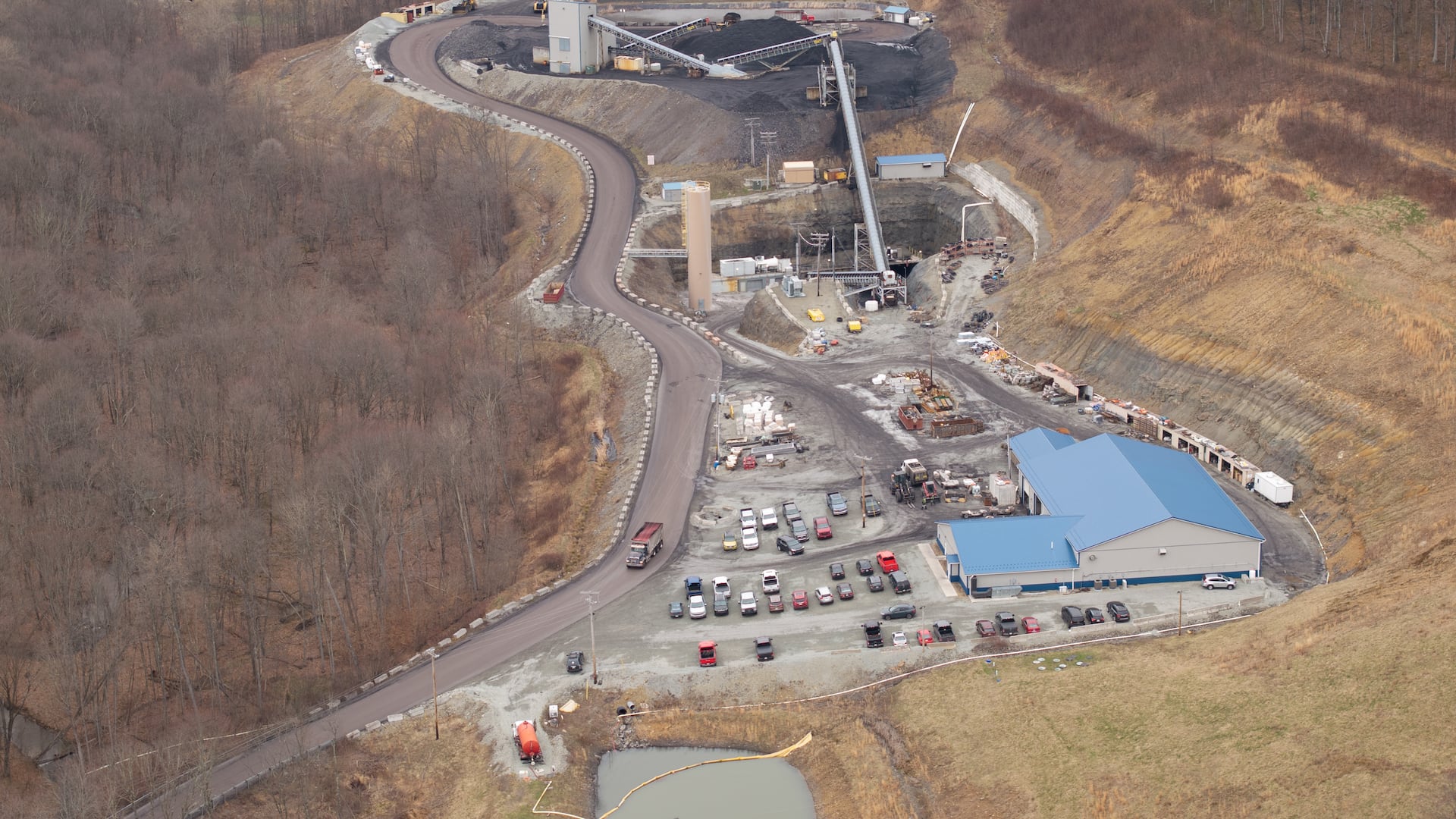
MELCROFT, Pa. — Company towns used to dot the landscape in the rolling hills of southwestern Pennsylvania, where coal mining drove commerce in the early 20th century — and left a legacy of environmental contamination that remains today.
This town was home to Melcroft Coal Co., named after shareholders of its parent company including former U.S. Treasury Secretary Andrew Mellon.
These days, this mountainous stretch of the Laurel Highlands 50 miles outside of Pittsburgh has taken on a new identity: a tranquil escape that is home to leafy wedding venues, tourist attractions like Frank Lloyd Wright’s Fallingwater, and even wind farms.
But here is also where a fight over Pennsylvania Gov. Josh Shapiro’s energy policies is playing out. An environmental group’s efforts to restore the land is running up against an industry that isn’t done digging up fossil fuels.
The dispute started in January 2024 when activists petitioned regulators to preemptively declare 11,000 acres off-limits for mining.
That threatened to undermine expansion plans by a coal company controlled by veteran mining executive D. Scott Kroh, CEO of family-owned Robindale Energy & Associated Cos. The Latrobe-based firm’s affiliates have received tens of millions of dollars in state taxpayer- and ratepayer-funded subsidies in recent years. Kroh and his sons are major campaign donors to Shapiro and Pennsylvania Republican lawmakers.
Robindale’s coal company, LCT Energy, lobbied the state to reject the request. After consulting Shapiro’s office, environmental regulators did just that, offering a rationale that echoed a key argument advanced by LCT — and which the state has since partially retracted.
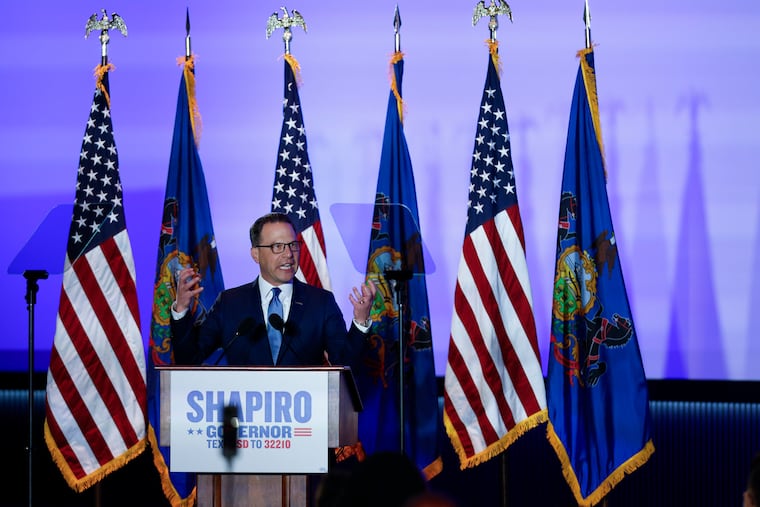
That rejection spurred litigation — and the documents from that dispute now offer a window into how Shapiro, a Democrat who is seeking reelection this fall, is navigating energy politics in a major fossil fuel-producing state ahead of a possible 2028 Democratic presidential campaign.
The coal fight comes as the public is increasingly anxious about affordability, and demand for energy to power AI data centers is spiking. In addition, the national Democratic Party is seeking to return to the White House after voters rejected a nominee in 2024 whom the Trump campaign successfully branded as too liberal in swing states like Pennsylvania.
President Donald Trump has encouraged more coal production. His big domestic policy law cut clean energy tax credits but added subsidies for companies that produce metallurgical coal, most of which is sold to foreign markets for steelmaking.
And Trump’s administration has exempted dozens of coal-fired plants — including several owned by Robindale — from federal rules requiring continuous monitoring of mercury pollution.
For Robindale, the dispute with the environmental group comes as key financial backers — two octogenarian billionaire industrialists — are fighting each other in courtrooms on multiple continents over everything from Australian mining operations and the use of Gulfstream jets to profits from Robindale-related investments.
It’s the latest chapter in the evolution of Pennsylvania’s energy sector. Even as natural gas has become the dominant source and the political debate in Harrisburg and Washington centers on the transition to cleaner fuels, the question of what to do about coal is something politicians can’t escape.
In Harrisburg, as the petition to protect land from mining was pending, staffers at the state Department of Environmental Protection sought input from Shapiro’s office as they handled what they saw as a potentially “politically controversial” issue, according to newly disclosed emails.
Regulators wanted to reject the Mountain Watershed Association’s request as legally deficient — but not before getting permission from Shapiro’s team, emails show.
“We are looking for Gov’s Office approval,” Max Schultz, deputy policy director for energy resources at the Department of Environmental Protection, wrote in a Feb. 14, 2024, email to administration officials, including Shapiro’s deputy secretary of policy and planning Jacob Finkel.
The emails, which were included in a December filing related to the dispute, haven’t been previously reported.
Shapiro’s office declined to make aides available for an on-the-record interview. In a statement, press secretary Rosie Lapowsky did not answer questions about whether anyone in that office granted the “approval” sought by DEP or if political considerations played a role in the petition review.
Lapowsky did say that with regard to the separate permitting process, DEP makes decisions “based on the applicable statutes and regulations.”
“To insinuate that any different process is followed would be completely false and irresponsible,” she said.
The episode raises concerns that DEP may be granting special treatment to certain projects based on factors that are unrelated to the law, said Lauren Williams, an environmental lawyer and founder of a Doylestown-based firm.
It also reflects a yearslong cultural shift at a DEP that once embraced a “fear no one” mentality but has since become more deferential toward industry amid staffing cuts, she said. “DEP shouldn’t constantly be looking over its shoulder to be like, ‘Hey Governor’s Office, can we do this?’” said Williams, who isn’t involved in the case.
The appearance of a conflict of interest
The Mountain Watershed Association’s executive director, Ashley Funk, 32, grew up with a huge pile of coal waste from abandoned mines in her backyard. She used to go sledding on it.
Founded in 1994, the group, now with 15 staffers and some 3,500 members, has developed five treatment systems to remediate contaminated mine water, restoring 70% of Indian Creek, a tributary of the Youghiogheny River.
Its offices are set in the Allegheny Front, a wooded area surrounded by campgrounds and tourist draws like Seven Springs Mountain ski resort.
On a drive along a scenic two-lane road in an electric Ford F-150 on a recent afternoon, there were signs of the Laurel Highlands’ other big industry: stains from mine traffic on the road.
It was the entrance to LCT’s Rustic Ridge No. 1, an underground mine that opened in 2018. Three years later, the company submitted a permit application to expand the mine. At a total of 4,200 acres, it would be bigger than Valley Forge National Historical Park.
Behind that project was the Kroh family — CEO Scott, 76, and his sons Jud, 43, company president, and Zachary, 40, chief commercial officer — as well as investors including billionaires Hans J. Mende, a German citizen who lives in Connecticut and Switzerland, and his longtime business partner Fritz R. Kundrun, a German-U.S. citizen who lives in Florida.
Mende, 82, and Kundrun, 89, own a combined 21% of LCT Energy, according to court records. They are also investors in other Robindale ventures, but the company said Mende and Kundrun “do not hold ownership in the majority of our operating entities.”
LCT employs about 200 people.
The Krohs own firms in multiple sectors regulated by the state. Those assets include three waste coal-fired power plants, which have received millions of dollars in Pennsylvania tax credits over the last decade. They also benefit from the “alternative” fuel mandates state government has imposed on electric utilities because waste coal qualifies as one such source.
Some of those policies became law after Robindale executives contributed to campaigns and committees affiliated with legislators involved in those efforts.
On at least three occasions in the last seven years, lawmakers during last-minute budget negotiations have either sweetened tax benefits for waste coal firms or taken action that dramatically increased ratepayer subsidies for the industry.
In one instance, in 2020, the Krohs donated $30,000 to the Pennsylvania Senate GOP campaign arm. A couple weeks later, the Republican Senate majority leader added language to a budget deal that boosted the local waste coal industry. It was signed by then-Gov. Tom Wolf, a Democrat.
Following the enactment of that law, Pennsylvania’s 10 waste coal power plants have seen a surge in ratepayer subsidies. Two Robindale plants received a total of $89.6 million in such payments in 2024, according to Shapiro’s office. Robindale said that figure overstated revenue by tens of millions of dollars.
Shapiro has emerged as a big beneficiary of the Krohs’ largesse in recent years. They had donated about $90,000 to Shapiro’s campaigns in the five years before the watershed association filed its petition. Scott and Jud Kroh gave Shapiro $271,000 last year, putting them among the governor’s top 10 donors among business executives. Jud Kroh served on Shapiro’s transition team after his 2022 election victory.
Limiting the amount of money people can give to candidates would help limit the possible sort of outside influence, where individuals have just way too much sway because of the financial resources that they have.
The Krohs declined to be interviewed for this article, citing ongoing litigation. In a statement provided by a representative, Jud Kroh said Robindale is “proud to support sound energy policy that reflects the seriousness of Pennsylvania’s position in the energy world.”
“Any advocacy, political or otherwise, done by employees of Robindale have been pursued reflecting their fiduciary duty to their employees, their communities, and the commonwealth,” he said.
Andrew McGinley, vice president of policy at government watchdog Committee of Seventy, said The Inquirer’s findings show why Pennsylvania should change a law that allows people to donate unlimited sums of money to candidates for state office.
He said Shapiro’s office’s involvement in a regulatory matter affecting a campaign donor’s business interests creates at least the appearance of a conflict of interest.
“Limiting the amount of money people can give to candidates would help limit the possible sort of outside influence, where individuals have just way too much sway because of the financial resources that they have,” he said.
Energy politics
Coal production has been declining nationally and in Pennsylvania for years, as natural gas-fired plants emerged as a bigger and cleaner source of electricity.
Bituminous coal, the type mined in Western Pennsylvania, is used for steelmaking and electricity generation. In 2024, coal supplied 5% of the state’s net generation, down from 36% in 2014.
Today, there are less than 5,000 Pennsylvania coal miners — down from 16,000 in 1990, according to the Federal Reserve Bank of St. Louis. Nevertheless, coal has retained cultural and political importance in a state that helped power the Industrial Revolution and make America a global superpower.
“It is something that reminds people of the days that … blue-collar workers could really get ahead,” said Mike Mikus, a Pittsburgh-based Democratic strategist.
Shapiro has approached energy politics with what Mikus called a balanced approach. During his 2022 campaign for governor, Shapiro, then the state attorney general, endorsed an “all of the above” energy platform that called for investing in clean technologies and continuing to use fossil fuels, even as some in the national Democratic Party proposed plans to phase them out.
He also expressed reservations about Pennsylvania’s participation in the Regional Greenhouse Gas Initiative — a multistate compact that places a cap on power plants’ carbon emissions and requires operators to pay for them — adopting a position aligned with the fossil fuel industry and building trades unions.
As governor this past year, Shapiro withdrew the state from RGGI in a budget deal with Senate Republicans. However, Shapiro has also proposed his own plan to modernize Pennsylvania’s grid, under which the state would set its own cap on carbon emissions and require plants to buy credits to pollute — money the state would mostly return to ratepayers as rebates on their electric bills. He would also incentivize investments in renewable energy through tax credits.
“We need to harness our energy and our natural resources — do it in a way that protects our public health, our public safety, our environment," Shapiro said in November. “I think we can do all of that and create lots of jobs, and bring down the cost of energy.”
The GOP-led Senate has shown little interest in the idea, but it could face better odds if Democrats win the chamber in the November midterm elections. For now, it’s “dead in the water,” said a Harrisburg Democratic lobbyist.
Shapiro’s allies in organized labor say he has backed coal miners. “He’s not very vocal per se about coal,” said Chuck Knissel, international vice president of District 2 for the United Mine Workers of America. “I know he does support us.”
Young people are terrified about the state of climate change, terrified about the state of our democracy.
Shapiro’s office said the administration has required natural gas operators to disclose chemicals used in drilling, held polluters accountable for excessive air pollution, and secured $100 million from agricultural firm Monsanto Co. to resolve allegations of environmental contamination.
Yet some climate activists disapprove of Shapiro’s record and say he would be vulnerable in the 2028 presidential election. The governor has put “fossil fuel companies first” and “has a lot of work to do if he wants to earn the youth vote,” said MacKenzie MacFarland, a 25-year-old organizer with the Sunrise Movement in Pittsburgh.
“Young people are terrified about the state of climate change, terrified about the state of our democracy,” MacFarland said.
Robindale as an industry leader
Robindale CEO Scott Kroh started in the coal business in 1978 as a salesman for Ringgold Mining in Kittanning, northeast of Pittsburgh, according to corporate records.
Robindale was founded in 2001 as a family-owned company led by Kroh. It now includes 21 businesses in power generation, mining, logistics, and material handling, operating in multiple states.
Key supporters in Kroh’s career have been Mende and Kundrun, the co-owners of American Metals & Coal International, a privately held, multibillion dollar global natural resources and commodities trading firm.
Kroh is “one of the great leaders in the energy industry,” said Michael “Mickey” Robb, an attorney for Mende and partner at Bailey Glasser LLP.
With almost 1,000 Pennsylvania employees, Robindale is an industry leader in cleaning up waste at abandoned mines and turning that material into fuel to generate power. Robindale says it has invested more than $1.3 billion in total capital since its founding, including $500 million across its mining operations.
When it comes to mining, Robindale is a relatively small player. Core Natural Resources is the biggest producer in Pennsylvania. Its Bailey Mine southwest of Pittsburgh produces 10.8 million tons a year — the ninth most in the U.S, according to federal data.
By contrast, Robindale said its three mining companies, including LCT, produced a total of 1.8 million tons in 2025. LCT mines metallurgical, or “met,” coal, used in the production of steel — essential for building bridges, skyscrapers, cars, and other applications. The Trump administration designated such coal a “critical mineral” eligible for tax credits and faster permitting.
LCT and other producers sell most of their met coal to foreign markets because countries like China and India still primarily use coal-dependent blast furnaces to make steel.
Beyond LCT, the Krohs and Mende’s AMCI are investors in a much bigger $1.1 billion West Virginia mine, which plans to produce 3.5 million tons of coal a year. Jud Kroh said his family owns 17.7%.
Subsidies and campaign contributions
In Pennsylvania, Kroh family members have been active political donors. Along with employees at Robindale affiliates, the Krohs have contributed more than $1.43 million to dozens of political action committees and candidates for state office from both parties since 2015, according to campaign-finance records.
“All contributions are lawful, publicly disclosed, and reflect” the family’s civic participation, Jud Kroh said.
In addition, Robindale and its affiliates have spent $825,000 on state lobbying over that period of time, records show.
Even as many coal-fired power plants have closed amid the fracking boom, Robindale has gone against the grain, buying three plants since 2016 — including the largest waste coal facility in the U.S., which it acquired for $82.5 million from GenOn Energy.
As the industry struggled to compete against cheap natural gas, the state stepped in.
A 2004 Pennsylvania law requires electric utilities to get 18% of energy they sell to customers from renewable sources like solar and wind — as well as “alternative” ones like waste coal, a fossil fuel included in Tier II of the program.
Utilities can comply with the standards by buying credits that are tied to megawatt generation.
They pass on the cost of these credits to ratepayers within their service territory, “essentially just spreading it like peanut butter across bread,” said Robert Routh, a policy director on Pennsylvania climate and energy issues for the Natural Resources Defense Council.
That cost has skyrocketed since the legislature in 2020 passed a law, Act 114, mandating that Tier II credits must be purchased from within the state — protecting Pennsylvania facilities from out-of-state competitors.
The average credit price of Tier II sources increased from 31 cents in 2019 to $26.92 last year, according to Public Utility Commission reports.

What is waste coal?
- A mixture of low-quality coal, rock and clay left over from mining operations dating back decades. It’s also referred to as refuse, boney, culm or gob.
- Over the last century, hundreds of millions of tons of waste were abandoned in piles near Pennsylvania coal mines. Those piles can leach toxic metals into waterways and spontaneously catch fire, releasing greenhouse gases into the atmosphere.
- New technology emerged in the 1980s to reuse waste coal.
What do companies like Robindale do with it?
- Load it up in trucks at abandoned mines and haul it to power plants, where it’s burned to generate electricity.
- The process produces leftover alkaline ash, which is used to restore acidic soil at the former waste piles. Grass is planted on top.
- The industry says it has removed 257 million tons of waste coal to date, restoring thousands of acres of land and miles of streams.
Waste coal operators account for about half the Tier II credits. In 2024, the power plants generated $199 million in revenue as a result of the government mandate, according to the utility commission. Two of Robindale’s plants received almost $90 million, according to Shapiro’s office.
In 2019, the industrywide total was $1.8 million.
Jud Kroh said Shapiro’s office “materially overstated” the number of credits sold by Robindale facilities. The actual amount of revenue generated by those credits is tens of millions of dollars less than $90 million, he said.
Both 2023 and 2024 “were characterized by extremely low wholesale energy prices,” he said. As a result, “waste coal generation fell significantly in both years as the industry sought to minimize losses.”
He also disputed the $199 million figure, saying it is “derived from credits retired in the compliance year, not credits generated during the same period.”
Credits can be banked for up to three years and are often sold forward, Kroh said. The per-credit price cited by PUC is also inflated, he said, because it does not account for bundled sales and other factors.
Kroh said any estimate of ratepayer cost “must account for the energy and capacity offsets that these plants provide to the grid, the avoided costs of environmental cleanup, and the estimated $50-100 million in ratepayer savings our fleet delivered” during Winter Storm Elliott in 2022.
Even with ratepayer support, Pennsylvania’s waste coal plants barely break even, with estimated total revenues of $446 million and costs of $434 million in 2023, according to a report commissioned by the Appalachian Region Independent Power Producers Association, or ARIPPA.
Alternative energy credits accounted for 57% of industry revenues that year, “stabilizing the industry in the midst of significant challenges” such as low wholesale prices, the report said.
It said waste coal plants support 2,200 jobs in Pennsylvania.
Sen. Dave Argall (R., Schuylkill), whose district is home to waste coal facilities, was a prime sponsor of legislation in 2020 that proposed restricting out-of-state competition. That provision was ultimately incorporated into a budget package.
Argall’s campaign reported receiving $21,000 in contributions from the Krohs on Sept. 20 that year. The senator’s bill was introduced the next day. Jud Kroh said the campaign filing reflected the day the donations were processed, not when the checks were cut.
On Sept. 21, a waste coal industry group funded in part by Robindale retained a lobbying firm run by Dave Thomas, who a few years earlier had served as chief counsel to then-Senate Majority Leader Jake Corman (R., Centre). The Senate GOP campaign arm was also a client of Thomas’ DT Firm during this period of time.
On Nov. 3, 2020, the Krohs donated $30,000 to the Senate GOP campaign arm.
Less than three weeks later, on Nov. 20, Corman added the language in Argall’s bill as an amendment to a broader budget deal.
The General Assembly passed the legislation the same day. The Krohs gave a total of $62,000 to Argall’s campaign that year.
Thomas’ representation of the industry group, ARIPPA — whose board vice president is Jud Kroh — ended the following month.
My goal was to help these facilities to survive because of the benefits they provide. The tax benefits and the jobs — they mean a lot in a small town.”
“My goal was to help these facilities to survive because of the benefits they provide,” Argall said, including for the environment. “The tax benefits and the jobs — they mean a lot in a small town.”
Argall added that he’s been supporting efforts to clean up waste coal since before he was elected to the Senate in 2009.
Jud Kroh said his family has supported Argall for many years, noting that the senator’s district is home to Robindale’s Lehigh anthracite operation.
The contributions to the Senate Republican Campaign Committee were made in response to “standard mailed invitations to fundraising events” and reflect “routine support,” Kroh said. The donations, he said, were “not connected” to any specific legislative action. Kroh said he’s never spoken to Thomas.
Neither Thomas nor Corman, now a lobbyist, returned messages seeking comment.
The Krohs are by far the biggest campaign donors in Pennsylvania’s waste coal industry. Owners, executives, and employees affiliated with non-Robindale plants have given $130,000 to Pennsylvania political committees since 2015 — less than 10% of the amount contributed by the Krohs and others affiliated with Robindale.
Shapiro’s “Lightning Plan” climate agenda would reduce ratepayer subsidies for waste coal — and his office said the plan would reduce Robindale’s compensation by potentially tens of millions of dollars a year.
Environmental groups have supported that idea but criticized the governor for withdrawing from RGGI without gaining significant concessions from Senate Republicans to move his plan forward.
Tax breaks
In addition to ratepayer subsidies, waste coal facilities are also eligible for state tax credits under a 2016 law.
Robindale affiliates have received about $60 million in tax credits since 2017, tied to their electricity generation.
The tax break has become more generous over time. In 2019, lawmakers doubled the cap on available credits to $20 million and extended the program by a decade to 2036. Supporters said the previous cap had limited remediation efforts and said waste coal facilities might close without additional incentives.
This provision was initially included in a bill sponsored by Sen. Argall. It was introduced in the Senate in May 2019, then, in late June, it was incorporated into the legislation accompanying the budget through an amendment proposed by Senate GOP leadership. The General Assembly enacted it on June 28.
The Krohs gave a total of $40,000 in campaign contributions to Argall on June 15 — their largest donations that year. Argall and others said at the time the incentive program was more cost-effective than having the government remediate some 220 million tons of remaining coal refuse.
As with the other political contributions mentioned in this article, Jud Kroh said the donations to Argall were not tied to any specific legislative action.
Lawmakers in 2024 doubled the credit to $8 per ton of coal waste processed and raised the cap to $55 million. That language was added to budget-related legislation on July 11 by Senate GOP leadership; the bill passed the legislature and was signed by Shapiro the same day.
The tax credit “is so critical to cleaning up streams,” Senate Majority Leader Joe Pittman (R., Indiana) said on the floor of the chamber during the vote.
The Krohs donated $69,000 to Pittman’s campaign that year, with the bulk of that coming in the months after the bill passed. Robindale did not lobby on the legislation, according to Jud Kroh.
Pittman’s district is home to Robindale’s Seward Generation plant, which is among the 10 largest real estate taxpayers in Indiana County, according to a 2021 bond disclosure.
The incentive program has received bipartisan support and benefits the environment, jobs, and electricity demands, said Pittman spokesperson Kate Eckhart Flessner.
Advocates for the environment say that by subsidizing the burning of waste coal, the legislature has simply moved “the pollution from the land to the air,” as Robert Altenburg, PennFuture’s senior director for energy and climate, told lawmakers at a hearing in August.
The industry, though, had backing at that hearing from organized labor — members of the International Brotherhood of Electrical Workers Local 459 in Johnstown sat in the front row behind those who gave testimony. The union represents workers at Robindale’s Seward plant.
Robindale sees itself as a responsible environmental steward. Those company towns that left abandoned mines across the state over the decades? “[W]hat we’re doing now is this environmental justice 100 years later,” Jim Panaro, an executive at a Robindale affiliate, told Mining People magazine last summer.
But compared to traditional coal, waste coal has a higher carbon intensity and “emits more mercury and metal-containing particulate matter,” according to Routh of the NRDC.
And many waste coal plants are now exempt from federal rules requiring close monitoring of mercury, a toxin, under the Trump administration. Jud Kroh said Robindale’s facilities “operate well below maximum allowable emission rates” and the monitoring mandate required technology that had not been proven reliable at waste coal plants.
A $100,000 contribution
Robindale says it has at times taken positions on public policy that run contrary to its own limited financial interests, with an eye on the greater good for Pennsylvania. Case in point, the company says, is the Regional Greenhouse Gas Initiative.
Robindale, like many energy firms, opposed the compact, which Pennsylvania joined under Shapiro’s predecessor, Wolf. Scott Kroh contributed $100,000 to Shapiro’s campaign two days before the governor withdrew from the program in November, The Inquirer previously reported.
Pennsylvania never implemented the program amid litigation, but the Wolf administration’s proposed regulations set aside a certain amount of carbon allowances for waste coal plants — meaning they would not have to pay for their pollution unless it exceeded those limits.
Jud Kroh previously described policies like RGGI as a “major concern for us.”
“Not just for our own business but for local reliability and economic issues,” including a potential reduction in coal production, he told lawmakers during a 2023 House hearing.
‘War on coal’
For decades, states that regulate coal mining have been required under federal law to maintain a process to determine what land is “unsuitable” for surface coal mining, which involves removing layers of soil and rock to reach shallow deposits.
Pennsylvania — the third-biggest coal-producing state in the U.S. — has made such a designation 20 times, the most recent of which was in 2011. Most were in the 1980s and ‘90s.
For years, the program has been effectively stalled. There are currently nine petitions “on hold” at DEP, with one dating back more than 30 years. Mining is prohibited in such areas while petitions are under review, according to the Governor’s Office.
DEP has blamed the backlog on staffing levels.
But emails made public in the watershed association’s case point to another possibility.
Six months after Shapiro took office in 2023, aides discussed what to do about Unsuitable for Mining petitions. In a July email, DEP policy aide Schultz wrote to two Shapiro aides that the Office of Active and Abandoned Mining Operations “has asked that I gauge the administration’s interest (or lack thereof) in ‘approving’” the petitions.
Schultz said regulators had not acted on such petitions for years, “as they can be viewed as anti-mining.”
In a reply email, deputy chief of staff Sam Robinson recalled his experience during the Wolf administration. “My recollection on this issue was that at the beginning of the Wolf admin there were concerned [sic] that designation would be perceived as part of a war on coal,” he wrote.
The petition
It was against that backdrop that the Mountain Watershed Association got involved.
On Jan. 22, 2024, the nonprofit filed its petition — the first submitted to the state since 2015 — for a swath of land in Westmoreland County almost 10 times the size of Philadelphia’s Navy Yard. It cited likely acid mine drainage into the water, water quality loss, damage to habitats, and other harms to the Fourmile Run watershed.
That includes places like taxpayer-owned Donegal Lake, a 90-acre reservoir that was drained a decade ago after a dam was found to be unsafe. It has since been refilled, and it’s home to rainbow and golden trout, big bass, and panfish.
Citing a report by its expert consultant, the nonprofit argues that the past impacts associated with area mines show that a future development would make it neither economically nor technologically possible to later restore the environment — a scenario under which the state is required by federal law to prohibit mining.
Short of that threshold, the state still has the discretion to take action for other reasons included in the regulations.
LCT Energy has said in court papers that the watershed association’s petition “makes sweeping and inaccurate allegations.”
A couple weeks after the petition was filed, on Feb. 9, LCT Energy sent a letter to DEP officials urging them to reject it.
How DEP handled the letter is potentially significant because under the department’s regulations, it is not supposed to consider outside input until a later phase in the review process.
In a deposition, DEP official Greg Greenfield maintained the letter had “no impact whatsoever” on the petition, saying he was “pretty sure” staffers were already working on a rejection letter to meet a 30-day deadline established by the law.
‘Politically controversial’
Five days later, on Feb. 14, DEP policy aide Schultz in an email to Shapiro aides gave an overview of the program’s backlog of petitions. “No action has been taken on any of them by previous administrations because they can be politically controversial,” he wrote.
He said DEP wanted to return it as frivolous — meaning it failed to meet the legal threshold necessary to proceed to a technical scientific review — but said the challenge was doing that despite past practice, noting that the Shapiro administration’s “position so far is to continue that nonaction on petitions that are currently ‘under review.’”
By rejecting the petition as frivolous, it technically would never reach the “review” stage, he said. That’s when Schultz requested the Governor’s Office’s “approval” to proceed.
Court records do not indicate whether anyone responded to the email.
DEP’s Greenfield later said in deposition testimony that career staffers made the decision to reject the petition and were not influenced by Shapiro’s office. He also acknowledged under questioning that the department’s policy office was “going to let, I think, both the Governor’s Office and the [DEP] secretary’s office know that this decision was — was going to be made.”
The Unsuitable for Mining program’s official regulations say nothing about involving the Governor’s Office.
But to finalize regulatory decisions such as determining whether a petition is frivolous, Greenfield said his bureau needs to get “sign-off” from the secretary of the Department of Environmental Protection. Getting that approval can involve the Governor’s Office, he said in the June 2025 deposition.
David Hess, a former DEP secretary in the early 2000s under a Republican administration, said it’s routine for the department to share information with the Governor’s Office about big projects like LCT’s planned mining development.
As secretary, Hess said, he wanted to get a sense of “what the boss’s office is thinking about a particular issue.”
‘Harmless error’
It all came to a head on Feb. 23, when DEP sent the watershed association a letter saying regulators had determined the petition lacked “serious merit.”
The petition provided evidence about potential harms associated with LCT’s underground mining activities, DEP said, but did not “adequately link those impacts to surface mining activities.”
That echoed a key point in LCT’s letter two weeks earlier, which said the petition was “based on the alleged effects of underground mining, which is outside the scope of the UFM regulations.”
Under deposition questioning, DEP’s Greenfield admitted that the department’s interpretation of Pennsylvania’s regulations defining “surface mining operations” was too narrow and incorrectly excluded surface activities connected with underground mining.
In this case, those activities include pumping mine water to the surface and using explosives in construction of an underground mine.
DEP has adopted a “broader interpretation” since it denied the petition, Greenfield said, but he maintained the request was still frivolous.
The watershed association argued in a filing that DEP’s admission was reason enough for the Pennsylvania Environmental Hearing Board to void the agency’s determination.
The board is a quasi-judicial independent entity, whose judges are appointed by the governor and subject to state Senate confirmation. The nonprofit is asking the board to reverse the decision and allow the petition to proceed to a technical review of scientific evidence.
Lawyers for DEP said in court papers that any change in the department’s interpretation was a “harmless error.”
LCT’s lawyers said the watershed association’s concerns are better addressed through the permitting process, through which the nonprofit has also contested the coal operator’s permits.
The appeal is pending.
‘Pride’ and suspicion
In the two years since DEP rejected the petition, regulators have approved an LCT permit to expand Rustic Ridge No. 1 and are now reviewing its application to open a new mine in the area. In response to questions from The Inquirer, the Governor’s Office said it does not get involved in project-level permitting decisions.
But while those developments have been welcome news to the Krohs, their investors are still at odds. In a federal lawsuit filed in June, Kundrun accused Mende of failing to distribute profits from their investments in Robindale-affiliated assets.
Mende has asked a judge to dismiss the case. His attorney, Robb, said the suit involves a minority nonoperating interest in Robindale and won’t affect the underlying business.
In Harrisburg, Shapiro has continued to try to strike a balance on energy policy. His administration says it has worked to speed up permitting for the $10 billion redevelopment of a Western Pennsylvania site that was once the largest coal-fired power plant in the state. It’s now being transformed into a data center campus powered by what would be one of the biggest natural gas-fired plants in the U.S. — fueled by fracking.
As for the watershed association, activists are suspicious of all the big money flowing from coal interests to political campaigns.
“Corporate interests are really pushing for their industries to survive,” Funk said, “and they do that by pressuring, and I guess in some cases, buying out, elected officials.”
Yet even the activists see why some in the community remain attached to coal mining.
“There’s like a pride in it,” Funk said as she and colleague Colleen O’Neil drove the pickup truck over LCT’s underground mine, passing the area’s sugar maple trees.
But political leaders should be investing in the future, she said, and that’s clean energy.
Then a coal truck passed by.
Staff writer Joe Yerardi contributed to this article.
This article is based on an Inquirer review of hundreds of pages of court records, a decade of campaign-finance filings, and government reports, as well as interviews with experts and people involved in the dispute.
This article has been updated to attribute information from the Governor’s Office to Shapiro’s press secretary.