As Josh Shapiro seeks reelection, his business-friendly brand has drawn millions from CEOs — including some with interests in Harrisburg
Dozens of CEOs in industries ranging from coal mining to gambling to real estate are helping to bankroll Pennsylvania Gov. Josh Shapiro’s campaign. His fundraising could invite scrutiny ahead of 2028.
A Florida developer who is building data centers in Pennsylvania. A Chicago crypto trader whose company was sued by the Biden administration. And a Southwestern Pennsylvania coal magnate whose firm received a permit from state regulators last year to expand operations — and is now seeking approval to open a new mine.
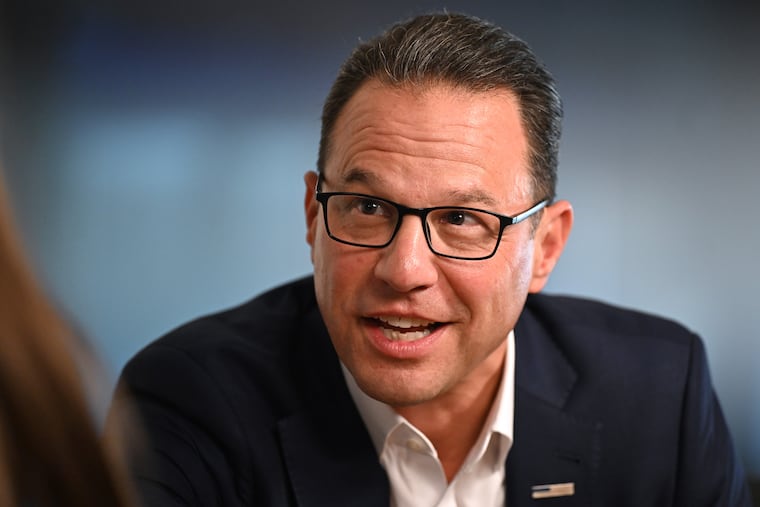
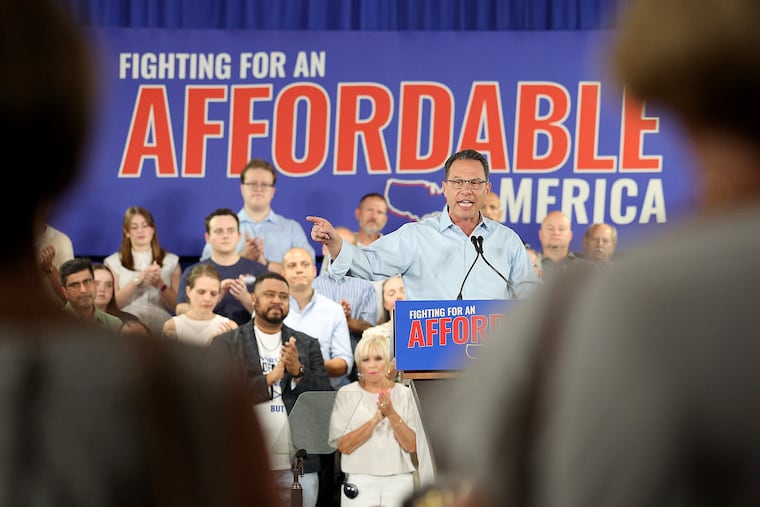
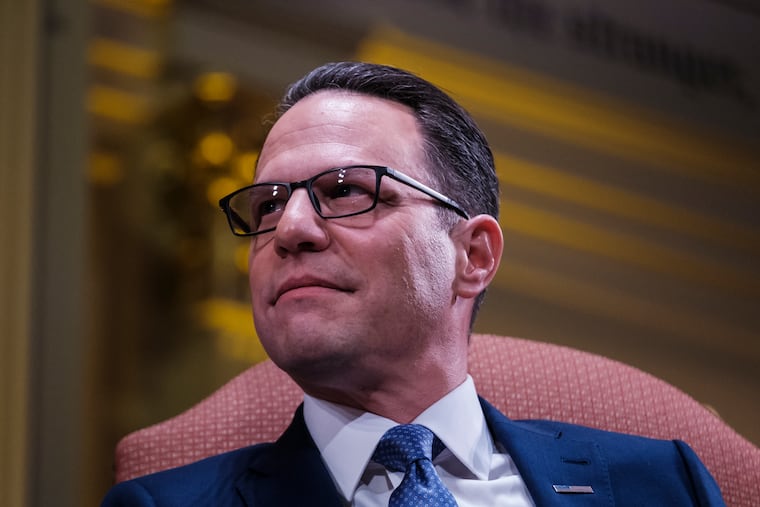
These are some of the dozens of CEOs backing Pennsylvania Gov. Josh Shapiro, a Democrat, as he seeks a second term this fall in Harrisburg — with an eye on a possible run for president in 2028.
Shapiro’s gubernatorial campaign raised at least $8.5 million last year from nearly 240 CEOs, founders, business owners, and other top executives, according to an Inquirer analysis of campaign-finance records that were made public last month.
That includes the single biggest donation to the campaign: $2.5 million from billionaire and former New York City Mayor Michael Bloomberg. Shapiro’s haul from top executives represents 50.8% of the $16.8 million he raised from donors who listed their occupation in campaign finance filings.
During his first three years in office, Shapiro, 52, has sought to build a profile as a pragmatic, business-friendly governor, focusing on speeding the permitting process and promoting economic development through government grants and tax breaks.
At the same time, the governor has proven adept at raising campaign cash from people who have business interests before state government in Harrisburg. Those include a skill game developer who staved off a major policy defeat this year and a waste coal power plant owner who gave $100,000 to Shapiro two days before the governor pulled out of a multistate program that requires such facilities to pay for their greenhouse gas emissions.
It’s a contrast with the rising populism on both the left and right, marked by a “Fighting Oligarchy” tour by progressive leaders and the MAGA movement’s deep suspicion of elites.
It’s not unusual for corporate executives to make contributions to candidates from both parties. But the practice could invite scrutiny for Shapiro in a White House run — particularly among voters and activists who are dismayed by the role of money in politics.
“We are concerned about any elected leaders taking monetary donations from corporate interests, regardless of who they are,” said Ashley Funk, executive director of the Mountain Watershed Association, a nonprofit that opposes a Shapiro donor’s coal mining expansion.
“I think that it influences decision-making,” she said.
‘The speed of business’
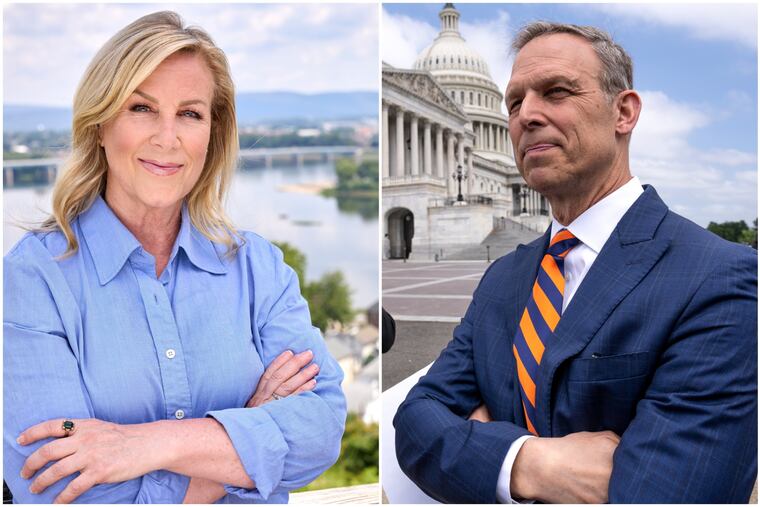
For now, Shapiro’s pledge to make Pennsylvania’s government run “at the speed of business” appears to have won over many executives, helping him build a massive fundraising advantage in his reelection bid. Shapiro raised $23.2 million overall in 2025, compared with the $1.5 million reported by his likely Republican opponent, State Treasurer Stacy Garrity.
“I’ve long admired the way the commonwealth approaches economic development and innovation, and I have deep respect for Gov. Shapiro’s leadership,” said Bob Clark, executive chairman and founder of Clayco, a Chicago-based real estate and construction firm that is redeveloping a site at the industrial hub known as the Bellwether District in South Philadelphia.
Clark gave Shapiro’s campaign $100,000 last year. “I consider him both a trusted colleague and an effective leader,” he said.
In recent weeks, the governor has celebrated pledges by pharmaceutical companies to invest billions of dollars in new facilities in Montgomery County and the Lehigh Valley, secured with tens of millions of dollars in state incentives. And last year, Amazon said it would spend $20 billion in Pennsylvania to build two new artificial intelligence data centers, in what officials called the single largest private investment in state history.
Shapiro’s allies say he stands up to big business, too, highlighting how he successfully prodded PJM Interconnection LLC — the Valley Forge-based regional electric grid operator whose voting members largely consist of companies in the electricity industry — to impose and extend a price cap. He has also received support from organized labor.
Shapiro argues that the way to restore faith in institutions is not by railing against billionaires but by showing that the government can fix real problems — “get s— done,” in his parlance.
Garrity, the Republican state treasurer, says Shapiro’s actions don’t live up to the hype.
Under Shapiro’s watch, she said, the state budget now has a $4.3 billion shortfall and Pennsylvania’s economy is on the wrong track.
“Liberal national donors may be investing in Josh Shapiro’s political vanity project, but hardworking Pennsylvanians are seeing nothing in return,” she said in a statement.
Garrity received nearly $380,000 from more than 60 CEOs and other top business executives. That figure represents about 41% of her contributions from donors who listed their occupation in campaign-finance filings.
Shapiro’s campaign said his coalition is “reflective of a governor who is delivering for all Pennsylvanians — and of a campaign that is fighting to win up and down the ballot.”
The governor has “focused on growing our economy and creating jobs, and he has delivered — creating tens of thousands of jobs, winning major deals, and building the only growing economy in the Northeast,” campaign spokesperson Manuel Bonder said in a statement.
Shapiro highlighted one such deal in July, when he appeared alongside executives at defense contractor Rhoads Industries at the Navy Yard in South Philly to announce the firm’s $100 million plan to build a new manufacturing facility, create 450 jobs, and boost production of submarine parts.
To help secure the investment, the Shapiro administration approved $4 million in grants and, along with the City of Philadelphia, extended a tax designation around the project site known as a Keystone Opportunity Zone, a program that voids most state and local taxes.
“One of the things that Rhoads is known to do is get things done. … We want to turn out product; we want to turn it around; we want to get it done,” president Mike Rhoads said.
Looking toward Shapiro, he said, “Somebody standing to my left has the kind of same attitude.”
Taking his turn at a lectern that read “Rebuilding America’s Fleet,” Shapiro said Rhoads’ investment — with help from the state — would “ensure the future of submarine manufacturing, shipbuilding, and all things important to securing our freedom is going to run right through the Philadelphia Shipyard.”
Three months later, in October, CEO Dan Rhoads contributed $10,000 to Shapiro’s campaign — the single largest donation he made to a candidate for state office in the last decade, records show. Rhoads did not respond to requests for comment.
Data centers and ‘skill games’
Shapiro donors’ business interests include everything from data center construction to state regulation of slot machine-style games and approvals for a nuclear reactor.
Dan Hilferty, CEO of Philadelphia-based Comcast Spectacor — which owns the Flyers and the Xfinity Mobile Arena in South Philly — gave $40,000. A political action committee affiliated with parent company Comcast also gave $50,000. Comcast Spectacor and the 76ers are building a new arena at the South Philadelphia sports complex, and Shapiro last year did not rule out offering state incentives. Hilferty, a former CEO of Independence Blue Cross, previously gave Shapiro’s campaigns $27,500 over the last decade. Other Comcast Spectacor executives contributed about $95,000 during that period.
Top executives at Pace-O-Matic, the Georgia-based developer of so-called skill games that have proliferated across convenience stores and bars, gave $50,000. Operators for Skill, a PAC affiliated with the firm, contributed $10,000. The company successfully fended off a push in 2025 by Shapiro and lawmakers to tax the games at a level the industry considered too high. The governor has renewed a push to regulate the games, which some Philadelphia lawmakers say they would prefer to see banned. Pace-O-Matic contributes to both parties and remains “committed to fighting for fair regulation and taxation of Pennsylvania skill games,” said Mike Barley, chief public affairs officer for Pace-O-Matic.
Joseph Dominguez, president of Baltimore-based Constellation Energy, gave $25,000. The company is seeking to restart a nuclear reactor at Three Mile Island, just outside Harrisburg, and needs state and federal approvals. The plant would supply power to Microsoft to support the tech company’s data centers. “Constellation executives contribute to policymakers on both sides of the aisle who, like Gov. Shapiro, prioritize results and pragmatic solutions over politics,” a company spokesperson said.
Brian Patten, CEO of Next Generation Land Co. LLC, gave $10,000. He is a Florida data center developer who says he is pursuing projects in Pennsylvania. Data centers that power companies’ cloud storage and computing needs have drawn backlash across the U.S. over fears of rising electricity rates. In his February budget address, Shapiro said he wants data centers to supply their own energy and pay for any new generation they need. He has also said the U.S. needs to win the AI race against China.
Justin Thompson, CEO of Iron Senergy, a coal operator, gave $10,000. His firm owns the Cumberland Mine in Greene County. When Pennsylvania applied to the U.S. Environmental Protection Agency for a $400 million grant, it mentioned several firms — including Iron Senergy — that could use the money for decarbonization projects, the Pittsburgh Post-Gazette reported in 2024. The EPA awarded the grant, and the Pennsylvania Department of Environmental Protection is tasked with administering it. The state is now reviewing applications, which it says are confidential.
Local and national donors
Shapiro drew on a mix of executives from local and national firms. In Pennsylvania, he raised money from health system CEOs (Joseph Cacchione of Thomas Jefferson University, $10,000), bankers (Richard J. Green of Philly-based Firstrust Bank, $125,000), and a home remodeler (Asher Raphael of Power Home Remodeling in Chester, $100,000). Josh Kopelman — founder of First Round Capital and chairman emeritus of The Inquirer’s board of directors — and his wife, Rena, each gave $50,000.
There were private equity investors (San Francisco billionaire John Pritzker, cousin of Illinois Gov. JB Pritzker, $50,000), Hollywood producers (Jimmy Miller of talent management and production firm Mosaic, $75,000), professional sports team owners (telecom billionaire Robert Hale, minority owner of the Boston Celtics, $50,000), and a Massachusetts sports betting executive (Jason Robins of DraftKings, $10,000).
For his part, Bloomberg is “a big fan of Gov. Shapiro and a big believer in his leadership, and thinks he’s done a great job for Pennsylvania,” adviser Howard Wolfson told Axios.
At least one donor had ties to President Donald Trump, whom Shapiro often criticizes.
Don Wilson Jr., CEO of Chicago-based trading firm DRW Holdings LLC, gave $10,000 to Shapiro in September.
The Securities and Exchange Commission filed civil charges against a unit of Wilson’s firm while President Joe Biden, a Democrat, was in office. The SEC accused it of operating as an unregistered cryptocurrency dealer.
Biden-era regulators said that firms were dodging that rule by claiming crypto was a commodity, not a security. The enforcers argued this exposed investors to extra risks associated with digital currencies.
Then last March, a couple of months after Trump took office, the new administration dropped the charges against Wilson’s firm. Nine weeks later, Wilson invested $100 million into a Trump bitcoin project, the Financial Times reported.
The company told the newspaper it engages in a “variety of strategies in the crypto ecosystem” and saw value in holding bitcoin. “This transaction was viewed purely through that lens,” it said.
Trump denies having conflicts of interest.
That didn’t stop the Democratic National Committee from flagging the news on its “CORRUPTION WATCH” page.
The Trump administration, the Democrats’ post said, “now appears to be engaged in blatant pay-to-play politics.”
Power plants and coal mines
Among corporate executives, two of the eight biggest donors to Shapiro’s campaign last year were the father-and-son owners of privately held Robindale Energy Services, which owns about 20 companies involved in waste coal reclamation, power generation, mining, and logistics. Robindale’s assets include multiple power plants fueled by waste products from abandoned coal mines.
CEO Scott Kroh and his son Judson, the Latrobe-based company’s president, gave a total of $271,000.
That included a $100,000 contribution from Scott Kroh two days before Shapiro signed the annual budget, which came after a monthslong stalemate. The deal with Senate Republicans included language pulling the state out of the Regional Greenhouse Gas Initiative, a multistate effort to generate cleaner power that Robindale had vocally opposed.
Robindale’s executives did not respond to requests for comment.
In June 2023, Judson Kroh spoke out against RGGI at a public hearing, telling Pennsylvania lawmakers that Robindale’s power plants have enough capacity to power 500,000 homes. “Our main concern is you’ll see a significant decrease in power exports out of the state due to RGGI, as well as a significant decrease in coal production,” Kroh said.
Other energy industry firms, Republican lawmakers, and building trades unions have also long opposed the initiative, which requires power plants to buy allowances to cover their carbon emissions. They call it a job killer and an electricity tax. Environmental groups say it has reduced pollution and led to investments in clean energy in other states.
Shapiro had for years expressed concerns about the greenhouse gas initiative, which Pennsylvania joined under his predecessor but never implemented due to litigation. Shapiro said in 2021 during his first run for governor that “it’s not clear to me” that the program protected jobs, addressed climate change, or ensured energy reliability.
The Kroh family donated a total of $55,000 to his 2022 campaign and $21,000 the following year. Judson Kroh was among the more than 300 people who served on Shapiro’s transition team.
Many of Robindale’s operations are regulated by the state, and the company spent $150,000 lobbying state government officials last year, records show. Company executives in recent years have largely donated to Republicans in Harrisburg, though they have also supported some Democrats, including Shapiro.
In addition to its power generation business, Robindale owns coal mines that are subject to state inspections and oversight. When two people died in a Somerset County mine operated by subsidiary LCT Energy, DEP required the company to update its safety protocols. The deaths in 2022 and 2023 came during a time in which there were 20 coal mining fatalities nationwide, according to federal data.
Johnstown-based LCT is currently expanding.
About 30 miles west of Maple Springs, LCT opened another mine in 2018 in Westmoreland County called Rustic Ridge 1, which produces 600,000 tons of coal a year.
The state renewed the permit for the 2,800-acre underground mine in January last year, and from that month through March, the Kroh family donated $70,000 to Shapiro’s campaign.
In April, after a yearslong review, the Pennsylvania Department of Environmental Protection approved a permit authorizing LCT to expand its operations there, adding 1,400 acres under the Pennsylvania Turnpike — the equivalent of 93 Lincoln Financial Fields. The permit allows LCT to mine coal up to 600 feet underground. The company sells the coal for production of steel.
The nonprofit Mountain Watershed Association is appealing the DEP’s approval to the Pennsylvania Environmental Hearing Board — whose judges are appointed by the governor, subject to confirmation by the state Senate — arguing that the expansion could harm groundwater and streams.
Others say the mine supports jobs and helps the local economy. Before opening, the company said in 2014 that it would invest $50 million to develop the mine, according to local news reports.
LCT is now also seeking federal and state approvals to open a new, 2,300-acre underground mine nearby.
That process could soon speed up.
The state budget Shapiro signed in November expanded a program for expedited permitting involving approvals from the DEP, which reviews 40,000 permits a year. Introduced in 2024, the program is currently available for eligible permits such as air quality, dam safety, and oil and gas erosion and sediment control.
The budget legislation — cheered by Shapiro and GOP lawmakers — added more permit types, including one for mining, “which DEP is in the process of adding to the program,” a department spokesperson said.
Funk — the executive director of the watershed association, which has spent millions of dollars over the last 30 years repairing the environmental damage of legacy coal mining — said she is concerned the Krohs’ political giving “might be having an influence over Shapiro and his administration as we work to permit some of Robindale’s projects such as LCT Energy.”
Shapiro says permitting reform reflects his governing ethos.
“When you think about getting stuff done … it requires focus and speed,” he said in December at a National Governors Association event. “We’ve gotta be speedier as a country.”

The Inquirer regularly compiles and analyzes campaign finance records of elected officials and candidates as a means of tracking money and power in politics.
For this story, The Inquirer searched campaign finance contributions from 11 years' worth of reports filed with the Pennsylvania Department of State.
To perform the analysis, the Inquirer tallied contributions from donors who listed occupations such as CEO, owner, or board chair to Shapiro and other candidates for state office. The Inquirer also conducted searches for specific individuals, corporations, and political action committees.
Campaigns and political committees are required to disclose occupation and employer information only on entities that donate more than $250 in total over the course of an election cycle. As such, contributions from entities that donated $250 or less are not generally included in the analysis. Unless otherwise noted, all analysis is of itemized cash (excluding in-kind) contributions from individuals. This includes LLCs and partnerships but excludes contributions from PACs or other political committees.