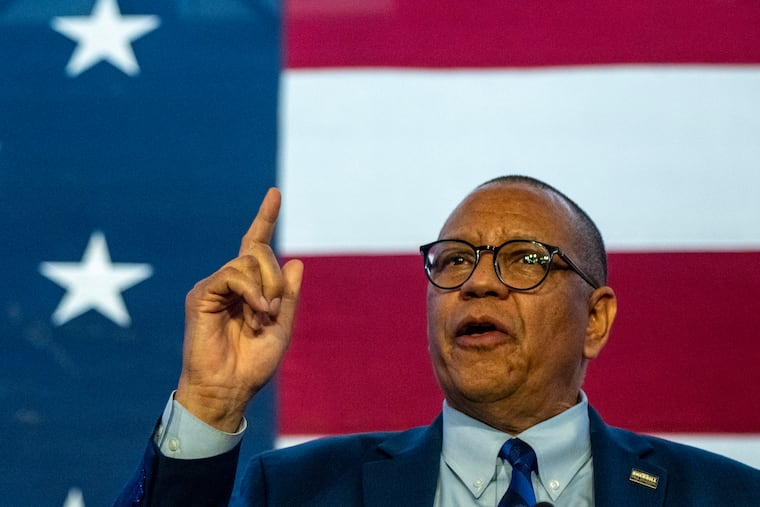
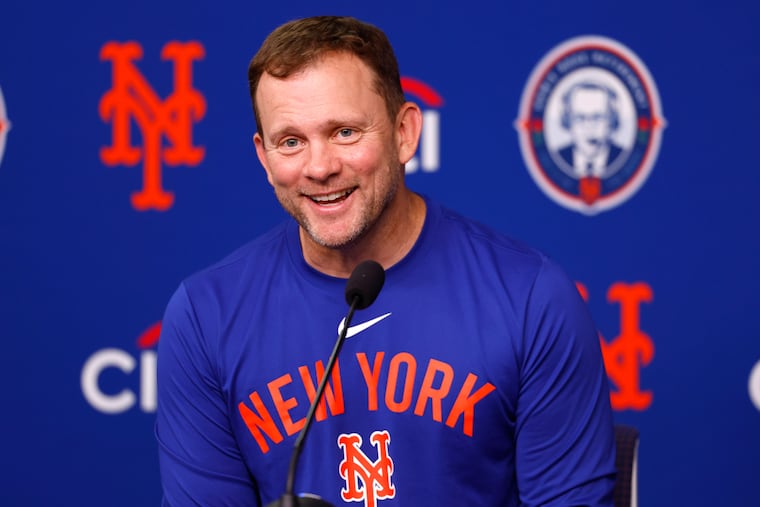
Eugene DePasquale is well aware of the losses Democrats racked up on the ballot in 2024.
His race was one of them.
Now DePasquale, the state’s former auditor general who lost a statewide bid for attorney general last year, is hoping his experience in office and on the trail can help him rebuild his party as its likely next state chair.
DePasquale, 54, is running in a special election Sept. 6 to replace State Sen. Sharif Street, who announced his resignation last week after five years as chair, amid his run for U.S. Congress.
He would take over during a critical juncture. The next 15 months will test whether Pennsylvania Democrats here can rebound after losing a U.S. Senate seat, two U.S. House seats, and the presidential contest last year.
The state will be a focal point in the battle to take back the U.S. House with four incumbent Republicans in swing districts up for reelection. Democratic Gov. Josh Shapiro also is up for reelection, as are state lawmakers in a narrowly divided legislature.
We talked to DePasquale, a former college baseball pitcher, cross-fit enthusiast, and Star Wars mega-fan, about his plans for fundraising, voter registration, and steering the party. This conversation has been edited lightly for clarity and length.
OK, so, why do you want to be chair of the Pennsylvania Democrats?
In full disclosure, I probably would have rather been pitching for the Pirates or the Phillies in a pennant chase, but, look, I think the state and country is at a crossroads right now, and I think as a party, we’re not doing enough to push back on some of the extremism. On … voter registration, media, connecting with voters that had voted with us, but then went the other way, I believe I’m someone that can help lend some leadership to turn that around.
And why should you be chair, given you did just lose a statewide election?
In my statewide elections, I’ve won two and lost one, and I’ve always won my primaries. And you know, as the great Kobe Bryant said, losing can lead to learning. Lessons that I learned can help rebuild the Democratic Party.
What are some of those lessons?
Big chunks of Pennsylvania, I just thought we stopped listening to them. You know, there were people struggling with inflation and the national Democratic Party message, I mean, I was frustrated by it too. It was like, “Oh, it’s not that bad. It’s worse in other countries.”
It might have been worse than in other countries, but that didn’t mean anything if you were living paycheck to paycheck in Lehigh Valley.
What are your top priorities coming in?
Fundraising and we’ve gotta get on the stick on voter registration.
On fundraising, I was looking at the party’s most recent fundraising report, $62,000 left in the federal account —
That is priority No. 1. Because, look, if you don’t have money, you can’t do any of this. But one thing that people know of is I’m not afraid to ask.
And following up on registration, the Pennsylvania Republican Party continues to make impressive strides registering voters. What are they doing that Democrats aren’t?
I want to give them credit … they have made an emphasis on partisan voter registration, and we have not, and that’s going to change. If, and when, I become chair of the party, that’s No. 1. If you look back to say, 2008, we had almost, I think, about a 1 million voter registration edge, and then I think the party just went to sleep.
What’s your plan to try and connect with Black and Latino voters across the state after Democrats lost some support with both blocs last year?
Yes, this cannot be an October-to-Election Day conversation. It’s got to be a continual conversation. And that’s why I think a lot of Democratic members of the state House and state Senate were reelected, because they have those conversations year round. … To me, Pennsylvania is a bread-and-butter state, whether you’re in Philadelphia, Westmoreland County, Erie, Pittsburgh, Scranton, when you focus on the economy, you do well. And when you don’t, you’re in trouble.
Pivoting to the four House seats Democrats are eyeing next year: You’ve run against Scott Perry. He’s been unbeatable in recent years. Why do you think this year will be any different?
I do think there’s two big openings that are coming in these congressional seats. They voted to defund healthcare [via Trump’s budget bill]. People’s healthcare premiums are going up dramatically, very soon. That’s something they did, and we’re going to hold them accountable for that. That’s No. 1. No. 2, we were promised on Day One, prices were coming down. … I believe those two things are going to be what make this election cycle different.
Do you think Democrats are being aggressive enough in this moment?
Democrats I know who are political, but not overly political, even they want to see Democrats fighting, and they’re very disappointed that the party leadership isn’t pushing back enough. Now, everyone has their own style how they do that, but I know for a fact that that’s what average everyday Democrats want.
Sure, an example of that, here is Sen. Fetterman, who hasn’t been afraid to criticize the party.
I know John well. We have a lot of discussions. And look, you know, he’s doing his job as the U.S. senator, but when it comes to the party-building stuff, you know, he and I have had very honest discussions about what we’ve got to do to be better. And when you lose, you can’t think everything’s fine. John’s been very good about this, and the governor has been, too, at realizing you got to go everywhere.
With Shapiro and Fetterman, they’re the top Democrats in the state, but it’s relatively well-known there’s tension there. Do you need them to get along for the state party to succeed and grow?
My job is to work with everybody.
Eugene DePasquale is well aware of the losses Democrats racked up on the ballot in 2024.
His race was one of them.
Now DePasquale, the state’s former auditor general who lost a statewide bid for attorney general last year, is hoping his experience in office and on the trail can help him rebuild his party as its likely next state chair.
DePasquale, 54, is running in a special election Sept. 6 to replace State Sen. Sharif Street, who announced his resignation last week after five years as chair, amid his run for U.S. Congress.
He would take over during a critical juncture. The next 15 months will test whether Pennsylvania Democrats here can rebound after losing a U.S. Senate seat, two U.S. House seats, and the presidential contest last year.
The state will be a focal point in the battle to take back the U.S. House with four incumbent Republicans in swing districts up for reelection. Democratic Gov. Josh Shapiro also is up for reelection, as are state lawmakers in a narrowly divided legislature.
And more urgently, in just three months, the party will defend three judicial seats on the state Supreme Court, a body whose importance has only grown in recent years as it has heard cases about election law, education funding, and abortion access.
The Pittsburgh-based attorney and adjunct professor at the University of Pittsburgh served two terms as auditor general, following three terms in the General Assembly. He lost a 2022 congressional run against U.S. Rep. Scott Perry, a Republican from York County.
We talked to DePasquale, a former college baseball pitcher, cross-fit enthusiast, and Star Wars mega-fan, about his plans for fundraising, voter registration, and steering the party. This conversation has been edited lightly for clarity and length.
OK, so, why do you want to be chair of the Pennsylvania Democrats?
In full disclosure, I probably would have rather been pitching for the Pirates or the Phillies in a pennant chase, but, look, I think the state and country is at a crossroads right now, and I think as a party, we’re not doing enough to push back on some of the extremism. On … voter registration, media, connecting with voters that had voted with us, but then went the other way, I believe I’m someone that can help lend some leadership to turn that around.
And why should you be chair, given you did just lose a statewide election?
In my statewide elections, I’ve won two and lost one, and I’ve always won my primaries. And you know, as the great Kobe Bryant said, losing can lead to learning. Lessons that I learned can help rebuild the Democratic Party.
What are some of those lessons?
Big chunks of Pennsylvania, I just thought we stopped listening to them. You know, there were people struggling with inflation and the national Democratic Party message, I mean, I was frustrated by it too. It was like, “Oh, it’s not that bad. It’s worse in other countries.”
It might have been worse than in other countries, but that didn’t mean anything if you were living paycheck to paycheck in Lehigh Valley.
In that last month of the campaign, I was running, and [the Kamala Harris campaign] is campaigning in the Philadelphia suburbs with Liz Cheney. That message is not doing anything for the people that are struggling economically. And, you know, we can make fun of Trump going to McDonald’s and handing out those hamburgers. But let me tell you, that was building more connection than sitting with Liz Cheney in the suburbs.
What are your top priorities coming in?
Fundraising and we’ve gotta get on the stick on voter registration.
On fundraising, I was looking at the party’s most recent fundraising report, $62,000 left in the federal account —
That is priority No. 1. Because, look, if you don’t have money, you can’t do any of this. But one thing that people know of is I’m not afraid to ask.
Why do you think fundraising hasn’t been more of a priority in the past?
All I know is that it has to be a priority moving forward. I can’t speak to some of that stuff, you know, because I wasn’t there.
And following up on registration, the Pennsylvania Republican Party continues to make impressive strides registering voters. What are they doing that Democrats aren’t?
I want to give them credit … they have made an emphasis on partisan voter registration, and we have not, and that’s going to change. If, and when, I become chair of the party, that’s No. 1. If you look back to say, 2008, we had almost, I think, about a 1 million voter registration edge, and then I think the party just went to sleep.
What’s the strategy to do that, though? How do you register more Democrats?
You gotta go where the people are and Democrats have been investing in what is known as nonpartisan voter registration. Democratic donor money has been going into nonpartisan voter registration. We’re gonna get back to actually focusing on partisan registration.
Where do you see the most opportunity, geographically, for Democrats in Pennsylvania right now?
There are a lot of good signs across the state. We lost, but we lost by about two points in 2024. There’s parts of Philadelphia where we went the wrong direction. That’s got to change. You know, there’s parts of the Philly suburbs, the Lehigh Valley, you know, that went the other way. So those are all concerns, but what’s happening in Lancaster County and Cumberland County are very positive signs. Harrisburg is now, technically, you can consider it a blue county.
What’s your plan to try and connect with Black and Latino voters across the state after Democrats lost some support with both blocs last year?
Yes, this cannot be an October-to-Election Day conversation. It’s got to be a continual conversation. And that’s why I think a lot of Democratic members of the state House and state Senate were reelected, because they have those conversations year round. … To me, Pennsylvania is a bread-and-butter state, whether you’re in Philadelphia, Westmoreland County, Erie, Pittsburgh, Scranton, when you focus on the economy, you do well. And when you don’t, you’re in trouble.
You know what happened with younger voters, I’m concerned about that, too, but I’m confident that we’re going to reengage with those groups, and rebuild that trust.
How do you do that? Are you going to hire more people?
Until I fill the party coffers, I can’t hire anyone. But yes, once I’ve raised enough money. I also believe, although you know, you got to walk before you run, but I do think there’s got to be better communication between the county and state party as well, particularly on messaging. And also knowing that some messages work better in different parts of the state.
If you are elected chair, the seat shifts from Sen. Street in Philadelphia to the other side of the state. Philadelphia, turnout has been a continual problem. How do you make sure you’re focusing on the entire state?
My daughter, she just graduated from Temple and she lives in Philly, and she takes transit to work. So I know firsthand what, what’s going to be happening with these transit cuts. My daughter, she’s not going to let me forget about Philadelphia.
Pivoting to the four House seats Democrats are eyeing next year: You’ve run against Scott Perry. He’s been unbeatable in recent years. Why do you think this year will be any different?
I do think there’s two big openings that are coming in these congressional seats. They voted to defund healthcare [via Trump’s budget bill]. People’s healthcare premiums are going up dramatically, very soon. That’s something they did, and we’re going to hold them accountable for that. That’s No. 1. No. 2, we were promised on Day One, prices were coming down. … I believe those two things are going to be what make this election cycle different.
Do you think Democrats are being aggressive enough in this moment?
Democrats I know who are political, but not overly political, even they want to see Democrats fighting, and they’re very disappointed that the party leadership isn’t pushing back enough. Now, everyone has their own style how they do that, but I know for a fact that that’s what average everyday Democrats want.
Sure, an example of that, here is Sen. Fetterman, who hasn’t been afraid to criticize the party.
I know John well. We have a lot of discussions. And look, you know, he’s doing his job as the U.S. senator, but when it comes to the party-building stuff, you know, he and I have had very honest discussions about what we’ve got to do to be better. And when you lose, you can’t think everything’s fine. John’s been very good about this, and the governor has been, too, at realizing you got to go everywhere.
With Shapiro and Fetterman, they’re the top Democrats in the state, but it’s relatively well-known there’s tension there. Do you need them to get along for the state party to succeed and grow?
My job is to work with everybody.