What’s in Gov. Josh Shapiro’s new housing plan: Protections for Pa. renters, $1 billion for infrastructure, homebuyer support, and more
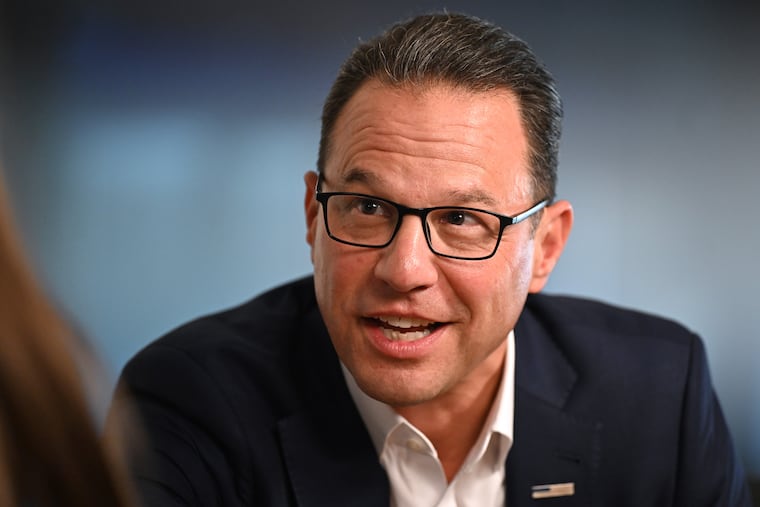
Shapiro appeared in Philadelphia to unveil the state's Housing Action Plan, which relies on action from lawmakers and other stakeholders.
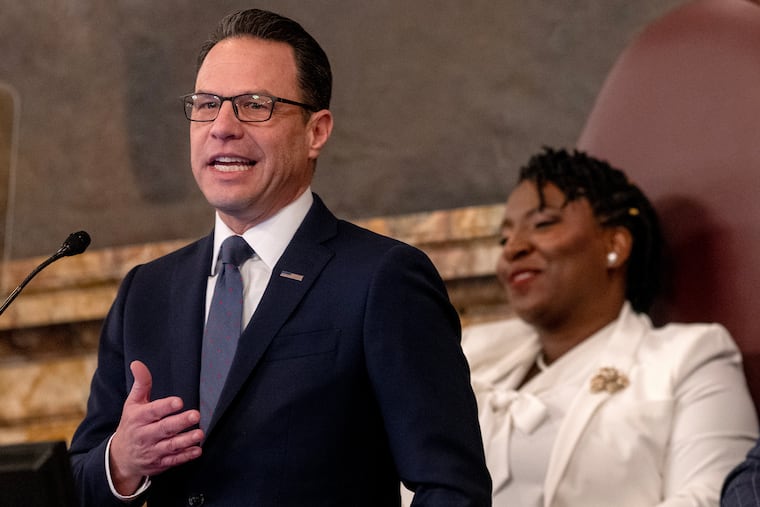
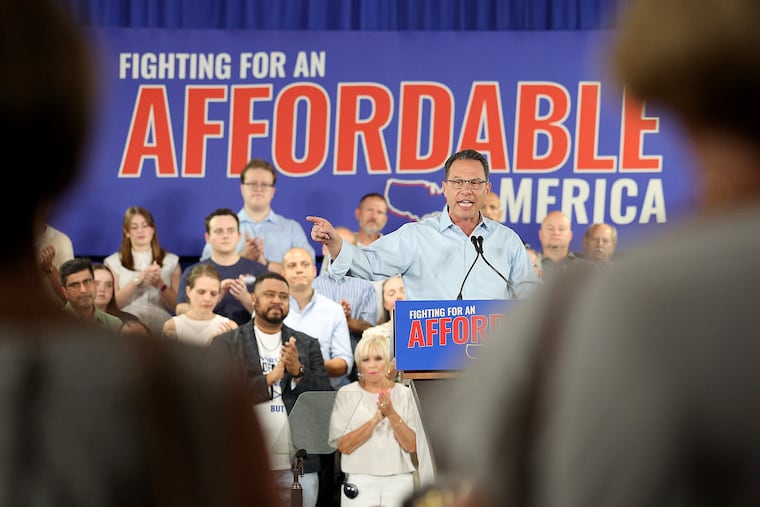
Gov. Josh Shapiro unveiled a broad plan Thursday meant to grow and preserve Pennsylvania’s housing supply as the state faces a shortage of homes residents can afford.
The plan aims to expand residents’ access to homes, connect Pennsylvanians to resources to keep them housed, make homebuilding faster and less costly, and improve coordination of housing efforts across agencies and levels of government.
Recommendations and reforms in the state’s Housing Action Plan, which is meant to guide Pennsylvania into 2035, are embedded in the governor’s proposed budget, Shapiro said.
“And now, the ball is in the court of the legislature to carry this forward and to get it done,” he said at a news conference in Philadelphia.
The plan is the culmination of a process that started in September 2024, when Shapiro signed an executive order directing state officials to create it.
In the plan, Shapiro highlights that more than a million Pennsylvania households are spending more than 30% of their income on housing. These households are “cost burdened,” according to the U.S. Department of Housing and Urban Development’s definition. Building more can lower housing costs.
Shapiro called the plan a long-term housing strategy that “brings together all different groups who are doing this work, builds on their expertise, and tackles housing access and affordability from every single angle.”
Here are key takeaways from Shapiro’s proposed housing action plan, the first of its kind in Pennsylvania.
Enacting the plan
Much of the plan relies on action from lawmakers in the state’s split legislature and other stakeholders rather than Shapiro’s administration exclusively. It does not assign dollar amounts to proposals, but calls on local governments to allow more housing and housing types, on builders to build more, and on both to work together to remove barriers to housing construction.
When Shapiro was asked how he intends to make sure the housing plan is implemented, he said he can take some actions through executive orders but “a lot does require the legislature to act and to work in concert with local government.”
“I hear in rural, urban, suburban communities, districts led by Democrats and Republicans, the need for more housing,” Shapiro said. “… And I would say to any lawmaker that doesn’t like my idea, ‘What’s yours?’ Because we can no longer wait. We have got to get this done. We’ve got to build more housing.”
$1 billion fund
In his budget address last week, Shapiro previewed his housing priorities, calling for a $1 billion fund, supported by the issuing of bonds, to pay for infrastructure projects that include housing.
Shapiro’s budget proposal includes no requirements on the proportion of funding that goes to each infrastructure need, leaving the possibility that the majority of funds could be spent on projects other than housing.
While Shapiro said Thursday that divvying up the $1 billion will be subject to negotiation with lawmakers, he said he hoped “the lion’s share of it would go to housing.”
Pennsylvania needs more housing
If Pennsylvania takes no action to build and preserve more housing, it will be short about 185,000 homes by 2035, according to the plan. To keep up with anticipated demand, the state needs to add 450,000 homes to its supply by then.
The housing plan has a stated goal of turning Pennsylvania into a leader in home construction.
As it stands now, Pennsylvania is one of the states that have allowed the least new housing. It ranked 44th for the share of homes approved to be built from 2017 to 2023, the Pew Charitable Trusts said in a report released last year. Pew said Pennsylvania’s lack of housing supply is hiking prices for homeowners and renters.
Shapiro’s housing plan recommends that Pennsylvania:
Expand programs to repair and preserve existing homes.
Create a tax credit to incentivize home building in underinvested areas.
Invest in small residential developers who can help boost housing production.
Eliminate outdated or unnecessary state development regulations.
Direct funding to help homebuilders pay land development costs, developers convert former commercial buildings into homes, and property owners create mixed-use developments that include housing.
Appoint a deputy secretary of housing and create a “housing one-stop shop” to help residents and builders access the state’s existing housing resources.
Protection for renters
The housing plan calls for Pennsylvania to bolster protections for households that either rent their homes or rent the land their homes sit on, including protections Shapiro called for in his budget address.
Suggestions include:
More eviction protections.
Restrictions on how much landlords can collect as a security deposit.
A statewide cap on rental application fees. (Philadelphia City Council members passed their own cap on application fees last year.)
Explicitly banning landlords from denying housing to people because they use public assistance or any other lawful source of income. (New Jersey enacted a law last month that does this.)
Security for manufactured-home owners
Manufactured homes are single-family dwellings often built off-site and placed on a lot. These households own their homes, but many of them rent the land.
Manufactured homes represent one of the most affordable forms of homeownership. But homeowners are often left vulnerable because they have no other option than to pay increased rent costs if they want to keep the homes they own. Manufactured-home communities are increasingly being bought by private equity companies and other institutional investors, and rent hikes tend to follow.
The housing plan says Pennsylvania should:
Limit the rent increases that landowners can charge.
Make financing easier for buyers of manufactured homes.
Give residents of manufactured-home communities the right of first refusal when a landowner decides to sell.
Recent laws in New Jersey limit annual rent increases for manufactured-home lots and make it easier for residents to buy their communities.
Across Pennsylvania, 56,000 households live in manufactured-home communities, Shapiro said in his budget address last week.
Homebuyer help
The plan calls for Pennsylvania to pursue new ways to help residents become homeowners, including creating programs to reduce home-buying costs and allowing local governments to exempt first-time homebuyers from local realty transfer taxes.
It also calls for the state to impose a transfer tax when corporate investors buy single-family and certain other types of homes to help households compete for properties.
Untangling titles
To protect Pennsylvanians’ generational wealth, the plan calls for the state to allow transfer-on-death deeds to provide a streamlined process for passing down homes. This would help prevent cases of tangled title — or unclear legal ownership of property. This mostly occurs when a homeowner dies and the deed is not transferred to a new owner.
Tangled titles keep people from qualifying for help to repair their homes and can prevent them from being able to sell properties.
In Philadelphia alone, tangled titles threaten more than $1 billion in generational wealth, according to a 2021 report from the Pew Charitable Trusts.
The plan also calls for funding for legal services to help low-income Pennsylvanians resolve tangled titles. In 2022, Philadelphia officials pledged to give $7.6 million over four years to legal-aid groups that are tackling this problem.
Rachel Gallegos, a divisional supervising attorney for the homeownership and consumer rights unit at Community Legal Services of Philadelphia, called Shapiro’s plan “ambitious.”
“And I like that,” she said. “I think it has to be in order to keep progress moving forward.”
The legal-aid nonprofit routinely helps low-income clients with tangled titles, and Gallegos said she was glad to see the plan call for additional support for the work.
“We want to preserve homeownership for our clients,” she said.