Montco municipal officials face pressure to adopt anti-ICE policies across 62 communities
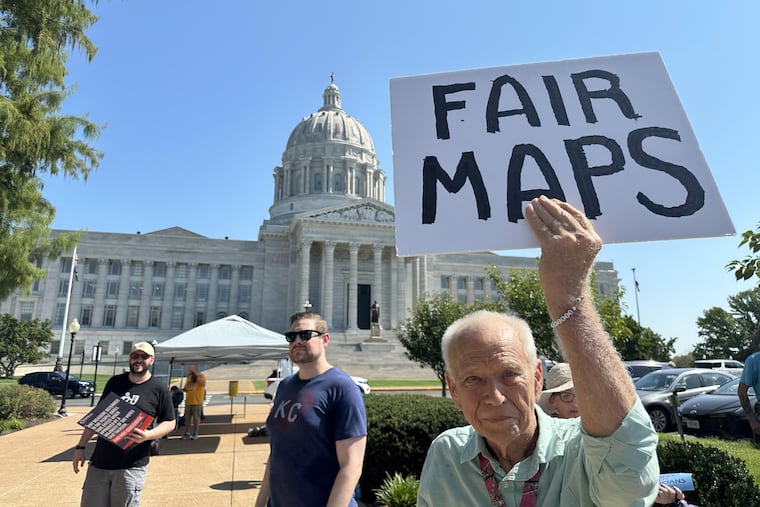
Activists are working township by township and borough by borough to persuade each of Montgomery County’s 62 municipalities to block their officers from working with federal immigration officials.
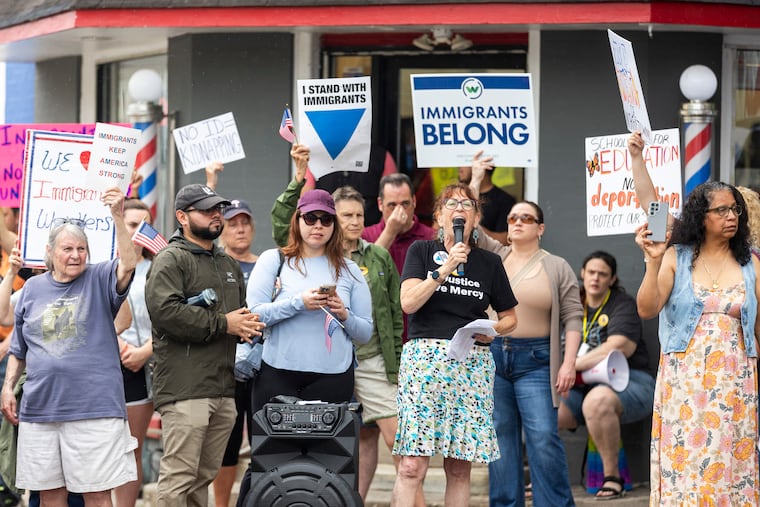
Month after month, immigration advocates have called for Montgomery County officials to adopt an ordinance limiting cooperation with ICE, but county officials challenged advocates to bring their requests to the municipal governments that control local police departments.
In recent weeks, they’ve accepted that challenge.
Activists are working township by township and borough by borough to persuade each of Montgomery County’s 62 municipalities to block their officers from working with federal immigration officials. The efforts come after local police were present during ICE arrests last month.
“The reality is that this is happening and it’s not going to stop happening and it’s only going to get worse,” said Stephanie Vincent, lead organizer of Community for Change Montgomery County. “We have to stand together now throughout Montgomery County and make decisions about what side our local law enforcement stands on.”
The sense of urgency around local policies has grown during President Donald Trump’s second term as the administration takes increasingly aggressive immigration enforcement action.
Advocates argue that immigrants in Montgomery County will feel safer interacting with police if ICE agents are unable to rely on help from local officers when making immigration arrests, but it could also put local officials in the crosshairs of the Trump administration amid threats to strip funding from communities that don’t cooperate with ICE.
These policies aren’t new, local governments, including Philadelphia, began passing “sanctuary” policies limiting cooperation with ICE in Trump’s first term. In some communities, like Radnor and Allentown, those efforts continued in Trump’s second term, but many local officials have been resistant to public shows of defiance of the Trump administration.
Montgomery County has been a focal point of ICE activity in the Philadelphia region as Trump seeks to fulfill his campaign promise to enact mass deportations. Advocates have reported ICE raids in a West Norriton grocery store and reports of arrests at an apartment building in Hatfield. Many were outraged last month when videos of the raid appeared to show West Norriton police officers assisting the agency.
‘Protecting our neighbors’
Montgomery County officials have not passed a formal ordinance declaring the county “welcoming,” but officials approved a policy limiting communication between county employees and ICE and committing to not honor prison detainer requests without warrants.
Those policies don’t extend to other local government officials in the county. And the county’s Democratic commissioners repeatedly told activists that they’d have more impact at other levels of government.
“Just showing up here can’t be the only place,” Democratic Commissioner Jamila Winder told advocates at a July board meeting.
At the same meeting Democratic board chair Neil Makhija recommended residents bring their concerns to local Republican members of Congress, U.S. Rep. Brian Fitzpatrick and Sen. Dave McCormick.
“My recommendation is to make sure that you show up and make sure that they hear from you,” he said.
In response Elyse Wechterman, a rabbi and longtime advocate for immigrant rights, built campaign materials and a toolkit instructing residents on how to advocate at the local level for welcoming policies. The kit includes sample policies drafted by the ACLU of Pennsylvania based on the type of municipality (borough, township etc.) and form letters and testimony for residents to use or expand upon.
“Families are being torn apart, children are being deprived of parental care, and the economic fallout in our communities is severe,” Wechterman’s toolkit reads. “We can do something to stop this.”
An Abington resident, Wechterman put the strategy to use in her hometown, reaching out to the local police chief and testifying in a local board meeting last month urging the borough’s board of commissioners to codify the department’s existing policy to avoid working with ICE without a warrant.
And similar efforts are beginning across the county as advocates say they are reaching out to county elected officials and police chiefs asking for updates on policy.
Though the goal is to influence change across the county, townships with high immigrant populations and where ICE activity has been recorded are prioritized. Those communities include townships near Norristown such as West Norriton and East Norriton as well as Ambler, Lansdale, and the townships surrounding them.
Jay Lee, advocacy and communications manager at the Woori Center, which advocates for Asian Americans, said he’s working to urge officials in Hatfield and Lansdale to adopt such policies. Lansdale has a large Korean American population and, while many of those immigrants are in the country legally, Lee said the actions of Trump’s administration gives the impression that no one is safe. While immigration is a federal issue, he argued that Trump’s policies call for a local response.
“For many of us, it’s also about ourselves. Protecting ourselves, protecting our neighbors,” he said.
Local responses
It’s unclear yet whether the group’s efforts will be successful.
Norristown, which has been the center of ICE’s activity in Montgomery County, issued a policy memorandum in January clarifying that the township would not honor ICE detainers and that township employees were discouraged from collecting and sharing information on residents’ immigration status.
West Norriton’s board of commissioners called for empathy and compassion and condemned the acts of federal agents in a post to Facebook after officers were present during ICE activity in the community last month. In a subsequent post that was not attributed to the commissioners, the county clarified that West Norriton’s police department was not obligated to assist with immigration enforcement without a judicial warrant. In the specific case that prompted community outrage, the post said federal authorities had requested the agency’s help to maintain order while serving a warrant for tax evasion.
Reached over the phone, West Norriton Commissioner Roseanne Millazzo, a Democrat, said the board was still having discussions about the issue.
In Lansdale, Democratic Council President Mary Fuller said in an email that the borough has no formal policy or ordinance regarding cooperation with ICE and currently has no plans to pass an ordinance. If an ordinance were proposed, she said, she expected the council would be “in favor of protecting the rights of our diverse population.”
Currently, Fuller said, the borough’s police department won’t engage with ICE enforcement activities and would only work to maintain order and prevent assaults on federal officers.
“Lansdale Borough by its general nature is a welcoming community and that tone is maintained by the current sitting 9 member Council and Mayor,” Fuller said in an email.
If townships begin to bring ordinances before their governing boards, Montgomery County GOP chair Christian Nascimento predicted it would drive an upswell of opposition. In Delaware County, the local GOP used Democratic-led Radnor’s decision to pass a policy blocking cooperation with ICE as a rallying cry to motivate voters to turn out in November’s municipal elections.
“When you start to get into the municipal level, this is where you’re really hitting people where they live,” he said. “That has the ability to start to activate people that aren’t as politically active.”
Denisse Arguto, executive director of the advocacy group Unides Para Servir Norristown, said she still hopes for an ordinance in Montgomery County codifying the policy changes they’ve made and setting an example for leaders across the county.
“Many of the townships and municipalities, they follow what the county is doing,” she said. “That was the reason we came first to them.”
Correction: An original version of this story misspelled Elyse Wechterman’s name.
Correction: An original version of this story incorrectly referred to the West Norriton Board of Commissioners as a Board of Supervisors and identified the ICE raid which happened in West Norriton as within Norristown.