A Pa. House committee advanced proposals to enshrine same-sex marriage and expand hate-crime penalties — but they’re unlikely to become state law
Democratic members of a key House committee described the sweeping package as an effort to modernize Pennsylvania’s laws, while Republicans opposed almost all of the bills.
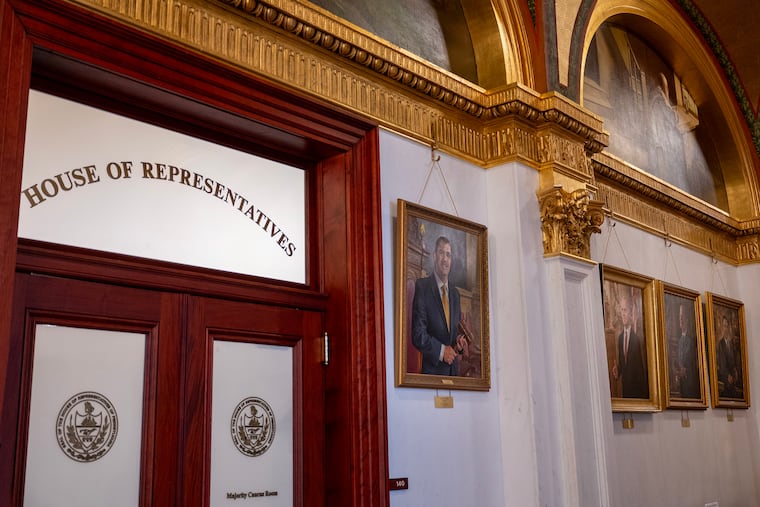
HARRISBURG — A formal recognition of same-sex marriage in Pennsylvania. Increased protections for marginalized groups from hate crimes. An easier process for a transgender person to change their legal name. Those bills and more passed a key state House committee on Tuesday — but are unlikely to ever reach Gov. Josh Shapiro’s desk to become law.
A sweeping package of eight bills to expand protections or remove barriers for Pennsylvania’s LGBTQ community and other underrepresented groups passed the state House Judiciary committee on Tuesday. But they face a steep challenge in Pennsylvania’s split legislature, whereDemocrats hold a one-seat majority in the state House and Republicans control the state Senate.
Democratic members of the committee described the sweeping package of bills as an effort to modernize Pennsylvania’s laws and acknowledge where lawmakers have previously failed to recognize or have harmed LGBTQ people. They also noted an urgency to codify the protections at the state level, as President Donald Trump’s administration has rolled back some federal safeguards mostly targeted at transgender people.
“The idea that we do not deserve to be discriminated against because of who we are and who we love should not be seen as controversial,” said Rep. Jessica Benham (D., Allegheny), who is bisexual and co-chairs the LGBTQ caucus, during the committee vote. “We understand, and most Pennsylvanians believe, that our commonwealth is better when it’s fairer.”
Meanwhile, Republican members of the committee opposed almost all of the bills considered Tuesday — except a bill to enshrine same-sex marriage in Pennsylvania law that received some bipartisan support. Republicans detailed their opposition for a variety of reasons, including what they saw as shortcomings of the bill’s language that could lead to inconsistent enforcement or constitutional issues, to one far-right member who viewed the efforts to enshrine same-sex marriage protections as immoral.
The wide-ranging package of bills that will now move to the House floor include:
The Fairness Act, which would prohibit discrimination in housing and education based on sexual orientation or gender identity, a proposal that has been introduced in the state House each year for more than 20 years.
Removes a portion of Pennsylvania’s current law on the books that invalidates same-sex marriages, in addition to redefining marriage to be “a civil contract between two individuals.”
Expands civil penalties for people who target others based on their race, religion, sexual orientation, gender, and more.
Requires additional training for law enforcement to better identify and investigate hate crimes.
Removes public notice requirements for someone to change their legal name and the addition of an automatic seal for someone changing their name to affirm their gender.
Prohibits the use of a so-called “LGBTQ panic” criminal defense that blames an individual’s violent actions as a panic response to a victim’s perceived sexual orientation or gender identity.
The removal of increased penalties for people with HIV charged with prostitution.
It’s unclear which bills will receive a full House vote. Several of the bills discussed Tuesday, including the Fairness Act and anti-hate crime bills, have been passed by the House in previous legislative sessions since Democrats took control in 2023 of the chamber with a narrow majority.
The GOP-controlled Senate has yet to take up any of the LGBTQ protections passed by the Democratic House and is unlikely to do so in the near future. Democrats have highlighted their work on LGTBQ issues as a reason why their party needs a trifecta of control in Harrisburg, which they’re fighting to win in the November midterm election.
The nearly two-hour-long meeting became heated at times as the members debated the legislation. Rep. Stephanie Borowicz (R., Clinton), one of the most conservative members of the state House and member of the House Judiciary committee, called one of the proposals to prohibit discrimination based on someone’s sexual orientation or gender identity “a very dangerous bill” and another bill as evidence of the country’s “godlessness.”
Rep. Malcolm Kenyatta (D., Philadelphia) the prime sponsor on several of the bills, rebutted Borowicz throughout the meeting.
“I was not asking, nor do countless people who get married, for the blessing of the Gentlelady from Clinton County or anybody else,” Kenyatta said, noting his own marriage to his husband in 2022. “You weren’t invited. We had a wonderful time. We want the government out of our business. Pretty libertarian view, actually.”
Same-sex marriage was legalized in the United States in 2015, following a landmark Supreme Court decision that found marriage as a fundamental right under the U.S. Constitution. While a state-level same-sex marriage ban remains on the books in Pennsylvania, it had not been followed since 2014, when a federal court overturned the law. There are 35 states across the country that have dormant same-sex marriage bans.
Democratic members acknowledged that some of the state bills would make little legislative impact because of such federal policies. Lawmakers noted that no person has been charged with increased prostitution penalties due to their HIV diagnosis in the last 10 years.
“We are recognizing that we, as a society, have not always recognized that common humanity so we need to provide the legislation that will allow [protections for] smaller, more vulnerable groups like the LGTBQ+ community generally and especially like the trans community, which is an even smaller slice of our population,” said Rep. Joe Hohenstein (D., Philadelphia) during the debate on a bill to ease restrictions to legally change a person’s name.
Republicans on the committee, meanwhile, tried to push a long-sought effort to ban transgender students from playing in girls’ sports. Democrats in the state House have largely avoided considering the bill by sending it to different committees to be considered, and thus, allowing no official vote to be taken on the bill.
They did so again on Tuesday for a third time, to objections from Republicans, voting to refer the bill to the Children and Youth committee for a vote.