‘Unattainable’: POWER Interfaith calls on City Hall to address affordability crisis. But Philly doesn’t have many good options.
POWER, an influential coalition that includes than 50 congregations in the city, released a report about affordability based on interviews with 750 city residents.

Philadelphians are facing a growing affordability crisis, and City Hall needs to act quickly to counter the impact of funding reductions from the federal and state governments, leaders of the progressive group POWER Interfaith said Monday.
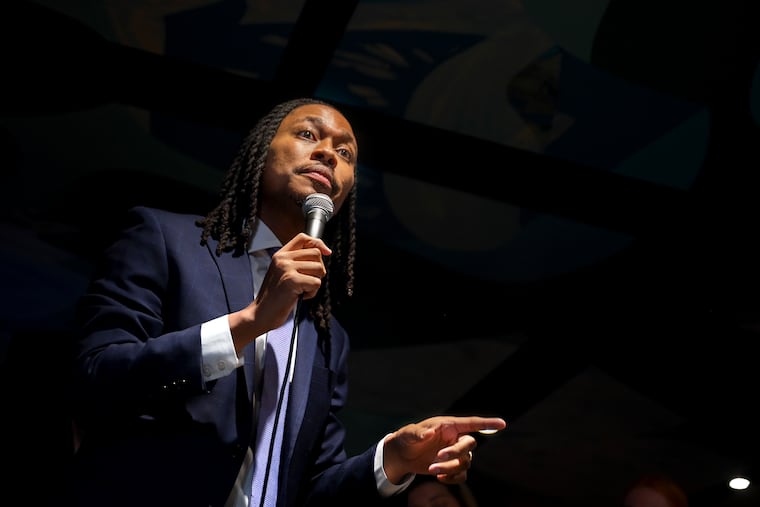
“Living comfortably in our city is becoming unattainable,” the Rev. Cean R. James, senior pastor of the Salt + Light Church, said at the gathering at Arch Street United Methodist Church. “The mayor’s recent budget does focus on economic mobility, and that is noble. But it does not go far enough. It’s not sustainable.”
POWER, an influential coalition that includes more than 50 congregations in the city, on Monday released a report based on interviews with 750 city residents at church meetings, neighborhood gatherings, and other events. The informal survey found:
About two-thirds of respondents had to forego another bill to pay mortgage or rent, and 80% struggled to afford property taxes.
A majority of congregations surveyed have seen the number of unhoused members in their congregations increase.
Ninety percent of respondents said the city hasn’t done enough to “invest in their community’s needs.”
POWER leaders on Monday called on City Council to hold a hearing on affordability. But the report did not include policy prescriptions for addressing the crisis it described, and it’s far from clear what city lawmakers or Mayor Cherelle L. Parker can do to make it easier to get by in the city.
Philadelphia already has a relatively small property tax burden, and the city has some of the strongest protections in the nation for people struggling to stay in their homes.
» READ MORE: Mayor Cherelle Parker unveils ‘economic mobility agenda’ in $7 billion city budget proposal
Parker last year unveiled her Housing Opportunities Made Easy, or H.O.M.E., initiative, which involves selling $800 million in city bonds to fund programs aimed at making housing more accessible and affordable. Last week, she unveiled a $7 billion proposal for the next city budget with a focus on economic mobility, including investments in workforce development training, internship opportunities, and financial counseling.
But with little ability to affect the cost of goods and state-imposed restrictions on how it can collect taxes — preventing the city from imposing higher rates on wealthier residents — Philadelphia officials have limited options when it comes to addressing affordability.
The POWER report acknowledged the predicament.
“To be very clear: There are no easy answers to these challenges,” the report said. “We must prepare serious and sober projections about the impacts of the impending revenue losses we face, and then we must develop a menu of policy options to soften those impacts and mitigate harm to residents. And we must ensure that any actions we take do not make the current cost-of-living crisis even worse.”
The city’s limited options on addressing affordability won’t stop it from being a major topic during this spring’s budget negotiations. Affordability has recently become a political buzzword, and Democrats are hoping to win back Congress in November in part by blaming rising costs on President Donald Trump’s administration.
This year, thousands of Pennsylvanians are abandoning the state’s Affordable Care Act insurance exchange after congressional Republicans declined to renew expanded healthcare subsidies. Trump’s efforts to increase tariffs and the war with Iran threaten to increase inflation nationwide. SEPTA last year increased fares and is still facing a fiscal crisis due, in part, to objections by GOP lawmakers in Harrisburg.
It’s unlikely the city could meaningfully address any of those losses without significantly increasing taxes, which would in turn make Philadelphia less affordable. And hiking any of the city’s three major sources of local revenue — the wage, property, and business taxes — all come with significant downsides or political roadblocks.
Increasing the wage levy alone would make the city’s tax structure more regressive, meaning a greater share of the overall tax burden would be paid by poorer workers.
Increasing the real estate tax rate could make the tax structure more progressive, because property owners tend to be wealthier than the average resident. But POWER and other left-leaning groups generally oppose that option due to concerns about displacing low-income homeowners.
And when it comes to the business income and receipts tax, or BIRT, City Hall has recently been moving in the opposite direction of POWER’s goals. Council last year approved a proposal championed by Parker and Council President Kenyatta Johnson that will provide annual cuts to the BIRT rate over the next 12 years.
POWER leaders have called on lawmakers to pause those reductions or even increase the tax. But the political headwinds they face in City Hall were evident at Monday’s news conference. Two of three Council members in attendance voted for the business tax cuts last year: Democrats Jamie Gauthier of West Philadelphia, and Isaiah Thomas, who represents the city at-large.
“It’s very difficult, as we discussed in the past, for local government to be able to step up and address some of these concerns,” Thomas said at the event. “There’s not much we can do as it relates to the catastrophe that we’re seeing around healthcare. There’s not much we can do as it relates to all the tariffs and the cost of living that’s going up significantly. But there are things that we can do, that we control.”
He pointed to efforts by Councilmember Nicolas O’Rourke to preserve a program that provides free SEPTA fares for low-income Philadelphians and to Gauthier’s advocacy to direct more housing money to the city’s poorest residents.
» READ MORE: Philly Council votes against Mayor Parker’s vision for her signature housing plan, signaling a win for progressives
The Rev. Carolyn C. Cavaness, pastor of Mother Bethel AME, said she understands that lawmakers have to deal with complicated political dynamics. But she said she hopes that POWER’s focus on the affordability crisis will reset the conversation.
“I always think about context. ... Sometimes we’re in tight spaces,” Cavaness said at the POWER event. “I think also conditions then were much different than what they are now. ... We’re really back to ground zero.”