Philly area Jan. 6 defendants are divided on whether to apply for money from Trump’s $1.8 billion payout fund
Zach Rehl, former leader of the Philadelphia Proud Boys, said he "absolutely" intends to seek money from the Justice Department's new fund. Others from the region are not as certain.
In the days since President Donald Trump’s administration announced its intent to establish a $1.8 billion fund to compensate people who believe they were wrongfully prosecuted by the Justice Department, Democrats and even some Republicans have criticized the decision as a politically dubious and potentially unlawful attempt to funnel money to Trump allies — including those who participated in the Jan. 6, 2021, insurrection at the U.S. Capitol.
And reaction among some Philadelphia-area residents convicted in Jan. 6 cases — and who received clemency from Trump last year — has been decidedly mixed.
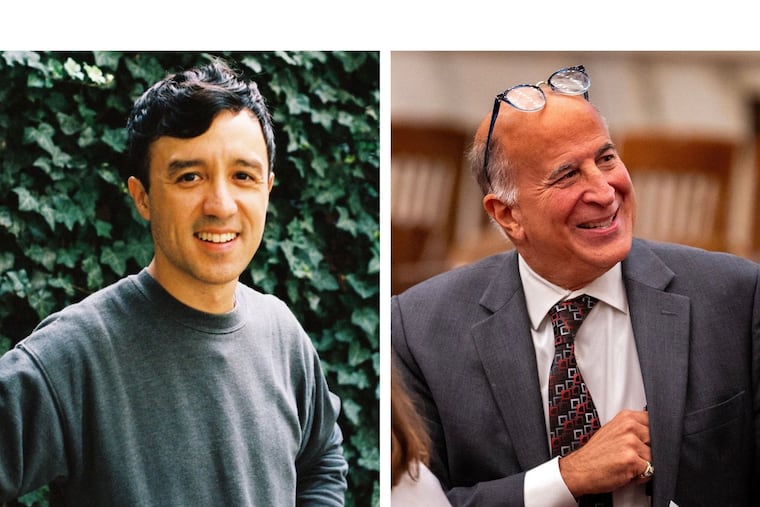
Zach Rehl, the former leader of the Philadelphia Proud Boys who was found guilty of seditious conspiracy for his role in helping incite the attack, said he was “shocked” and “relieved” when he heard about the fund, and that he “absolutely” intends to apply for it.
Whether Rehl accepts any potential payout is another matter, he said. He and several other people have already sued the government seeking $100 million in restitution, so compensation from the Justice Department’s so-called “anti-weaponization fund” would have to approach at least $5 million, Rehl said, for him to consider dropping that suit and accepting a settlement instead.
“If the amount is sufficient enough for what I’m claiming [I’d accept], but if it’s not I may reject it,” Rehl said in an interview Friday.
Ryan Samsel — the Bucks County native who was the first person to break through a barricaded security perimeter around the Capitol, and who knocked over a police officer in the process — said he has no intention of submitting a claim, largely because he thinks the fund was established to reimburse more prominent Trump allies convicted of crimes over the years.
“I don’t think President Trump really is going to give the January 6ers anything,” Samsel said. “I think it’s for guys like [Trump advisor] Roger Stone, his most inner circle. I don’t think its going to be for us. I don’t. I think it’s a fund for his closest friends.”
Another Jan. 6 defendant from the Philadelphia suburbs said he was “completely unaware” of the fund until asked about it by an Inquirer reporter. And he was slightly baffled to learn that it was created as part of Trump’s agreement to drop a lawsuit against the Internal Revenue Service over the leak of his tax information.
“It’s something I guess I’m going to inquire into,” said the man, who asked not to be identified to discuss a sensitive matter.
The divergence in the reactions adds to the tumult that has erupted since the fund was announced earlier this week — a roiling and unusually bipartisan controversy that has shown few signs of abating.
The fund was announced Monday by the Justice Department, and officials said it would end Trump’s unrelated lawsuit against the I.R.S. and allow “victims of lawfare and weaponization” to “seek redress.”
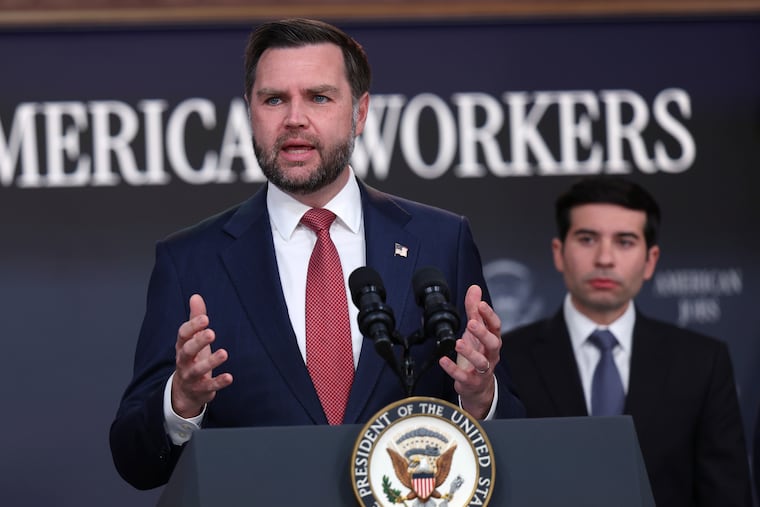
“The machinery of government should never be weaponized against any American, and it is this Department’s intention to make right the wrongs that were previously done while ensuring this never happens again,” said Acting Attorney General Todd Blanche, one of Trump’s former personal attorneys.
Blowback, however, was swift.
Dozens of Democrats in the House of Representatives signed onto a legal brief opposing the arrangement, saying the Justice Department “colluded” with the president in an unprecedented and unacceptable fashion.
Donald K. Sherman, president of the nonprofit Citizens for Responsibility and Ethics in Washington, called it “one of the single most corrupt acts in American history.”
Blanche went on to defend the fund while testifying Tuesday on Capitol Hill. But the fallout continued to spread.
On Thursday, Senate Republicans held a closed-door meeting with Blanche, a session that reportedly did little to assuage lawmakers wary of the plan.
Senate Majority Leader John Thune, a South Dakota Republican, said after the meeting that administration officials “need to help with this issue, because we have a lot of members who are concerned.”
And by the end of the day Thursday, Republican lawmakers decided to leave town rather than vote on a bill to spend about $70 billion on immigration enforcement agencies — a defection that was spurred in part by frustration over how or whether they should take action to block the weaponization fund.
In the meantime, a variety of Trump allies have voiced support for the initiative, including Enrique Tarrio, the leader of the far-right Proud Boys who, like Rehl, was convicted of seditious conspiracy; former Republican congressman George Santos, whose sentence for identity theft and wire fraud was commuted by Trump; and former Illinois governor Rod Blagojevich, whom Trump pardoned for trying to sell former President Barack Obama’s vacant Senate seat.
Trump has also continued to defend the fund — even after saying earlier this week that he knew little about its creation.
“I gave up a lot of money in allowing the just announced Anti-Weaponization Fund to go forward,” he wrote Friday on his Truth Social platform, later adding: “I am helping others, who were so badly abused by an evil, corrupt, and weaponized Biden Administration, receive, at long last, JUSTICE!”
Rehl, the onetime Philadelphia Proud Boys leader, said he believed any money distributed from the fund should go toward people like him who spent months or years in prison due to the government “going overboard with charges and sentences.”
Samsel, meanwhile, said he’s grateful for Trump’s clemency, but didn’t feel the need to apply for compensation while seeking to move forward.
“I got a second chance at life, and I don’t intend on [expletive] that up,” he said.