The last new office built in Philadelphia? Inside Chubb’s new Center City building.
Philadelphia's latest office building just opened. What will it take to get more built?
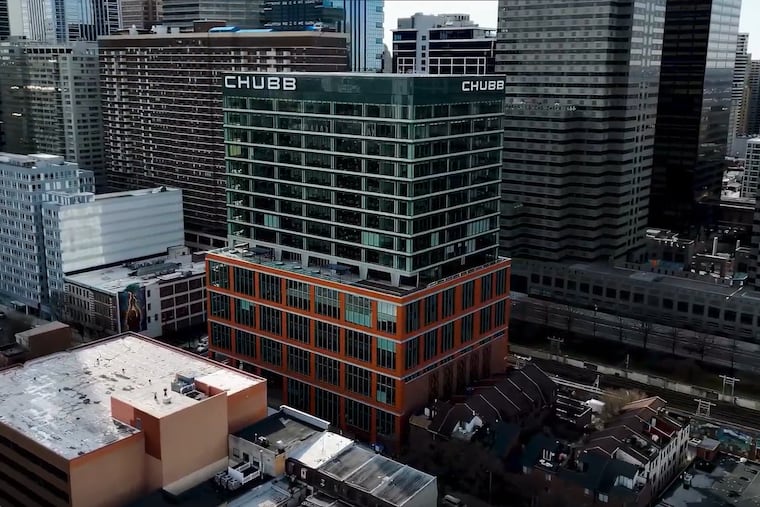
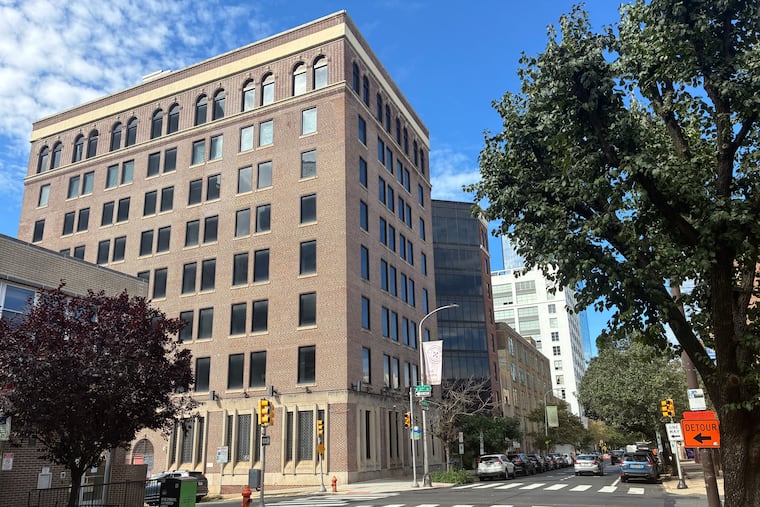
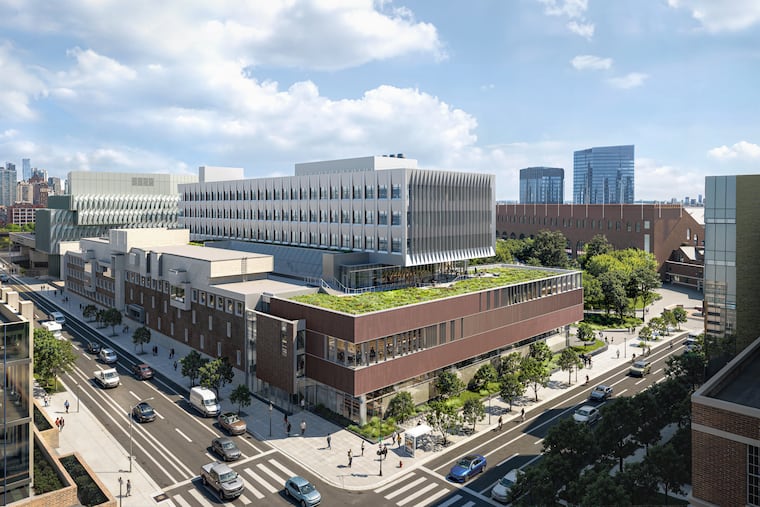
Philadelphia’s newest office building, the 18-story tower dedicated to insurance giant Chubb, is officially full.
Executives say the edifice at 2000 Arch St. is receiving rave reviews from the 2,250 workers who now fill it.
“We plan on continuing to grow this office for many years to come, for generations to come,” said Bryce Graham, Mid-Atlantic regional executive officer with Chubb.
“There’s great talent in Philadelphia. To keep up within this industry, our building will keep employees here and it will attract new employees into the organization,” he said on a tour of the new tower.
The fresh 438,000-square-foot building stands out in an office landscape that’s contracted with the rise of hybrid work in the wake of the COVID-19 pandemic.
Between mid-2020 and the first quarter of 2026, there’s been an 87% decline in office space under construction nationally, according to real estate services firm CBRE. Only New York City seems to be beating the trend.
In Philadelphia, many companies have been reducing their footprints and trading up to smaller spaces in fancier buildings. In response, older offices that struggle to replace tenants have plummeted in value, bringing them into a price range that makes residential development affordable.
Now a wave of offices are being converted to apartments, including most of the two largest complexes by square footage: Centre Square and the Wanamaker Building.
At the same time, there have been few new companies entering the region — a longstanding trend — so the office market has been in stasis even as the overall number of jobs in Center City has increased since the pandemic.
So, could Chubb’s tower be Center City’s last new office building — at least for the foreseeable future?
Bill Hankowsky, former CEO of Liberty Property Trust, which developed the Comcast towers and One and Two Liberty Place, doesn’t know of any projects on the horizon for new office buildings, particularly without a specific tenant in mind.
“Could someone else [like Chubb] come along and say, ‘I need a new building’? That could happen,” said Hankowsky. “I don’t think it’s zero, but I don’t think it’s a high probability either.”
Why Chubb built new
Most of the office buildings built in Philadelphia recently — Comcast, Chubb, Morgan Lewis — have been built for a specific homegrown tenant. (Although Chubb isn’t technically headquartered in Philadelphia it has deep roots here back to the 1700s.)
In late 2019, Chubb began discussions with Parkway Corp., which also developed the Morgan Lewis building. Then the pandemic happened.
During negotiations with Parkway, it became clear that COVID had ushered in an era of hybrid, not fully remote, work that’s become important for attracting younger workers.
“These modern buildings with all of the amenities are what the workforce of today is looking for,” said Chubb’s Graham. “And being in Philadelphia, we’re around great universities that we recruit from.”
Chubb doesn’t have an umbrella hybrid-work policy, although on a recent Wednesday the building was vibrant and the ninth-floor cafeteria was full.
“We provide flexibility,” said Graham. “It’s really for the employee to work out with their manager. But we are in office. I’m in the office five days a week.”
The new building offers a variety of amenities, including expanded food offerings from Aramark and a free gymnasium that offers state-of-the-art equipment and yoga classes. (Graham says workers have already begun canceling their gym memberships.)
There’s little car parking — only 85 spaces — but a lot of bicycle parking, and showers for those who want to rinse off before work.
The most important amenity, however, might be the location. It’s at the center of the regional transit network, and a 10-minute stroll to either 30th Street or Suburban Stations. It’s also easily walkable to the Convention Center and clients in the West Market skyscraper corridor.
Chubb‘s employee head count in Philadelphia has grown from 1,500 in 2019 to 2,250 today, even as its overall amount of office space in Philadelphia shrank (previously it had over 500,000 square feet between two buildings).
The office’s developer argues that Chubb’s growth and success could be a sign of things to come.
“Twenty-five years ago we started bringing work home at unprecedented levels, but what the pandemic taught us is that we now need to bring home to work,” said Brian Berson, president of Parkway’s commercial properties division.
“You shouldn’t have to go home to get a good cup of coffee or work out,” said Berson. “Enlightened companies like Chubb have started to offer that to their employees. I think to be competitive other companies are going to have to do the same thing.”
Could Philly see new office growth?
In Philadelphia, office construction has been sluggish since long before the pandemic. The two Comcast towers that remade the skyline in the first two decades of the 21st century were the exception.
Few other new offices have been built in Center City in the last 30 years, which business leaders often blame on Philadelphia’s unusual tax structure.
But there hasn’t been much office construction in the suburbs recently either, with more new buildings sprouting in Philadelphia itself in the last 15 years.
On paper, conditions don’t look ripe for change. No major tax reform is on the horizon. While vacancy rates are lower than most American downtowns, even the highest-end Philly buildings still have close to three times their 2019 vacancy levels, according to data from CBRE.
The average lease on the market is 11,000 square feet, which can house fewer than 100 workers, hardly the scale that demands a new building.
Still, it’s not impossible to imagine new Chubb-like buildings — especially if Philly and its dense, walkable, affordable transit-rich advantages finally become nationally competitive.
“I will say we’ve seen more inquiries from out of market, [with] large companies inquiring, and in some cases, even touring, which is really positive,” said Ashley Parrillo, senior vice president with CBRE, who specializes in office leases.
Parrillo said clients have been pitching Philadelphia’s relatively affordable housing market as an incentive to attract talent from expensive states like California and New York, sometimes with individual listings.
“Now, do we land those deals? Historically, no,” said Parrillo. “But … [today are] big companies saying, well, what about Philly? It feels like yes.”
Many of Philadelphia’s largest tenants, companies like Deloitte, PNC Bank, and some big law firms, have lease expirations coming up.
Although the high rates of vacancy make it look as if they have plenty of options, that can be deceiving. Large buildings like Centre Square, which are slated for conversion to residential and hotel uses, are still counted as vacant offices.
In reality, there are few blocks of large vacant office space available in Center City, which could make some big companies interested in building their own offices in the coming years.
“The lack of inventory for large users might force them to think about it, when previously they wouldn’t have,” said Parrillo. “I think more people are going to broach the topic.”